
Lawn Care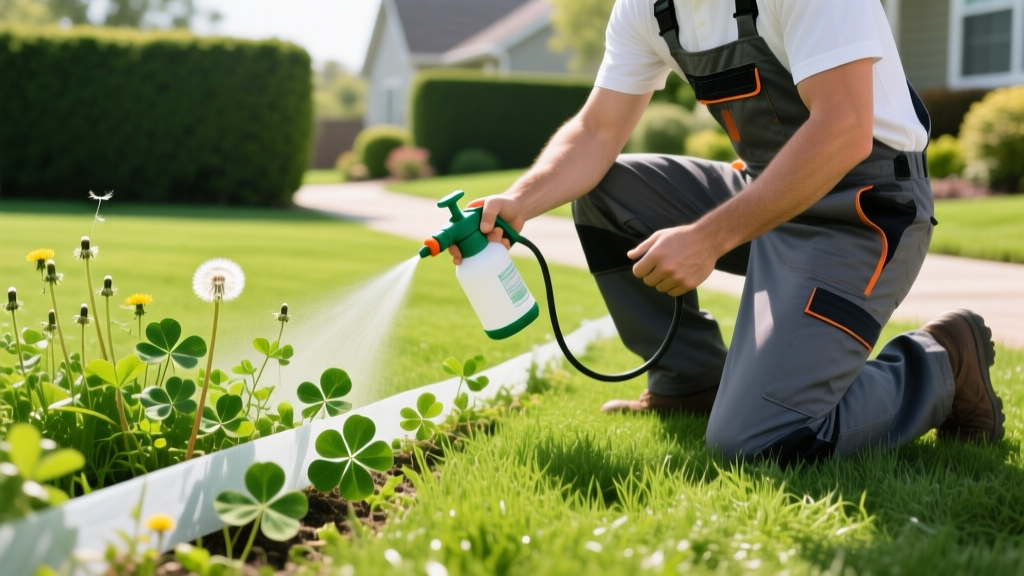
Spot-Treating Lawn Weeds That Bypass Your Chemical Weed Blocker
The Reality of Chemical Weed Blocker Failures
In professional turf management, a "weed blocker" rarely refers to physical landscape fabric; it refers to pre-emergent herbicides like prodiamine or dithiopyr that create a microscopic chemical barrier in the top half-inch of soil. When applied correctly in early spring, these barriers inhibit cell division in germinating weed seeds. However, no chemical weed blocker is 100% impenetrable. Environmental variables, soil disturbances, and biological adaptations routinely allow aggressive weed species to breach the barrier.
When weeds break through, broadcasting a heavy post-emergent herbicide over the entire lawn is inefficient and increases chemical resistance risks. Instead, precision spot-treatment protocols are required. This guide details the exact failure modes of pre-emergent barriers and provides actionable, species-specific spot-treatment frameworks to eliminate escaped weeds without compromising your turfgrass canopy.
Why Weeds Penetrate Your Weed Blocker Barrier
Understanding why your weed blocker failed is the first step in targeted spot-treatment. Pre-emergent barriers fail due to three primary mechanisms:
- Thatch Interference: If your lawn has a thatch layer exceeding 0.5 inches, the pre-emergent binds to the organic matter rather than reaching the soil surface. Weeds germinating at the soil line beneath the thatch bypass the chemical barrier entirely.
- Physical Barrier Disruption: Core aeration, heavy foot traffic, animal digging, and severe rain events (over 2 inches in 48 hours) physically fracture the chemical shield, creating micro-zones where weed seeds can germinate unimpeded.
- Late-Season Germination Flushes: Standard spring applications of pre-emergents degrade via microbial activity and photodegradation. By late July, soil concentrations often drop below the lethal threshold for late-germinating species like smooth crabgrass or yellow nutsedge.
Pro Tip: The Pencil Test for Thatch
Push a standard wooden pencil into your lawn until it hits resistance. Measure the distance from the soil line to the green turf canopy. If the brown, spongy thatch layer exceeds 0.5 inches, your next weed blocker application will fail unless you perform a deep dethatching or liquid aeration treatment first.
Push a standard wooden pencil into your lawn until it hits resistance. Measure the distance from the soil line to the green turf canopy. If the brown, spongy thatch layer exceeds 0.5 inches, your next weed blocker application will fail unless you perform a deep dethatching or liquid aeration treatment first.
Breakthrough Weed Species and Targeted Active Ingredients
Not all escaped weeds require the same chemistry. Identifying the specific species that breached your weed blocker dictates the post-emergent active ingredient you must use. According to Penn State Extension, matching the herbicide mode of action to the weed's biological family is critical for complete eradication.
| Weed Species | Germination Soil Temp | Key Identification Marker | Spot-Treatment Active Ingredient |
|---|---|---|---|
| Smooth Crabgrass | 55°F - 60°F | Hairy leaf sheath, rolled vernation, prostrate growth | Quinclorac (Drive XLR8) |
| Yellow Nutsedge | 65°F+ | Triangular stem, shallow tubers (nutlets), lime-green | Halosulfuron-methyl (SedgeHammer+) |
| Annual Bluegrass (Poa annua) | 50°F - 65°F | Boat-shaped leaf tip, light green, shallow roots | Mesotrione (Tenacity) |
| Common Dandelion | N/A (Perennial) | Deep taproot, lobed rosette leaves, yellow flower | 2,4-D + Dicamba + MCPP (Trimec) |
Precision Spot-Treatment Calibration and Application
Spot-treating is not simply mixing a chemical and spraying the weed. To prevent turf phytotoxicity (chemical burn) and ensure the weed absorbs a lethal dose, you must calibrate your equipment and select the correct adjuvants.
1. Nozzle Selection and Spray Pattern
Never use a cone nozzle or a hose-end sprayer for spot treatments. These deliver uneven coverage and excessive volume, leading to runoff and wasted chemical. Equip your backpack or handheld sprayer with a TeeJet 11002 Flat Fan nozzle. This nozzle delivers a uniform, tapered edge pattern at 40 PSI, allowing you to precisely overlap the weed's foliage without drenching the surrounding healthy turf.
2. Surfactant Chemistry
Water has high surface tension, causing it to bead up and roll off waxy weed leaves. You must add a surfactant to lower the surface tension. The EPA notes that adjuvants significantly increase herbicide efficacy, but the type matters:
- Non-Ionic Surfactant (NIS): Use an 80% active ingredient NIS for systemic herbicides like Quinclorac and Halosulfuron-methyl. It helps the chemical penetrate the leaf cuticle without burning the tissue.
- Methylated Seed Oil (MSO): Use MSO only for contact herbicides or when treating mature, drought-stressed weeds with thick cuticles (like mature dandelions). MSO aggressively strips the leaf wax, which can cause severe burning to desirable turf if drifted.
3. The Dye Indicator Protocol
Always add a blue or red turf marking dye (e.g., Turf Mark Blue) to your spot-treatment tank mix. This provides immediate visual confirmation of your spray footprint, preventing accidental double-application to the same weed, which is a primary cause of turfgrass death during spot treatments.
Top Post-Emergent Spot-Treatment Formulations for 2026
When your weed blocker fails, these professional-grade formulations offer the highest success rates for spot-treating specific breakthrough species. Prices reflect average 2026 retail costs for professional-grade concentrates.
Syngenta Tenacity (Mesotrione 40%)
Target: Annual Bluegrass, Bentgrass, and certain broadleaves.
Cost: $75 - $85 per 8 oz bottle.
Mixing Rate: 1/2 teaspoon per 1 gallon of water + 2 teaspoons NIS.
Mode of Action: Tenacity is an HPPD inhibitor. It stops carotenoid production, causing the weed to bleach white and starve. It is unique because it can be used as both a post-emergent spot treatment and a pre-emergent weed blocker simultaneously. Warning: It will temporarily bleach your desirable turfgrass if oversprayed.
SedgeHammer+ (Halosulfuron-methyl 75%)
Target: Yellow and Purple Nutsedge.
Cost: $28 - $35 per 13.5g box (includes built-in surfactant).
Mixing Rate: One 0.9g water-soluble packet per 1 to 2 gallons of water.
Mode of Action: An ALS inhibitor that stops amino acid synthesis. Nutsedge is notoriously immune to standard weed blockers because it propagates from deep underground tubers (nutlets), not just surface seeds. SedgeHammer translocates down into the tubers, preventing regrowth the following season.
BASF Drive XLR8 (Quinclorac 18%)
Target: Smooth and Large Crabgrass.
Cost: $80 - $95 per 1 Liter bottle.
Mixing Rate: 1.45 oz per 1 gallon of water + 1 oz MSO.
Mode of Action: A synthetic auxin that causes uncontrolled, lethal growth in grassy weeds. Crabgrass often breaks through pre-emergents in compacted soil areas along driveways. Drive XLR8 is the industry standard for post-emergent crabgrass control, though it requires MSO to penetrate the hairy leaf sheaths effectively.
Rebuilding the Weed Blocker Shield Post-Treatment
Once you have spot-treated the escaped weeds, the localized area remains vulnerable to future germination. You must patch the chemical barrier. However, applying standard pre-emergents like prodiamine immediately after a post-emergent application can cause severe root pruning in your desirable turf, especially in heat.
"Applying a heavy pre-emergent over a turf canopy that is already stressed from post-emergent herbicide activity and summer heat is a recipe for root system collapse. Always wait until the turf has fully recovered from the spot treatment before re-establishing the barrier." — University of Minnesota Extension Turf Specialists
The Patch Protocol:
Wait 14 days after your spot-treatment application. Once the weed is dead and the surrounding turf shows no signs of phytotoxicity, apply a half-rate application of Dimension (Dithiopyr) specifically to the patched zones. Dimension is unique among weed blockers because it possesses early post-emergent activity, meaning it will kill any newly sprouted weeds that are too small to see, while safely re-establishing the pre-emergent barrier in the soil.
Frequently Asked Questions
Can I mix my post-emergent spot treatment with my liquid fertilizer?
No. Mixing post-emergent herbicides with nitrogen-rich liquid fertilizers causes the turfgrass to rapidly absorb the herbicide alongside the nitrogen, leading to severe chemical burn. Always apply spot treatments in a dedicated, clean tank with water and the appropriate surfactant only.
Why did my weed blocker fail specifically along the edges of my driveway?
Concrete and asphalt radiate heat, raising the adjacent soil temperature by 10°F to 15°F compared to the rest of the lawn. This accelerates the microbial breakdown of your pre-emergent weed blocker, causing it to degrade weeks earlier than in the center of the yard. You must apply a second, localized booster application of pre-emergent along hardscape edges in early June.
Is it safe to spot-treat weeds when temperatures exceed 85°F?
Avoid spot-treating when daytime highs exceed 85°F. High temperatures increase the volatility of herbicides like 2,4-D and Quinclorac, causing the chemical to vaporize and drift onto non-target plants. Furthermore, turfgrass stomata close in high heat to conserve water, preventing the systemic herbicide from translocating into the weed's root system. Spray only in the early morning when temperatures are below 80°F.

