
Lawn Care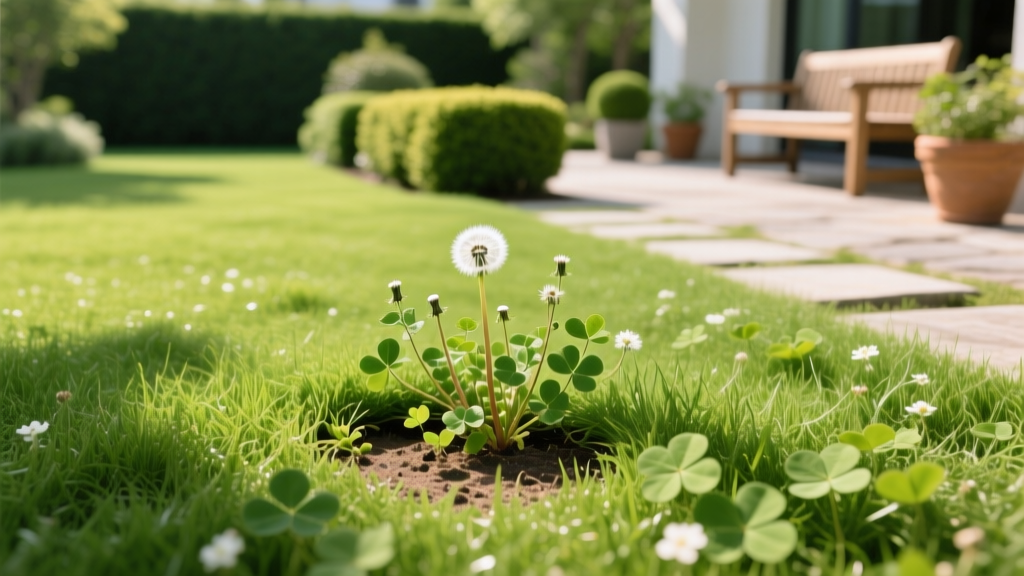
How to Spot-Treat Weeds in a Grass and Clover Lawn
The Broadleaf Herbicide Trap
Maintaining a mixed grass and clover lawn is one of the most ecologically sound decisions a homeowner can make. Clover fixes atmospheric nitrogen, reduces water requirements, and stays green during summer droughts. However, this botanical partnership creates a massive vulnerability when invasive weeds strike: you cannot use standard lawn weed killers.
The active ingredients in 90% of commercial broadleaf weed killers—specifically 2,4-D, dicamba, MCPP, and triclopyr—are designed to target broadleaf plants. Because clover is a broadleaf legume, applying products like Trimec or SpeedZone to your yard will annihilate your clover within 7 to 14 days, leaving behind dead patches and destroying your lawn's nitrogen-fixing engine.
Warning: The Iron Herbicide Myth
Many eco-conscious homeowners turn to iron-based herbicides (FeHED, sold under brands like Fiesta) as an 'organic' broadleaf weed killer. While safer for the environment, FeHED is still a broadleaf selector. It will severely burn and likely kill your clover. Do not use chelated iron sprays on a grass and clover lawn unless you are intentionally trying to eradicate the clover.
Many eco-conscious homeowners turn to iron-based herbicides (FeHED, sold under brands like Fiesta) as an 'organic' broadleaf weed killer. While safer for the environment, FeHED is still a broadleaf selector. It will severely burn and likely kill your clover. Do not use chelated iron sprays on a grass and clover lawn unless you are intentionally trying to eradicate the clover.
According to research from Penn State Extension, successfully managing a mixed lawn requires shifting your mindset from 'broadcast spraying' to 'surgical spot-treatment' and heavy reliance on pre-emergent strategies. Below is the exact framework for eliminating invaders without harming your clover.
Decision Matrix: Identifying and Treating Invaders
Because post-emergent chemical options are severely limited in a mixed lawn, your treatment protocol depends entirely on the biological classification of the invading weed. Use this matrix to determine your attack plan.
| Weed Category | Common Culprits | Chemical Strategy | Clover Safety |
|---|---|---|---|
| Grassy Weeds | Crabgrass, Poa annua, Goosegrass | Pre-emergent (Prodiamine). Post-emergent is virtually impossible without killing turf. | High (Pre-emergent) |
| Broadleaf Weeds | Dandelion, Thistle, Plantain | Glyphosate gel wick applicator or manual extraction. | High (if zero drift) |
| Sedges | Yellow Nutsedge, Purple Nutsedge | Halosulfuron-methyl (SedgeHammer) applied with a physical shield. | Moderate (Shield required) |
Execution: Zero-Drift Spot Treatment Techniques
When dealing with broadleaf invaders like dandelions or thistles in a grass and clover lawn, liquid sprays are a liability. Even a slight breeze can carry microscopic droplets of non-selective herbicide onto your clover leaves, causing localized necrosis. As of 2026, the industry standard for mixed-lawns relies on two zero-drift methodologies.
1. The Wick and Gel Method
For isolated broadleaf weeds, abandon pump sprayers entirely. Use a glyphosate-based gel weed killer (such as Roundup Precision Gel or generic equivalents, typically costing $8 to $12 per tube). These products feature a built-in sponge or wand tip that dispenses the herbicide only upon physical contact.
- Application: Press the sponge tip directly onto the center rosette of the dandelion or thistle.
- Volume: Apply just enough to coat the weed's leaves. Do not let the gel drip onto the soil or surrounding clover.
- Timing: Apply in the early morning when dew has dried, but avoid afternoons where temperatures exceed 85°F, as heat accelerates evaporation and reduces translocation to the weed's taproot.
2. The Shielded Spray Technique
If you are dealing with a dense patch of nutsedge or a cluster of weeds where a gel applicator is too slow, you must use a physical shield. Cut a 12x12 inch square from a thick cardboard box or use a commercial plastic cone shield.
- Place the shield flat on the lawn, sliding it under the target weed while covering the surrounding grass and clover.
- Use a pump sprayer with a pin-stream or cone nozzle (never a fan nozzle) set to a low pressure (15-20 PSI).
- Spray the weed through the hole or from above the shield, ensuring no overspray bounces off the soil onto adjacent clover stolons.
Preventative Ecology: Pre-Emergents and Nitrogen Balancing
Spot-treating is reactive. The cornerstone of a pristine grass and clover lawn is proactive soil and seedbank management. According to the University of Minnesota Extension, mixed lawns require a delicate nutritional balance to prevent the turfgrass from outcompeting the clover.
Pre-Emergent Timing and Rates
Because you cannot safely spray post-emergent grassy weed killers (like Quinclorac) without damaging your turfgrass, you must stop crabgrass and Poa annua before they germinate. Prodiamine (sold as Barricade) is highly effective and safe for established clover.
Pro Tip: The Overseeding Caveat
Prodiamine will prevent clover seeds from germinating. If you are establishing a new grass and clover lawn or overseeding bare patches with microclover seed, do not apply pre-emergents. Wait until the clover has been mowed at least twice before applying a pre-emergent barrier.
Prodiamine will prevent clover seeds from germinating. If you are establishing a new grass and clover lawn or overseeding bare patches with microclover seed, do not apply pre-emergents. Wait until the clover has been mowed at least twice before applying a pre-emergent barrier.
Mixing Rate: For Prodiamine 65 WDG, apply 0.18 to 0.23 ounces per 1,000 square feet in early spring when soil temperatures at a 2-inch depth consistently reach 50°F to 55°F. Water in with 0.25 inches of irrigation immediately to activate the chemical barrier in the top inch of soil.
The Nitrogen Tug-of-War
Clover is a legume; it hosts Rhizobium bacteria in its root nodules, pulling nitrogen from the air and depositing it into the soil. A healthy clover population can contribute 1 to 2 pounds of nitrogen per 1,000 square feet annually. If you apply a standard high-nitrogen turf fertilizer (e.g., 3-4 lbs of N per year), the turfgrass will experience explosive growth, creating a dense canopy that shades out the clover, eventually killing it and leaving you with a pure, high-maintenance grass lawn.
The Fix: Limit synthetic nitrogen applications to a maximum of 1 to 1.5 pounds per 1,000 square feet per year, applied in a single late-fall application (around mid-October). This feeds the grass roots for the following spring without giving the turf an unfair competitive advantage during the summer growing season. For weed suppression, rely on the UC Statewide Integrated Pest Management Program's recommendation of maintaining a mowing height of 3 to 3.5 inches, which shades out weed seeds while allowing the low-growing clover to thrive beneath the turf canopy.
Troubleshooting Common Mistakes
Mistake: Using Vinegar (Acetic Acid) as an Organic Spot-Treatment
While 20% horticultural vinegar is a popular organic weed killer, it is a non-selective contact acid. If you spray it on a dandelion in a mixed lawn, any drift onto the clover will instantly burn the clover's cellular walls, leaving unsightly brown spots. Stick to targeted glyphosate gels or manual pulling for broadleaves.
Mistake: Pulling Weeds When Soil is Dry
In a mixed lawn, the root systems of grass, clover, and weeds are densely intertwined. Yanking a dandelion from dry, compacted soil will rip out the surrounding clover stolons and grass rhizomes, creating a bare patch that invites crabgrass. Always water the lawn deeply 24 hours before manual weed extraction to ensure the taproot slides out cleanly without collateral root damage.

