
Lawn Care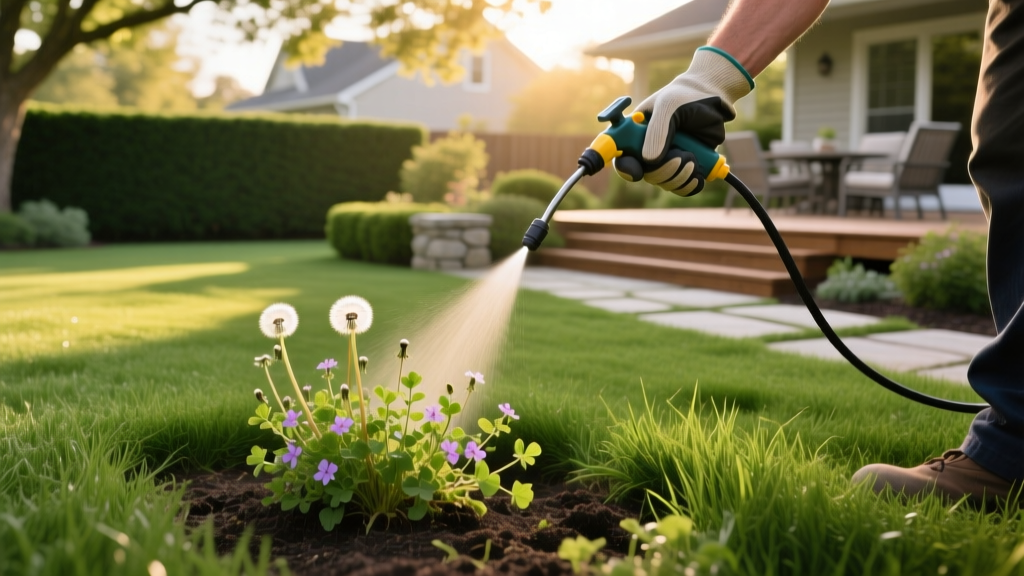
How to Kill Weeds Without Killing Plants: Spot-Treatment Guide
Maintaining pristine garden beds, lawn borders, and foundation plantings requires a delicate touch. When invasive grasses, sedges, or broadleaf weeds infiltrate these zones, blanket spraying is not an option. Figuring out how to kill weeds without killing plants hinges on understanding plant biology, utilizing selective chemistry, and mastering physical application techniques. This spot-treatment guide provides the exact protocols, product models, and measurement frameworks required to eradicate weeds while preserving your desired ornamentals and turf.
The Science of Selective vs. Non-Selective Herbicides
To selectively target weeds, you must exploit physiological differences between plant species. Non-selective herbicides like glyphosate inhibit the EPSP synthase enzyme, a pathway essential for all green plants. In contrast, selective herbicides target enzymes specific to certain plant families.
- ACCase Inhibitors (e.g., Fluazifop): Target grassy weeds by disrupting lipid synthesis. Broadleaf plants (flowers, shrubs) lack this specific enzyme sensitivity, making it safe to spray over them.
- ALS Inhibitors (e.g., Halosulfuron): Target sedges and broadleaves by halting amino acid production. Safe for use over most established turfgrasses and many ornamentals.
- Synthetic Auxins (e.g., 2,4-D, Dicamba): Mimic plant growth hormones, causing broadleaf weeds to grow themselves to death. Safe for monocot turfgrasses but highly toxic to desirable broadleaf flowers and shrubs.
According to the UC Statewide IPM Program, correctly identifying whether your weed is a grass, broadleaf, or sedge is the mandatory first step before selecting a chemical control method.
Weed Species Spot-Treatment Matrix
Use this decision matrix to select the correct active ingredient based on the weed species and your desired surrounding plants. Pricing reflects average 2026 retail costs for homeowner-sized quantities.
| Weed Species | Desired Surrounding Plants | Active Ingredient | Brand Example | Avg. Cost | Mix Rate (per Gallon) |
|---|---|---|---|---|---|
| Bermudagrass / Crabgrass | Broadleaf flowers, shrubs | Fluazifop-p-butyl | Ortho Grass B Gon | $14 / 32oz | 1.0 fl oz |
| Yellow / Purple Nutsedge | Turfgrass, most ornamentals | Halosulfuron-methyl | SedgeHammer+ | $26 / 5-pack | 0.5 oz (1 packet) |
| Dandelion / Clover | Cool- & Warm-season Turf | 2,4-D + Dicamba + MCPP | Trimec 992 | $35 / 128oz | 1.5 fl oz |
| Annual Bluegrass (Poa annua) | Tall Fescue / Kentucky Bluegrass | Ethofumesate | Prograss (Professional) | $120 / 2.5gal | 3.0 fl oz |
Step-by-Step Chemical Spot-Treatment Protocol
Even when using selective herbicides, physical drift can damage sensitive ornamentals. Follow this precise application protocol to ensure zero collateral damage.
- Calibrate Your Equipment: Use a dedicated 1-gallon pump sprayer (e.g., Chapin 2054, approx. $18). Swap the standard cone nozzle for a flat fan nozzle (TeeJet XR8002) to produce a uniform, coarse droplet pattern that resists wind drift.
- Add a Non-Ionic Surfactant (NIS): Herbicides bead up and roll off waxy weed leaves. Add NIS at a rate of 0.25% v/v (roughly 1/2 teaspoon per gallon of water) to break surface tension and ensure the chemical penetrates the weed cuticle.
- Deploy a Physical Shield: Cut a 24x24 inch square from heavy-duty corrugated cardboard. When spraying near the base of desirable shrubs or flowers, place the cardboard between the weed and the desired plant to block microscopic spray drift.
- Control Nozzle Height: Keep the spray wand exactly 12 to 18 inches above the target weed. Spraying from higher than 24 inches exponentially increases the drift radius, even on calm days.
- Apply to the Point of Runoff: Spray the weed until the leaves are visibly wet but not dripping. Dripping wastes chemical and risks soil-level root uptake by nearby desirable plants.
Top Tools and Selective Herbicides for Precision Work
1. Ortho Grass B Gon (Fluazifop-p-butyl)
This is the gold standard for killing grassy weeds in flower beds. It is a systemic herbicide, meaning it travels down to the roots to kill rhizomatous grasses like Bermudagrass. Limitation: It will not kill broadleaf weeds or sedges. It is entirely safe to spray directly over hostas, daylilies, and roses.
2. SedgeHammer+ (Halosulfuron-methyl)
Nutsedge is notoriously difficult to pull because it leaves behind underground tubers (nutlets). SedgeHammer+ is absorbed through the foliage and translocates to the tubers, sterilizing them. The '+' formulation includes a built-in surfactant, eliminating the need to buy separate NIS. Safe for most established ornamentals, but avoid spraying directly on the foliage of young, unestablished transplants.
3. Nisaku NJT650 Hori Hori Knife
For tap-rooted weeds like dandelions or dock growing tightly against the crown of a delicate perennial, chemical treatment is too risky. The Nisaku NJT650 (approx. $28) features a 6.75-inch concave stainless steel blade with serrated edges. The concave shape acts as a lever, allowing you to surgically extract the entire taproot without disturbing the root ball of the adjacent desirable plant.
⚠️ WARNING: Temperature and Volatilization
Never apply ester-based herbicides (common in many 2,4-D broadleaf killers) when ambient temperatures exceed 85°F (29°C). At high temperatures, these chemicals undergo volatilization—turning into a gas that can drift hundreds of feet and severely damage neighboring gardens, vegetable patches, and ornamental trees. Always apply amine-based formulations or spot-treat during early morning hours when temperatures are below 80°F.
Organic and Non-Chemical Alternatives
If you prefer to avoid synthetic chemistry, organic spot-treatment requires stricter physical barriers, as organic herbicides are inherently non-selective (contact burn-downs).
- Horticultural Vinegar (20-30% Acetic Acid): Burns the foliage of young, annual weeds on contact. It does not kill roots. Cost: ~$25 per gallon. Protocol: Must be shielded with cardboard. Will severely burn the leaves of your desired plants if drift occurs. Wear ANSI Z87.1 rated splash goggles and nitrile gloves, as 20% acetic acid causes corneal damage and skin burns.
- Flame Weeding: Using a propane torch (e.g., Red Dragon 100,000 BTU Weed Dragon, ~$65) to boil the water inside weed cells. Excellent for driveway cracks or clearing beds before planting. Failure Mode: Never use near dry mulch, pine straw, or dormant perennials with woody crowns, as the fire risk is severe.
- Corn Gluten Meal (CGM): An organic pre-emergent that inhibits root formation in germinating weed seeds. Apply at 20 lbs per 1,000 sq ft in early spring. It will not kill existing weeds, but stops new ones from emerging around your established plants.
For more comprehensive data on organic weed management and soil health, refer to the University of Minnesota Extension guidelines on integrated weed control.
Frequently Asked Questions
Will horticultural vinegar kill my flowers if it accidentally hits them?
Yes. Unlike selective synthetic herbicides, 20% acetic acid is a non-selective contact burn-down. If it touches the foliage of your flowers, it will destroy the cell membranes of those specific leaves, causing immediate necrosis (browning). It will not travel systemically to kill the whole plant unless the entire plant is drenched, but it will cause cosmetic damage and stress.
How long should I wait to plant new flowers after spot-treating weeds?
This depends entirely on the active ingredient. Fluazifop (Grass B Gon) has a short soil half-life and is generally safe for planting broadleaf transplants after 14 days. Halosulfuron (SedgeHammer) can persist in the soil and may damage sensitive broadleaf transplants; wait at least 30 to 45 days. Always consult the specific product label's 'Replanting' interval. For detailed safety and environmental fate data, consult the EPA's Safe Use of Pesticides database.
Why did the weed turn yellow but start growing again after two weeks?
You likely under-applied the herbicide or sprayed a mature weed that had already developed a thick, waxy cuticle. Systemic herbicides require adequate leaf surface area to absorb a lethal dose. If the weed is over 6 inches tall, mow or string-trim it first, wait 48 hours for new, tender growth to emerge, and then apply your spot-treatment with a surfactant included.

