
Lawn Care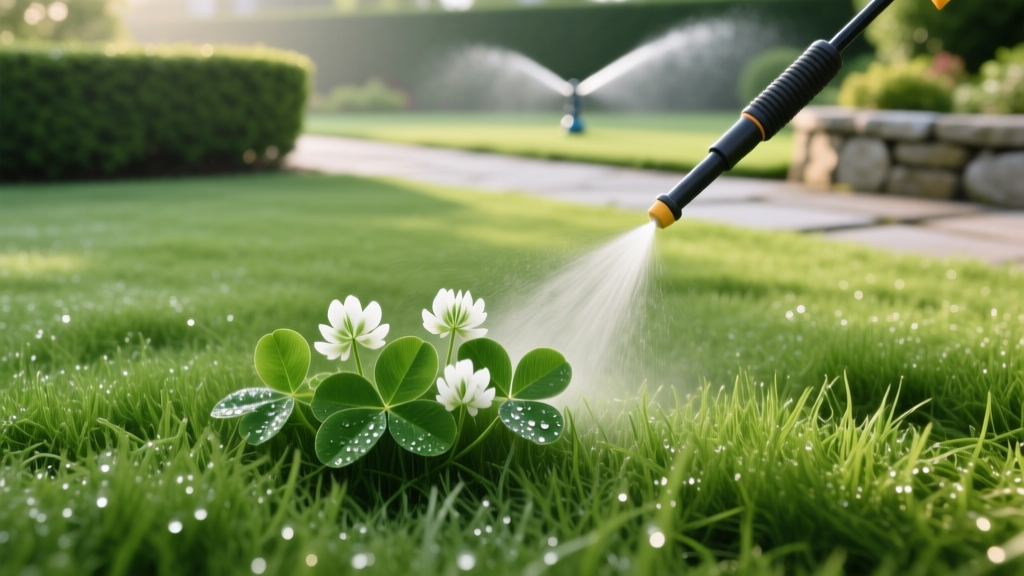
How to Spot-Treat White Clovers Without Killing Your Grass
White clover (Trifolium repens) is a perennial broadleaf weed that thrives in under-fertilized, compacted, or poorly drained lawns. Unlike annual weeds that die off in winter, white clover spreads aggressively via above-ground stolons, rooting at nodes to form dense mats that choke out desirable turfgrass. Because it fixes its own atmospheric nitrogen, it easily outcompetes grass in low-nitrogen soils. Spot-treating white clovers requires a targeted approach to eradicate the weed while preserving the surrounding grass canopy.
Identifying White Clover vs. Lookalikes
Before mixing any herbicide, confirm you are dealing with white clover. Misidentification leads to ineffective chemical selection. According to the University of California Integrated Pest Management program, accurate identification relies on three distinct morphological features:
- Leaf Structure: Trifoliate (three leaflets) with a distinct white or pale green 'V' shape (chevron) on each leaflet.
- Growth Habit: Creeping stolons that root at the nodes, allowing the plant to spread laterally across the soil surface.
- Flowers: Globe-shaped inflorescences, typically white with a slight pinkish tinge, blooming from late spring through early fall.
Note: Oxalis (woodsorrel) is frequently confused with clover. Oxalis features heart-shaped leaflets and yellow flowers, requiring a different herbicide protocol (often requiring sulfentrazone or fluroxypyr).
The Spot-Treatment Decision Matrix
Choose your eradication method based on the square footage of the infestation and your lawn's grass type. Broadcast spraying is rarely necessary for clover and increases the risk of turf phytotoxicity.
| Infestation Size | Recommended Method | Active Ingredients / Tools | Estimated Cost (2026) |
|---|---|---|---|
| < 10 sq ft (Isolated patches) | Manual Extraction or Chelated Iron | Weeding fork, FeHEDTA (Fiesta) | $0 - $25 |
| 10 - 50 sq ft (Scattered clumps) | Targeted Chemical Spot-Spray | 2,4-D + Dicamba + Carfentrazone | $15 - $30 |
| > 50 sq ft (Dense matting) | Selective Broadcast Application | Triclopyr + Quinclorac blends | $35 - $60 |
Chemical Spot-Treatment Protocols
White clover possesses a waxy leaf cuticle that repels water-based sprays. To achieve lethal absorption, you must use a systemic selective herbicide paired with a non-ionic surfactant (NIS). The Purdue University Turfgrass Science extension recommends multi-active-ingredient formulations to prevent herbicide resistance and ensure complete root kill.
Professional-Grade Option: SpeedZone Broadleaf Herbicide
SpeedZone contains 2,4-D, MCPP, Dicamba, and Carfentrazone-ethyl. The carfentrazone provides a rapid 'burn-down' effect within 24 to 48 hours, while the systemic auxins (2,4-D and Dicamba) travel to the stolon nodes to kill the root system over 10 to 14 days.
Mixing Rate for Spot Treatment:
Mix 1.5 to 2.0 fluid ounces of SpeedZone per 1 gallon of water. This covers approximately 1,000 square feet. Crucially, add 1 teaspoon (approx. 0.25% v/v) of a high-quality non-ionic surfactant (e.g., Dyna-Surf or R-11) to break the clover's waxy cuticle. A gallon of SpeedZone retails for roughly $45 to $55 in 2026 and will last a homeowner multiple seasons.
Mix 1.5 to 2.0 fluid ounces of SpeedZone per 1 gallon of water. This covers approximately 1,000 square feet. Crucially, add 1 teaspoon (approx. 0.25% v/v) of a high-quality non-ionic surfactant (e.g., Dyna-Surf or R-11) to break the clover's waxy cuticle. A gallon of SpeedZone retails for roughly $45 to $55 in 2026 and will last a homeowner multiple seasons.
Residential Ready-to-Use Option: Ortho WeedClear for Lawns
For smaller jobs where mixing concentrates is impractical, Ortho WeedClear (formulated with 2,4-D, Quinclorac, and Dicamba) is highly effective. Ensure you purchase the formula specifically labeled for your grass type (Northern vs. Southern lawns), as Quinclorac can cause severe yellowing in St. Augustinegrass if applied at high rates.
Organic and Low-Toxicity Alternatives
If you maintain an organic lawn or have concerns regarding synthetic auxin herbicides near ornamental beds, chelated iron is the most effective selective alternative.
Chelated Iron (FeHEDTA)
Products like Fiesta Turf Weeder utilize iron HEDTA (hydroxyethylenediaminetriacetic acid). Broadleaf weeds like white clover absorb the iron rapidly, leading to fatal oxidative stress and tissue necrosis, while monocot grasses metabolize the iron safely.
- Application Rate: Mix 3.5 to 4.0 fluid ounces per gallon of water.
- Timing: Apply when temperatures are below 80°F to prevent temporary grass darkening.
- Follow-up: FeHEDTA rarely kills the deep stolon nodes on the first pass. Plan for a second application 14 to 21 days after the initial treatment once the top growth has blackened and regrowth begins.
The Problem with Horticultural Vinegar
Many online guides suggest using 20% or 30% horticultural vinegar (acetic acid) for clover. Avoid this for spot-treating in established lawns. Acetic acid is a non-selective contact desiccant. It will burn the white clover to the ground within hours, but it will simultaneously kill the surrounding turfgrass, leaving bare dirt patches that invite crabgrass and spurge. Furthermore, it does not translocate to the clover's roots, guaranteeing a resurgence within three weeks.
Post-Treatment Lawn Recovery and Prevention
Eradicating the weed is only half the battle. White clover is an indicator species for nitrogen-deficient soil. If you do not correct the underlying soil ecology, clover seeds (which can remain viable in the soil seedbank for over a decade) will germinate the following spring.
- Remove Dead Biomass: Once the clover has turned brown and crispy (approx. 14 days post-spray), rake out the dead stolons to expose the bare soil.
- Overseed Bare Patches: For cool-season lawns, apply a matching turf-type tall fescue or Kentucky bluegrass seed at a rate of 4 to 6 lbs per 1,000 sq ft. Top-dress lightly with compost to retain moisture.
- Correct Nitrogen Levels: Apply a slow-release, polymer-coated urea fertilizer (such as Scotts Turf Builder or a professional-grade 30-0-10) to deliver 1.0 lb of actual nitrogen per 1,000 sq ft. Dense, vigorously growing grass will naturally shade out future clover seedlings.
Expert Insight: 'Clover thrives in soils with a pH below 6.0 and low phosphorus. If your clover problem persists despite nitrogen applications and herbicide treatments, pull a core soil sample. Amending the soil pH with pelletized lime based on a university soil test is often the missing link in long-term clover suppression.'
Frequently Asked Questions
Will pulling white clover by hand work?
Hand-pulling is only effective for very young, isolated plants. Mature white clover develops extensive stolon networks. If you pull the plant and leave even a half-inch of rooted stolon in the soil, it will regenerate a new crown within 7 to 10 days. If you choose manual extraction, use a dandelion weeder or soil knife to sever the taproot and lift the entire node matrix.
When is the best time of year to spot-treat white clovers?
Early fall (September to October in most temperate zones) is the optimal window. During fall, perennial weeds are actively pulling carbohydrates down into their root systems to prepare for winter. Systemic herbicides applied during this phase are translocated directly to the roots, ensuring a complete kill. Spring applications often only burn the top growth, leading to summer regrowth.
Is white clover actually bad for my lawn?
From an ecological standpoint, white clover fixes atmospheric nitrogen, naturally fertilizing the surrounding grass, and its flowers support native pollinators. However, from a turfgrass management perspective, it creates an uneven playing surface, competes for water during summer droughts, and can cause turf thinning. The decision to eradicate it depends entirely on your aesthetic and functional goals for the landscape.

