
Lawn Care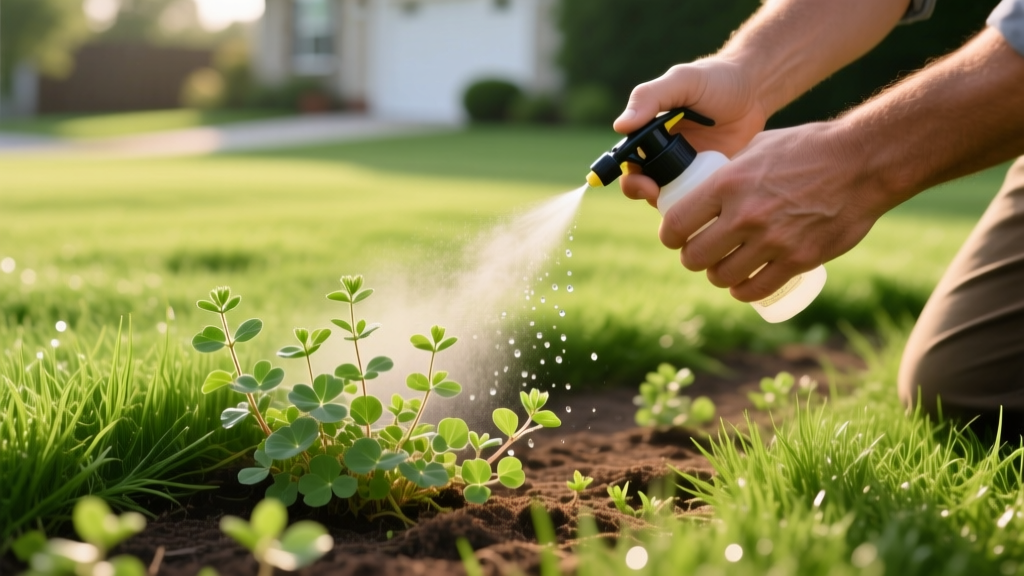
The Ultimate Guide to Spot-Treating Chickweed Grass
The "Chickweed Grass" Misconception: Broadleaf vs. Turf
Despite the common search term "chickweed grass," chickweed is not a grass at all. It is a winter annual or perennial broadleaf weed that forms dense, low-lying mats, which mimic the appearance of a turf canopy from a distance. This matting habit allows it to choke out desirable cool-season and warm-season grasses by monopolizing surface moisture and blocking sunlight to emerging turf shoots. Because it thrives in the same cool, moist conditions that promote turfgrass growth, spot-treating chickweed requires precise timing and targeted active ingredients to avoid damaging the surrounding lawn.
Identifying the Invader: Common vs. Mouse-Ear
Before selecting a spot-treatment protocol, you must correctly identify the specific chickweed species invading your turf. The treatment efficacy varies significantly between the two most common types.
Visual Identification Checklist
- Common Chickweed (Stellaria media): Features smooth, succulent stems that snap easily. Leaves are pointed and oval. The defining characteristic is its small, white, star-shaped flowers with five deeply notched petals (appearing as ten). It has a shallow, fibrous root system with a central taproot.
- Mouse-Ear Chickweed (Cerastium vulgatum): A perennial variety with densely hairy stems and leaves that feel like velvet. It forms thicker, more aggressive mats and is notably more resistant to standard broadleaf herbicides than common chickweed.
According to the University of Minnesota Extension, common chickweed germinates in early fall, grows through the winter, and sets seed in late spring. Mouse-ear chickweed, being a perennial, will persist year-round if not aggressively managed.
Spot-Treatment Protocols for Active Infestations
When chickweed has already established in localized patches, broadcast spraying is unnecessary and wastes chemical. Spot-treating minimizes environmental impact and reduces the risk of turf phytotoxicity. Choose your protocol based on your lawn type and environmental preferences.
Protocol 1: Targeted Chemical Control (Selective Herbicides)
For rapid eradication of both common and mouse-ear chickweed, a three-way selective herbicide is the industry standard. These formulations combine 2,4-D, MCPP (mecoprop-p), and Dicamba.
- Product Recommendation: Trimec Classic (for cool-season grasses) or Trimec Southern (for warm-season grasses like Bermuda and Zoysia).
- Mix Rate: 1.5 fluid ounces per 1 gallon of water to treat 1,000 square feet.
- Surfactant Requirement: Chickweed leaves have a waxy cuticle. You must add a non-ionic surfactant at a rate of 0.25% v/v (roughly 1/2 teaspoon per gallon) to break the surface tension and allow the herbicide to penetrate the leaf tissue.
- Application Rule: Apply only when daytime temperatures are between 60°F and 85°F. Applications above 85°F risk severe vapor drift and turf burn.
Protocol 2: Iron-Based Organic Herbicides
For homeowners seeking an organic alternative, chelated iron (FeHEDTA) is highly effective against chickweed. Broadleaf weeds absorb iron in toxic quantities, leading to rapid cellular necrosis, while turfgrasses metabolize the iron safely.
- Product Recommendation: Fiesta Turf Weeder or Bayer Advanced Natria Lawn Weed Control.
- Application Strategy: Iron-based herbicides are contact burners, not systemic killers. You must apply the product until the chickweed leaves are visibly wet. Expect the foliage to blacken within 24 hours.
- The Catch: Because it does not translocate to the roots effectively, a second application is strictly required 14 days after the first to kill any regrowth from the root crown.
Protocol 3: Mechanical Extraction (Hand-Pulling Done Right)
Chickweed's shallow root system makes it a prime candidate for mechanical removal, but its brittle stems are a trap. If you pull the top growth and leave the taproot crown, it will regenerate within a week.
- Water the soil deeply 12 hours before extraction to soften the top 2 inches of the soil profile.
- Use a stand-up weeder tool with serrated steel claws (such as the Fiskars Stand-Up Weeder) to penetrate 2 inches below the mat.
- Step on the tool's foot platform, angle the handle back to 45 degrees, and extract the entire soil plug.
- Immediately fill the void with screened topsoil and a pinch of turf seed to prevent new weed seeds from settling in the bare dirt.
Spot-Treatment Method Comparison Matrix
| Treatment Method | Active Ingredient / Tool | Cost per 1,000 sq ft | Time to Kill | Best Use Case |
|---|---|---|---|---|
| Selective Chemical | 2,4-D + MCPP + Dicamba | $0.15 - $0.25 | 7 - 14 Days | Large patches, severe infestations |
| Iron-Based Organic | FeHEDTA (Chelated Iron) | $0.80 - $1.20 | 24 Hours (foliage), 14 Days (root) | Organic lawns, sensitive warm-season turf |
| Mechanical Extraction | Stand-up Weeder Tool | $0.00 (after tool purchase) | Immediate | Small, isolated spots in high-traffic areas |
| Thermal / Vinegar | 20% Horticultural Acetic Acid | $0.40 - $0.60 | 2 - 4 Hours | Driveway cracks, non-turf borders only |
Timing the Attack: Soil Temperature Thresholds
The biggest mistake homeowners make is treating chickweed in late spring when it is already flowering and dying back naturally. At this stage, the plant's energy is focused on seed production, and it will not translocate herbicides down to the roots effectively.
According to Penn State Extension, the optimal window for spot-treating chickweed is in the fall or early spring when the plant is in its active vegetative growth phase. Use a digital soil thermometer inserted 1 inch into the ground. You want to apply treatments when soil temperatures are consistently between 60°F and 70°F. During this window, the plant is actively pulling nutrients (and herbicides) down into its root system to prepare for winter or spring growth.
Post-Treatment Prevention: Closing the Canopy
Spot-treating eliminates the current generation, but chickweed produces thousands of seeds that remain viable in the soil seedbank for up to a decade. To prevent the next flush of germination, you must deploy a pre-emergent herbicide and adjust your cultural practices.
Pre-Emergent Timing and Selection
Apply a pre-emergent containing Isoxaben (such as Gallery 75 DF) in late summer, precisely when soil temperatures drop to 70°F. Isoxaben is a cellulose biosynthesis inhibitor that specifically targets broadleaf weeds like chickweed without harming emerging cool-season grass seedlings. This is a critical advantage over Prodiamine, which can stunt the root growth of newly overseeded fescue or ryegrass.
Finally, chickweed exploits thin, under-fertilized turf. Raise your mowing height to 3.5 inches to shade the soil surface, preventing chickweed seeds from receiving the light they require to germinate. Conduct a soil test and maintain a soil pH between 6.2 and 6.8 to ensure your turfgrass can outcompete any remaining weed pressure.
Frequently Asked Questions
Will chickweed die on its own in the summer?
Common chickweed is a winter annual and will naturally yellow and die back when summer temperatures consistently exceed 85°F. However, it will have already dropped thousands of seeds by early June, guaranteeing a return the following fall.
Can I use a weed-and-feed product for spot treatment?
No. Weed-and-feed products are designed for broadcast application. Using them for spot-treating requires you to apply a heavy concentration of nitrogen fertilizer to a small area, which will cause rapid, weak turf growth and increase susceptibility to fungal diseases like brown patch.

