
Lawn Care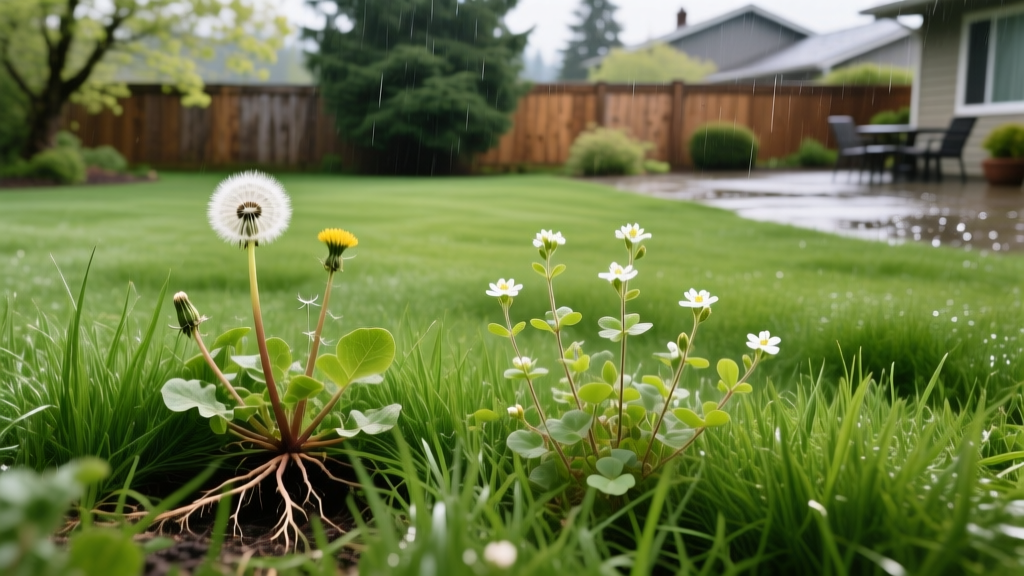
How to Identify and Spot-Treat Common Weeds in Seattle Lawns
The Seattle Microclimate: Why Your Lawn is Under Attack
Seattle's marine west coast climate dictates a unique weed pressure profile. The region receives roughly 38 inches of annual precipitation, heavily concentrated between October and April. This relentless winter rainfall leaches calcium and magnesium from the soil, driving the pH down to an acidic 5.0 to 5.5. Cool-season turfgrasses like tall fescue and perennial ryegrass require a pH of 6.0 to 6.8 for optimal nutrient uptake. When the soil becomes too acidic, grass roots stall, and opportunistic invaders take over.
Furthermore, Seattle's distinct summer drought (July through September) stresses cool-season grasses, causing them to enter dormancy. This opens the turf canopy, allowing sunlight to hit the soil surface and trigger the germination of fall-annual weeds right before the autumn rains begin. Effective spot-treatment in this region requires aligning chemical applications with these specific micro-seasons, rather than following generic national lawn care calendars.
Seattle Soil Alert: Before applying any broadleaf herbicide, test your soil pH. If it is below 5.8, apply pelletized calcium carbonate lime at a rate of 25 to 50 lbs per 1,000 square feet. Herbicides like 2,4-D and Dicamba bind tightly to organic matter in highly acidic soils, rendering them ineffective and wasting your money.
Spot-Treatment Protocols for the 'Big Four' Invaders
1. Moss (The Unofficial Seattle Weed)
While technically a non-vascular plant rather than a true weed, moss is the number one lawn complaint in King County. It thrives in compacted, acidic, and shaded soils. According to the Washington State University HortSense Weed Database, moss control requires a two-pronged approach: chemical burn-down and cultural correction.
The Protocol: Avoid traditional ferrous sulfate if your soil pH is above 6.0, as it becomes unavailable to the plant. Instead, use Iron HEDTA (chelated iron), found in products like Bonide MossMax or Lilly Miller Moss Out.
Application: Apply Iron HEDTA when daytime temperatures are consistently above 45°F. Mix at 2 oz per gallon of water for spot treatments. The moss will absorb the iron, undergo rapid cellular oxidation, and turn black within 3 to 4 hours. Once dead, rake it out and core aerate the bare spots to relieve the compaction that invited the moss in the first place.
2. Annual Bluegrass (Poa annua)
Poa annua is a winter annual that germinates in Seattle during the September rains, stays green all winter, and dies off in July. Spot-treating it in a cool-season lawn is notoriously difficult because it is genetically similar to your desirable fescue and ryegrass.
The Protocol: Standard selective herbicides (like 2,4-D) will not kill Poa annua without killing your lawn. For true post-emergent spot treatment, professionals use foramsulfuron (Revolver), which selectively removes Poa from cool-season turf. However, Revolver is expensive (approx. $300 per gallon) and restricted in some retail channels.
The Homeowner Hack: Wait until mid-to-late July. Poa annua will naturally die and turn brown from summer heat stress, while your tall fescue will merely go dormant. Carefully spot-spray the dead/brown Poa patches with a 2% glyphosate solution using a shielded sprayer. Wait 14 days, scratch the soil surface, and overseed with a WSU-recommended tall fescue blend before the September rains.
3. Broadleaf Plantain and Dandelion
Broadleaf plantain (Plantago major) indicates heavily compacted soil, while dandelions (Taraxacum officinale) exploit thin turf canopies. Both are easily controlled with synthetic auxin herbicides.
The Protocol: Use a three-way herbicide containing 2,4-D, Mecoprop-p (MCPP), and Dicamba (e.g., Trimec Classic or Ortho WeedClear). The Pacific Northwest Weed Management Handbook recommends targeting these weeds during their active growth phases in spring and early fall.
Application: Mix 1.5 oz of concentrate per gallon of water. Add a non-ionic surfactant (like Hi-Yield Spreader Sticker) at 0.5% volume (approx. 1/2 teaspoon per gallon). The surfactant breaks the surface tension of the water, allowing the herbicide to stick to the waxy cuticle of the plantain leaves rather than rolling off onto the soil. Spray until the leaves are wet but not dripping. Apply in May or late September when daytime highs are between 60°F and 80°F.
4. Creeping Bentgrass
Creeping bentgrass spreads via aggressive above-ground stolons, forming pale green, dense patches that turn brown during Seattle's dry summers.
The Protocol: Mesotrione (Tenacity) is the premier active ingredient for bentgrass. It inhibits photosynthesis, causing the bentgrass to turn stark white while leaving cool-season turfgrasses largely unaffected.
Application: For spot treatments, mix 1 teaspoon of Tenacity per 2 gallons of water. Add a surfactant. Spray directly on the bentgrass patches. The bentgrass will bleach white over 10 to 14 days and eventually die. Note that Tenacity can cause temporary whitening of desirable Kentucky bluegrass, so confine your spray strictly to the bentgrass stolons.
Spot-Treatment Decision Matrix
| Weed Species | Primary Identifier | Active Ingredient | Seattle Application Window | Est. Cost per 1k sq ft |
|---|---|---|---|---|
| Moss | Low, dense, bright green mat; thrives in shade | Iron HEDTA (Chelated Iron) | March - May, September - November | $4.00 - $6.00 |
| Poa annua | Light green, boat-shaped leaf tips, white seed heads | Prodiamine (Pre) / Glyphosate (Post-Hack) | Late August (Pre) / Mid-July (Post) | $1.50 - $3.00 |
| Broadleaf Plantain | Broad, ribbed oval leaves growing in a basal rosette | 2,4-D + MCPP + Dicamba | May, September | $0.50 - $1.00 |
| Creeping Bentgrass | Fine texture, pale green, spreads via above-ground stolons | Mesotrione (Tenacity) | June - August (Active growth phase) | $8.00 - $12.00 |
Equipment Calibration and Surfactant Rules
Spot-treating requires precision. Broadcasting herbicide over an entire Seattle lawn wastes chemicals and increases runoff risk into the Puget Sound watershed.
The 1-Gallon Pump Sprayer: Use a 1-gallon pump sprayer (like the Chapin 20000) equipped with a flat-fan nozzle, not a cone nozzle. A flat-fan nozzle provides an even, rectangular spray pattern that makes it easier to track your coverage.
Calibration: Fill the sprayer with 1 gallon of plain water. Spray a 10x10 foot area (100 sq ft) on your driveway at your normal walking pace. Measure how much water is left. If you used 16 oz (0.125 gallons), your application rate is 1.25 gallons per 1,000 sq ft. Adjust your herbicide concentrate accordingly to match the label's rate per 1,000 sq ft.
Dye Indicators: Always add a spray marker dye (like Hi-Yield Spray Marker Blue) to your tank mix. Seattle's overcast skies and damp grass make it nearly impossible to see where you have already sprayed. The dye stains the grass blades temporarily, preventing overlapping applications that can cause chemical burn to your desirable turf.
Frequently Asked Questions
Can I use vinegar to spot-treat weeds in Seattle?
Horticultural vinegar (20% acetic acid) is a non-selective contact burn-down herbicide. It will scorch the leaves of dandelions and plantain, but it rarely kills the deep taproots. In Seattle's damp climate, the weeds typically recover within 14 days. Furthermore, 20% acetic acid is highly corrosive and requires full PPE (goggles, respirator, heavy gloves). Synthetic auxins (2,4-D) are vastly more effective for broadleaf root kill and are safer to handle when mixed properly.
When should I apply pre-emergent for Seattle lawns?
Timing pre-emergent in the Pacific Northwest is dictated by soil temperature, not the calendar. Apply Prodiamine or Dithiopyr when soil temperatures at a 2-inch depth drop to 70°F in late summer (typically late August to early September in Seattle). This creates a chemical barrier in the top inch of soil just before the autumn rains trigger Poa annua and henbit germination.
Is it legal to use weed-and-feed products near Puget Sound?
Washington State and local municipalities have strict regulations regarding phosphorus and nitrogen runoff into sensitive watersheds. Avoid combination 'weed-and-feed' granular products. Spot-spraying liquid herbicides directly onto the weed foliage eliminates the risk of granules bouncing off the turf, washing into storm drains, and entering the Puget Sound. For fertilization, use standalone, slow-release nitrogen products applied only when the grass is actively growing.

