
Lawn Care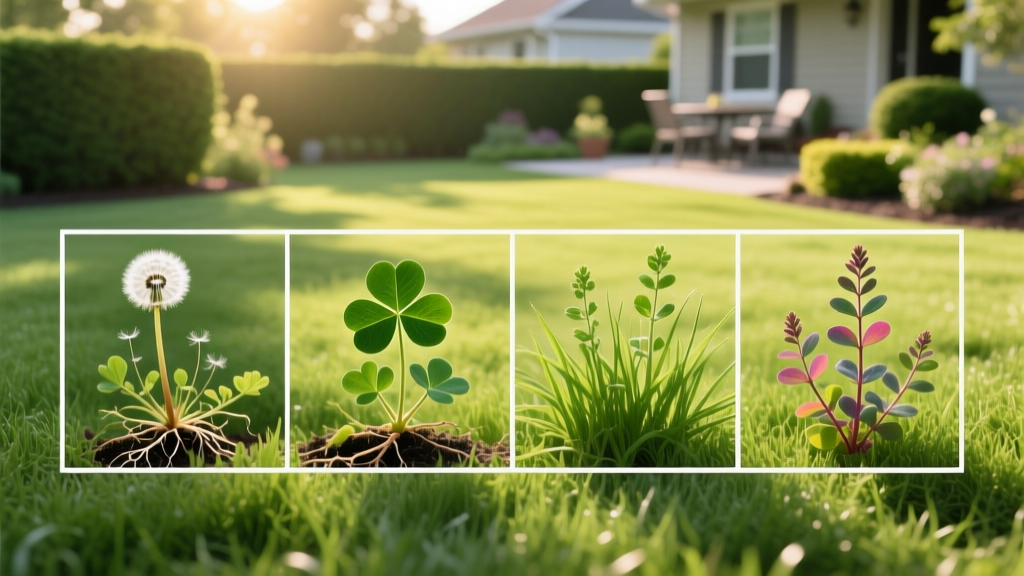
Identify and Spot-Treat 5 Common Lawn Weed Types Fast
The Economics and Ecology of Spot-Treating Weeds
Blanket spraying an entire 5,000-square-foot lawn with post-emergent herbicides is a relic of outdated lawn care practices. Not only does broadcast application waste expensive chemicals, but it also unnecessarily stresses your turfgrass and disrupts soil microbiology. Spot-treating specific weed types allows you to deploy highly targeted active ingredients directly to the foliage of the invader, reducing chemical usage by up to 90% and saving you roughly $30 to $50 per season in product costs.
According to the University of Minnesota Extension, precise identification is the cornerstone of effective weed control. A broadleaf herbicide will do absolutely nothing to a grassy weed, and a sedge-specific chemical will fail against a broadleaf perennial. Understanding the exact botanical classification of the invader dictates the active ingredient, the surfactant requirement, and the optimal soil temperature for application.
5 Common Lawn Weed Types and Their Exact Treatment Protocols
Below is a deep-dive into the five most pervasive weed types found in North American lawns, complete with identification markers and professional-grade chemical solutions.
1. Crabgrass (Digitaria sanguinalis)
Classification: Grassy Annual
Identification: Crabgrass features wide, pale-green leaf blades that grow in a sprawling, star-like pattern from a central root node. It thrives in compacted soil and thin turf, usually germinating when soil temperatures consistently hit 55°F in early spring.
Spot-Treatment Protocol: Once crabgrass has emerged and tillered (spread out), standard 2,4-D herbicides will not kill it. You need Quinclorac. Products like Drive XLR8 (approx. $55 per pint) or consumer-grade Ortho Weed B Gon Plus Crabgrass Control ($18 per 32oz bottle) are highly effective. Apply when the weed is young (1-2 tillers). If it has matured into a thick mat, a second application 14 days later is mandatory.
2. Dandelion (Taraxacum officinale)
Classification: Broadleaf Perennial
Identification: Recognizable by its jagged, deeply lobed leaves forming a basal rosette, and its thick, brittle taproot that can plunge 10 inches into the soil. If the taproot snaps and remains in the ground, the weed will regenerate within weeks.
Spot-Treatment Protocol: Systemic broadleaf herbicides containing a three-way mix of 2,4-D, Dicamba, and MCPP (commonly sold as Trimec) are the gold standard. Priced around $25 per gallon of concentrate, this mixture translocates down into the taproot. Apply in the fall when the plant is actively pulling nutrients into its root system for winter storage, ensuring the chemical is dragged deep into the taproot.
3. Yellow Nutsedge (Cyperus esculentus)
Classification: Sedge (Neither grass nor broadleaf)
Identification: Nutsedge grows 30% faster than surrounding turf in peak summer. The definitive test: roll the stem between your fingers. If it feels distinctly triangular ("sedges have edges"), you have nutsedge. It also produces small, nut-like tubers (nutlets) underground.
Expert Warning: Do not pull nutsedge by hand. Pulling snaps the rhizome, leaving the nutlets in the soil. Each nutlet can generate a new plant, effectively turning one weed into three.
Spot-Treatment Protocol: You must use Halosulfuron-methyl. The industry standard is SedgeHammer+ (approx. $28 for a box of 5 water-soluble packets). As noted by Michigan State University Extension, halosulfuron inhibits amino acid production specifically in sedges. It is slow-acting; expect the nutsedge to yellow and die back over 14 to 21 days.
4. White Clover (Trifolium repens)
Classification: Broadleaf Perennial
Identification: Features three-leaflet (trifoliate) leaves with distinct white, V-shaped watermarks. It spreads via aggressive above-ground stolons and thrives in nitrogen-deficient soils.
Spot-Treatment Protocol: Clover has a waxy leaf cuticle that repels standard herbicides. You need a product containing Quinclorac or Triclopyr. T-Zone SE ($60 per gallon) is a premium choice for stubborn clover. Crucially, you must add a non-ionic surfactant (NIS) to your tank mix to break the surface tension and allow the chemical to adhere to the waxy leaves.
5. Annual Bluegrass (Poa annua)
Classification: Grassy Annual/Short-lived Perennial
Identification: Features distinctive "boat-shaped" (canoe-like) leaf tips and produces a prolific, whitish seed head even when mowed at 2 inches. It turns a lawn into a patchy, yellowish mess in late spring when it dies off.
Spot-Treatment Protocol: Post-emergent control of Poa annua is notoriously difficult because it is genetically very close to desirable turfgrasses. In cool-season lawns (Fescue, Kentucky Bluegrass), Mesotrione (sold as Tenacity, approx. $70 for 8oz) is the only viable spot-treatment. Tenacity bleaches the Poa annua white by inhibiting photosynthesis, eventually killing it. Never use Tenacity on Bermuda, St. Augustine, or Zoysia grass, as it will severely damage warm-season turf.
Active Ingredient Decision Matrix
Use this reference table to ensure you are purchasing the correct chemical for your specific weed types and turfgrass variety.
| Weed Type | Primary Active Ingredient | Commercial Product Example | Safe for Cool-Season Grass? | Safe for Warm-Season Grass? |
|---|---|---|---|---|
| Crabgrass | Quinclorac | Drive XLR8 / Ortho Weed B Gon | Yes | Yes (with caution on St. Aug) |
| Dandelion | 2,4-D + Dicamba + MCPP | Trimec Classic | Yes | Yes |
| Yellow Nutsedge | Halosulfuron-methyl | SedgeHammer+ | Yes | Yes |
| White Clover | Triclopyr / Quinclorac | T-Zone SE | Yes | Check label (some restrictions) |
| Poa Annua | Mesotrione | Syngenta Tenacity | Yes | NO (Causes severe bleaching) |
Precision Mixing and Application Protocol
Professional results require professional mixing. Never eyeball herbicide concentrations; overdosing can burn your surrounding turf, while underdosing creates herbicide-resistant weed biotypes.
- Calibrate Your Sprayer: Use a 1-gallon or 2-gallon pump sprayer for spot treatments. Fill it halfway with clean water.
- Measure the Herbicide: Use a dedicated measuring syringe. For standard 2,4-D amine concentrates, the ratio is typically 1.5 fluid ounces per gallon of water. For SedgeHammer, use one 0.068 oz packet per 1 to 2 gallons.
- Add the Surfactant: Herbicides like SedgeHammer and Tenacity require a Non-Ionic Surfactant (NIS) or a methylated seed oil (MSO). Add 1 teaspoon of NIS (like Prime Source Duo Stick, $30/gallon) per gallon of water. This reduces the droplet size and prevents the chemical from beading up and rolling off the leaf.
- Agitate: Close the sprayer and shake vigorously for 30 seconds to ensure a homogenous emulsion.
- Targeted Application: Spray until the weed leaves are damp, not dripping. Dripping means the chemical is hitting the soil, which is useless for post-emergent foliar herbicides and risks damaging tree roots nearby.
Pro-Tip: The Wind Rule
Never spot-treat when wind speeds exceed 5 mph. Herbicide drift can land on desirable ornamental shrubs, vegetable gardens, or neighboring lawns, causing severe phytotoxicity. Early morning (7:00 AM - 9:00 AM) typically offers the calmest wind conditions and optimal stomatal opening on the weed leaves for maximum chemical absorption.
Never spot-treat when wind speeds exceed 5 mph. Herbicide drift can land on desirable ornamental shrubs, vegetable gardens, or neighboring lawns, causing severe phytotoxicity. Early morning (7:00 AM - 9:00 AM) typically offers the calmest wind conditions and optimal stomatal opening on the weed leaves for maximum chemical absorption.
Organic and Cultural Alternatives for Sensitive Zones
For homeowners managing lawns near waterways, wellheads, or children's play areas, synthetic chemicals may not be viable. The Environmental Protection Agency (EPA) strongly recommends integrated pest management (IPM) and exploring minimum-risk alternatives.
- Iron-Based Herbicides (FeHEDTA): Products like Fiesta or Natria Lawn Weed Control utilize chelated iron. Broadleaf weeds absorb iron to toxic levels, causing cellular rupture and blackening within hours, while monocot grasses naturally regulate iron uptake. Expect to pay around $25 per 32oz ready-to-spray bottle.
- Soil Amendment: Clover and dandelions are indicator species. Clover indicates low soil nitrogen; dandelions indicate compacted, high-pH soil. Applying a dense layer of compost and aerating the soil annually alters the environment, making it hostile to these weed types while promoting thick turfgrass canopy closure.
Post-Treatment Recovery
After a weed dies, it leaves a bare patch of soil. If left untreated, this bare soil will be colonized by new weed seeds within 14 days. Once the spot-treated weed has completely browned (usually 10-14 days post-spray), rake out the dead debris, loosen the top inch of soil with a hand cultivator, and drop 5-10 seeds of your primary turfgrass variety into the space. Keep the spot moist for 7 days to ensure germination and permanent turf reclamation.

