
Lawn Care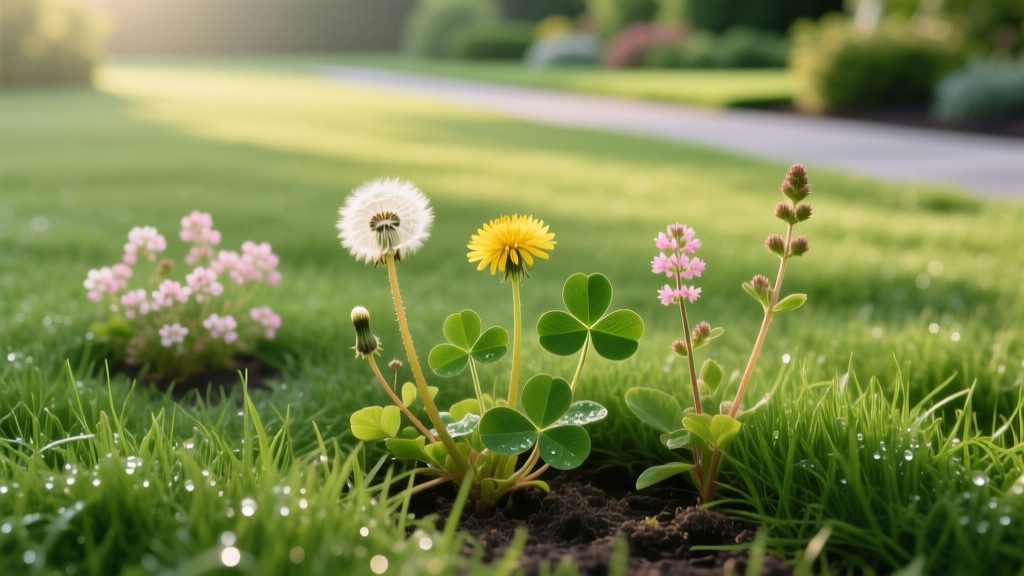
Flowers That Are Weeds: Spot-Treatment Guide for Lawns
The Paradox of Pretty Weeds in Turfgrass
Many homeowners hesitate to eradicate flowering weeds because they add seasonal color and support early-spring pollinators. However, from a turf management perspective, these flowers that are weeds represent a critical threat to lawn density. Species like dandelions, wild violets, and creeping charlie possess aggressive root systems and allelopathic traits that actively suppress turfgrass growth, leading to thin, drought-susceptible lawns that eventually succumb to erosion and crabgrass invasion.
Spot-treating these flowering invaders requires more than a casual spray of generic weed killer. The waxy cuticles, deep taproots, and rhizomatous spreading habits of broadleaf flowering weeds demand precise chemical selection, proper surfactant use, and exact timing. This guide provides a professional-grade framework for identifying and eliminating flowering weeds while preserving your surrounding turf.
Broadleaf Flowering Weed Identification Matrix
Before selecting a treatment, accurately identify the weed. Different root structures dictate whether a contact herbicide or a systemic translocated herbicide is required.
| Weed Species | Flower Color & Season | Root Structure | Primary Active Ingredient | Treatment Difficulty |
|---|---|---|---|---|
| Dandelion (Taraxacum officinale) | Yellow (Spring/Fall) | Deep Taproot (up to 3 ft) | 2,4-D + Dicamba | Low (if systemic) |
| Wild Violet (Viola sororia) | Purple/White (Spring) | Fleshy Rhizomes | Triclopyr | High (requires 2-3 apps) |
| Creeping Charlie (Glechoma hederacea) | Blue/Purple (Spring) | Stolons & Fibrous Roots | Triclopyr + 2,4-D | Medium (timing dependent) |
| White Clover (Trifolium repens) | White/Pink (Summer) | Stolons & Shallow Roots | Quinclorac + Dicamba | Medium (waxy leaf barrier) |
Spot-Treatment Protocols: The Big Four
1. Dandelions: Conquering the Taproot
Dandelions are the most recognizable of all flowers that are weeds. Their survival mechanism is a brittle, deep taproot that stores carbohydrates. If you attempt physical removal, the root inevitably snaps, and the weed regenerates within 14 days. According to Penn State Extension, systemic herbicides containing 2,4-D and Dicamba are highly effective because the plant translocates the chemical down into the taproot.
Actionable Spec: Use a ready-to-spray product like Ortho WeedClear Lawn Weed Killer (approx. $14/gallon). Spray the center rosette until the leaves glisten. Do not spray to the point of runoff, which wastes chemical and increases soil contamination.
2. Wild Violets: Breaking the Waxy Barrier
Wild violets produce beautiful purple or white flowers, but their leaves are coated in a thick, waxy cuticle that causes standard water-based herbicides to bead up and roll off. To kill wild violets, you must use a product containing Triclopyr and pair it with a non-ionic surfactant.
Actionable Spec: Mix 1.5 oz of a Triclopyr-based concentrate (like Ortho Chickweed, Clover & Oxalis Killer) per gallon of water. Add 1 teaspoon of Southern Ag Surfactant (approx. $15/pint) to break the leaf tension. Expect to apply this mixture 2 to 3 times, spaced 14 days apart, to exhaust the rhizome network.
3. Creeping Charlie: The Mint Family Invader
Creeping Charlie (Ground Ivy) features scalloped leaves and a distinct minty odor when crushed. It spreads via above-ground stolons, forming dense mats that choke out cool-season grasses. The University of Minnesota Extension notes that Creeping Charlie is most vulnerable in early autumn.
Pro Tip: Treat Creeping Charlie between September 15 and October 15. During this window, the plant is actively pulling nutrients (and herbicides) down into its root system to prepare for winter, resulting in a 90%+ kill rate compared to spring applications.
4. White Clover: The Nitrogen Indicator
White clover produces classic spherical white flowers. While it fixes atmospheric nitrogen, its aggressive stolon growth creates uneven turf texture and attracts bees to high-traffic lawn areas, posing a stinging hazard. Clover thrives in nitrogen-deficient soils; its presence is a biological indicator that your lawn requires a higher nitrogen fertilization regimen.
Chemical vs. Organic Spot-Treatment Options
Homeowners increasingly seek alternatives to synthetic auxin herbicides. Below is a comparison of the two primary spot-treatment pathways available in 2026.
Option A: Synthetic Auxin Herbicides (2,4-D, Dicamba, Triclopyr)
- Cost: $12 - $25 per gallon of ready-to-use solution.
- Efficacy: 85% - 98% kill rate on mature broadleaf weeds.
- Drawback: Temperature sensitive. Applying when ambient temperatures exceed 85°F causes the chemical to volatilize (turn into a gas) and drift, potentially damaging nearby ornamental shrubs, tomatoes, and flower beds.
Option B: Chelated Iron (FeHEDTA) - The Organic Route
- Cost: $40 - $55 per gallon (e.g., Fiesta Turf Weeder or Natria Lawn Weed Control).
- Efficacy: 70% - 85% kill rate. Works by causing rapid oxidative stress and cellular collapse in broadleaf plants, while turfgrass easily metabolizes the iron and recovers within 48 hours.
- Drawback: Requires 2 applications spaced 14 days apart for perennial weeds like dandelions. Can temporarily stain concrete driveways and sidewalks a rusty brown color if overspray is not immediately washed off.
Step-by-Step Spot-Spraying Technique
Improper application is the leading cause of treatment failure and turf damage. Follow this precise protocol for spot-treating flowers that are weeds:
- Calibrate the Sprayer: Use a 1-gallon or 2-gallon handheld pump sprayer. Ensure the nozzle is set to a fine mist or pin-stream, not a wide fan, to minimize drift onto desirable grass.
- Check the Forecast: Only spray when temperatures are between 60°F and 85°F, wind speeds are under 5 mph, and no rain is forecast for at least 24 hours.
- Mix the Solution: Add water to the tank first, then the herbicide concentrate, then the surfactant. This prevents excessive foaming. Agitate gently.
- Apply to the Rosette: Aim directly at the center crown (rosette) of the weed. Spray just enough for the leaves to glisten. Dripping leaves indicate chemical waste and soil overload.
- Mark the Spot: Place a small landscaping flag or golf tee next to heavily infested areas so you can monitor the die-back process over the next 10-14 days.
Post-Treatment Lawn Recovery
Killing the weed is only half the battle. The dead weed leaves a bare void in the turf canopy that will quickly be colonized by crabgrass or nutsedge if left untreated.
Once the flowering weed has turned completely brown and brittle (usually 14-21 days post-application), use a hand trowel or a stand-up weeder tool to pop out the dead root mass. Fill the resulting divot with a 50/50 mix of topsoil and compost. Overseed the bare spot using a matching turfgrass cultivar. For cool-season lawns, apply Tall Fescue seed at a rate of 4 to 5 lbs per 1,000 square feet, or Kentucky Bluegrass at 1 to 2 lbs per 1,000 square feet. Keep the spot consistently moist for 14 days to ensure germination and canopy closure.
Frequently Asked Questions
Will killing flowering weeds harm local bee populations?
While dandelions and clover provide early-season forage for bees, a dense, healthy turfgrass lawn is not a sustainable pollinator habitat. If you wish to support pollinators, designate a specific 'no-mow' garden bed for native wildflowers rather than allowing invasive weeds to compromise the structural integrity of your lawn.
Can I use vinegar to kill these flowering weeds?
Horticultural vinegar (20% to 30% acetic acid) is a non-selective contact burn-down agent. It will scorch the flowers and leaves of broadleaf weeds, but it will not kill the taproot or rhizomes. Furthermore, it will severely burn any surrounding turfgrass it touches, leaving dead patches in your lawn. Chelated iron (FeHEDTA) is a vastly superior organic alternative for selective spot-treatment.

