
Lawn Care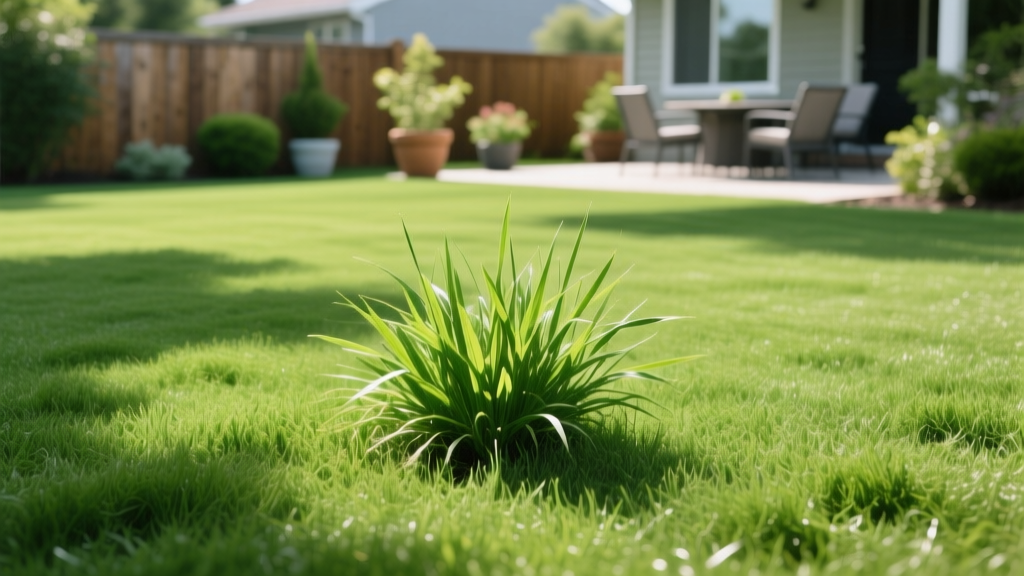
Spot-Treatment Guide for Invasive Grass Weeds in Home Lawns
Grassy weeds are the ultimate lawn imposters. Unlike broadleaf weeds such as dandelions or clover, which succumb quickly to standard 2,4-D or Dicamba sprays, invasive grass weeds share the same biological family as your desirable turf. This biological similarity means that broad-spectrum herbicides will kill your lawn alongside the weed. Effective management requires precise identification, targeted chemistry, and meticulous application techniques. According to turfgrass specialists at NC State University's TurfFiles, misidentifying a grassy weed and applying the wrong selective herbicide is the leading cause of chemical turf damage in home lawns.
The Identification Matrix: 4 Most Common Invasive Grass Weeds
Before mixing any chemicals, you must confirm the exact species. Grassy weeds exhibit distinct morphological traits—specifically in their ligules, auricles, and leaf vernation (how the leaf is folded in the shoot). Use this matrix to narrow down your target.
| Weed Species | Growth Habit | Key Identifying Feature | Primary Turf Threat |
|---|---|---|---|
| Quackgrass (Elymus repens) | Perennial, spreading via rhizomes | Clasping auricles at the collar; flat, rough leaf blades | High: Forms dense, unkillable patches in cool-season lawns |
| Dallisgrass (Paspalum dilatatum) | Perennial, bunch-type with short rhizomes | Distinctive seed head with 3-5 finger-like spikes; rolled vernation | Medium-High: Thrives in wet, compacted warm-season lawns |
| Crabgrass (Digitaria spp.) | Annual, prostrate spreading | Wide, light-green leaves; prominent membranous ligule; roots at nodes | High: Chokes out thin turf during peak summer heat |
| Nimblewill (Muhlenbergia schreberi) | Perennial, spreading via stolons | Short, narrow, grayish-green leaves; turns straw-brown in winter | Medium: Creates unsightly dormant patches in cool-season lawns |
The Chemistry of Spot-Treatment: Selective vs. Non-Selective
Spot-treating invasive grass weeds requires selecting an active ingredient that exploits the metabolic differences between the weed and your desirable turf. As of 2026, homeowners have access to several professional-grade selective herbicides previously restricted to commercial applicators.
Selective Herbicides for Grassy Weeds
- Fluazifop-p-butyl: Found in products like Ortho Grass B Gon or professional Fusilade II. It is highly effective against quackgrass, nimblewill, and bermudagrass. Turf Safety: Safe for most cool-season grasses (Fescue, Kentucky Bluegrass, Ryegrass). Will severely damage or kill St. Augustine and Centipedegrass.
- Fenoxaprop-p-ethyl: The active ingredient in Bayer Advanced Bermudagrass Control. Excellent for suppressing crabgrass and bermudagrass. Turf Safety: Safe for cool-season lawns; toxic to St. Augustine and Centipedegrass.
- Sethoxydim: Available in products like Hi-Yield Grass Killer. Targets annual and perennial grassy weeds. Turf Safety: One of the few selective grassy weed killers safe for Centipedegrass and St. Augustinegrass.
⚠️ CRITICAL WARNING: Temperature and Surfactant Limits
Never apply Fluazifop or Fenoxaprop when ambient temperatures exceed 85°F (29°C). High heat causes the desirable turf's stomata to open wider, increasing herbicide uptake and resulting in severe phytotoxicity (leaf burn). Always include a non-ionic surfactant at a rate of 0.25% to 0.5% v/v (roughly 1/2 teaspoon per gallon of mixed solution) unless the product label explicitly states it contains a built-in adjuvant.
Step-by-Step Spot-Spraying Protocol
Broadcast spraying selective grassy weed killers over an entire lawn is rarely recommended for home users due to the high risk of turf stunting. Spot-treatment requires precision. Follow this protocol to eradicate invasive grass weeds without harming the surrounding desirable turf.
- Calibrate Your Sprayer: Use a dedicated 1-gallon or 2-gallon pump sprayer. Do not use a sprayer previously used for broadleaf killers or non-selective herbicides, as chemical residue will damage your lawn. Spray water onto a 10x10 ft concrete driveway to measure your output rate (aim for 1.5 gallons per 1,000 sq ft).
- Mix the Solution: Fill the tank halfway with water. Add the precise amount of selective herbicide (e.g., Fusilade II requires roughly 0.15 to 0.25 fl oz per 1,000 sq ft for spot treatments). Add the non-ionic surfactant. Fill the rest of the tank with water and agitate gently.
- Attach a Spray Shield: Snap a plastic cone shield onto your sprayer wand. This prevents wind drift from carrying the herbicide mist onto desirable, sensitive grass blades nearby.
- Target the Weed Center: Hold the wand 12 to 18 inches above the weed. Apply a steady, even mist directly over the invasive grass clump until the leaves are wet but not dripping. Over-application leads to soil saturation and root uptake by surrounding desirable grass.
- Monitor and Retreat: Selective grassy weed killers are slow-acting. Fluazifop takes 7 to 14 days to show yellowing and 21 to 28 days for complete necrosis. Do not reapply for at least 14 days. Most perennial grassy weeds (like Quackgrass) require a second application 21 days after the first to kill the deep rhizome network.
The 'Paintbrush Method' for High-Risk Zones
When invasive grass weeds like Dallisgrass or Nimblewill are growing directly intertwined with highly sensitive turf (or near flower beds), spraying is too risky. According to weed management guidelines from Penn State Extension, wick application or the paintbrush method is the safest alternative.
Mix a 2% solution of non-selective glyphosate (e.g., 2.6 fl oz of 41% glyphosate per gallon of water). Dip a foam paintbrush or a specialized wick applicator into the solution, wiping off excess to prevent dripping. Carefully paint the herbicide directly onto the leaves of the invasive grass weed. The glyphosate will translocate down to the roots, killing the weed systemically without touching the surrounding soil or desirable turf.
Post-Treatment Renovation and Pre-Emergent Defense
Spot-treating invasive grass weeds leaves bare patches in your lawn. If left empty, these patches will be immediately colonized by new weed seeds. You must renovate the soil and establish a chemical barrier.
Renovation Steps
- Week 4 (Post-Necrosis): Once the treated grassy weed is completely brown and dead, use a hand rake to aggressively dethatch the dead material down to the bare soil.
- Soil Amendment: Apply a 1/4 inch layer of compost to the bare spot to restore microbial activity disrupted by the herbicide.
- Overseed: Sow premium turf-type tall fescue or Kentucky bluegrass seed at a rate of 6 to 8 lbs per 1,000 sq ft. Keep the area consistently moist for 14 days.
Pre-Emergent Cost and Application Matrix
To prevent annual invasive grass weeds (like Crabgrass and Goosegrass) from returning the following spring, a pre-emergent herbicide is mandatory. The industry standard for home lawns is Prodiamine 65 WDG. As of 2026, a 5 oz bottle of generic Prodiamine 65 WDG retails for approximately $85, which is enough to treat a 10,000 sq ft lawn for an entire year, bringing the cost down to roughly $0.008 per square foot.
| Target Weed | Application Timing (Soil Temp) | Prodiamine 65 WDG Rate (per 1,000 sq ft) | Water-In Requirement |
|---|---|---|---|
| Crabgrass | Early Spring (50°F - 55°F at 2-inch depth) | 0.18 oz to 0.23 oz | 0.25 inches of irrigation within 48 hours |
| Goosegrass | Mid-Spring (60°F - 65°F at 2-inch depth) | 0.23 oz to 0.30 oz | 0.25 inches of irrigation within 48 hours |
| Poa Annua | Late Summer (Soil temps dropping below 70°F) | 0.23 oz to 0.35 oz | 0.25 inches of irrigation within 48 hours |
Frequently Asked Questions
- Can I pull invasive grass weeds by hand instead of spraying?
- Hand-pulling is only effective for annual weeds with shallow roots, like young crabgrass. Perennial invasive grass weeds like Quackgrass and Bermudagrass spread via deep, brittle rhizomes. If even a half-inch of rhizome is left in the soil, the weed will regenerate within two weeks. Chemical translocation is required to kill the entire root system.
- Why did my lawn turn yellow after using a selective grassy weed killer?
- Selective herbicides like Fluazifop work by inhibiting the ACCase enzyme, which is crucial for lipid synthesis in grassy weeds. While cool-season turfgrass can metabolize and detoxify the chemical, the process causes temporary chlorosis (yellowing). This 'chemical stress' usually resolves in 10 to 14 days. Applying a liquid kelp extract or amino acid biostimulant can accelerate the turf's recovery.
- Is it safe to spot-treat invasive grass weeds during a drought?
- No. During drought conditions, both the weed and the desirable turf are under environmental stress. The weed's stomata will close to conserve water, preventing the herbicide from entering the leaf tissue. Furthermore, the desirable turf's reduced metabolic rate will prevent it from detoxifying any accidental drift, leading to severe, long-lasting turf damage. Always wait for adequate soil moisture and moderate temperatures before applying herbicides.

