
Lawn Care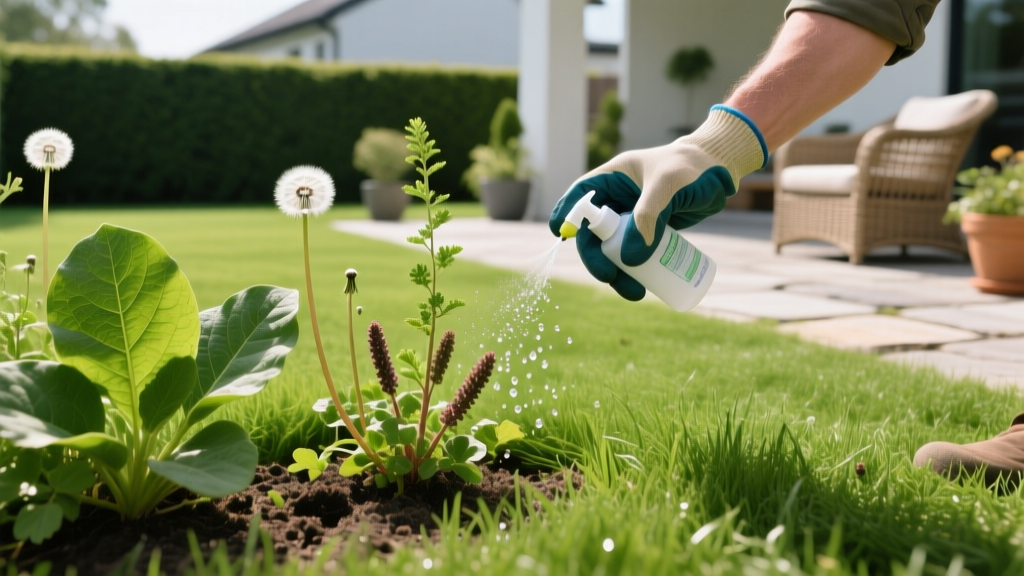
Spot-Treatment Guide for Common Large Leaf Weeds in Lawns
Large leaf weeds, scientifically categorized as broadleaf weeds with prominent, wide-bladed foliage, are among the most aggressive competitors in residential turfgrass. Unlike grassy weeds that blend in until they seed, large leaf weeds like broadleaf plantain, common mallow, and dandelion disrupt the uniform canopy of your lawn, hoarding sunlight, water, and soil nutrients. Because they possess entirely different cellular structures and growth hormones than cool- and warm-season turfgrasses, they require highly specific spot-treatment protocols to eradicate without collateral damage to your surrounding lawn.
This guide details the exact identification markers, chemical active ingredients, and mechanical extraction techniques required to eliminate large leaf weeds effectively in the 2026 turf management landscape.
Identifying the Most Common Large Leaf Weeds
Accurate identification is the prerequisite for effective treatment. The waxy cuticle thickness and root structure of the weed dictate whether you need a systemic herbicide, a contact burner, or manual extraction. Below is a diagnostic matrix for the most prevalent large leaf invaders.
| Weed Species | Leaf Characteristics | Root System | Primary Vulnerability |
|---|---|---|---|
| Broadleaf Plantain (Plantago major) | Wide, oval, deeply ribbed parallel veins, low rosette growth. | Shallow, fibrous, dense crown. | Susceptible to 2,4-D and Dicamba combinations. |
| Common Mallow (Malva neglecta) | Large, rounded, scalloped edges, velvety texture, alternate branching. | Deep, tough taproot with lateral branching. | Requires Triclopyr for systemic root kill; waxy leaf resists weak solutions. |
| Dandelion (Taraxacum officinale) | Deeply lobed, jagged edges, forms a flat basal rosette. | Thick, brittle, deep taproot (up to 10 inches). | Vulnerable to systemic herbicides in fall; manual extraction if taproot is fully removed. |
| Wild Violet (Viola papilionacea) | Heart-shaped, large, dark green, smooth margins. | Rhizomes and fibrous secondary roots. | Highly resistant to 2,4-D; requires Triclopyr or Quinclorac. |
Selective vs. Non-Selective Herbicide Chemistry
When spot-treating large leaf weeds, the goal is to use selective post-emergent herbicides that target the broadleaf's auxin (growth hormone) pathways, causing them to grow themselves to death, while leaving the monocot turfgrass unharmed. According to University of Minnesota Extension, timing and active ingredient selection are the two highest determinants of success.
The "Big Three" Active Ingredients
- 2,4-D (Amine or Ester): The foundational broadleaf killer. Excellent for plantain and dandelion. Amine formulations are safer in high heat; ester formulations (like SpeedZone Southern) penetrate waxy leaves faster but carry volatilization risks.
- Dicamba: Often mixed with 2,4-D to broaden the spectrum. It moves through the soil slightly, making it effective against weeds with shallow lateral root systems.
- Triclopyr: The heavy hitter for stubborn, waxy, or woody large leaf weeds like common mallow, wild violet, and ground ivy. If a product lacks Triclopyr, it will likely fail against these specific species.
⚠️ Temperature & Volatilization Warning: Never apply ester-based herbicides (e.g., SpeedZone, Trimec Ester) when ambient temperatures exceed 85°F. The chemicals will vaporize and drift, severely damaging nearby desirable broadleaf plants, shrubs, and even your turf. Stick to amine-based formulations (e.g., Ortho WeedClear, Trimec Amine) for summer spot-treatments.
Step-by-Step Chemical Spot-Treatment Protocol
Broadcast spraying your entire lawn for a few scattered large leaf weeds is a waste of chemicals and increases environmental runoff. Spot-treating requires precision. Follow this exact protocol for optimal kill rates.
- Calibrate Your Sprayer: Use a 1-gallon or 2-gallon pump sprayer equipped with a flat fan nozzle (not a cone nozzle). A flat fan provides a uniform, directed sheet of liquid that minimizes drift onto desirable grass.
- Add a Non-Ionic Surfactant: Large leaf weeds like mallow and plantain have thick, waxy cuticles that cause water-based herbicides to bead up and roll off. Add 0.25% to 0.5% v/v of a non-ionic surfactant (roughly 1/2 teaspoon per gallon of mix). This breaks the surface tension, allowing the chemical to spread and penetrate the leaf stoma.
- Mix the Solution: For a standard Triclopyr/2,4-D/Dicamba concentrate (like T-Zone SE or SpeedZone), the typical spot-treatment rate is 1.5 to 2.0 fluid ounces per gallon of water. This treats approximately 1,000 square feet. Always read the specific label for your turfgrass type, as St. Augustine and Centipede grasses are highly sensitive to 2,4-D.
- Apply to the Point of Runoff: Spray the large leaf weed until the leaves are visibly wet and glistening, but stop before the liquid drips onto the soil. Systemic herbicides are absorbed through the foliage, not the roots.
- Observe the Mowing Window: Do not mow for 48 hours before application (to maximize leaf surface area) and wait at least 48 hours after application to allow the herbicide to translocate down into the root crown.
Organic and Mechanical Eradication Tactics
For homeowners managing organic lawns, or for weeds growing in tight spaces near vegetable gardens where chemical drift is unacceptable, mechanical and organic spot-treatments are necessary. Penn State Extension notes that while organic methods require more labor, they are highly effective when targeted at the root zone.
Manual Extraction Tools
Pulling large leaf weeds by hand often leaves the taproot or crown behind, resulting in regrowth within 14 days. Invest in specialized extraction tools:
- Fiskars Stand-Up Weeder ($35 - $45): Features a serrated stainless steel claw that grabs the root crown of plantain and dandelions without requiring you to bend over. Best for deep taproots in moist soil.
- Grandpa's Weeder ($30 - $40): A long-handled, foot-lever tool that pins the weed and extracts the root vertically. Excellent for minimizing soil disruption in established lawns.
Horticultural Vinegar (Acetic Acid)
Standard 5% kitchen vinegar is useless against mature large leaf weeds. You must use 20% to 30% horticultural vinegar (acetic acid). This is a non-selective contact burner. It will destroy the cell walls of the large leaves within hours, causing rapid desiccation. Warning: It will also kill your turfgrass on contact. Use this only for large leaf weeds growing in driveway cracks, sidewalk pavers, or gravel beds. Apply on a hot, sunny day with a shielded spray wand to protect surrounding grass.
Post-Treatment Lawn Recovery and Prevention
Eradicating the weed is only half the battle. Large leaf weeds are opportunistic; they germinate and thrive in compacted soil, low-nitrogen environments, and thin turf canopies. Once the weed turns brown and dies (usually 7 to 14 days post-treatment), you must repair the void.
Overseeding and Fertilization
Rake out the dead weed debris to expose the soil. Apply a starter fertilizer (such as a 18-24-12 NPK ratio) at a rate of 4 lbs per 1,000 sq ft, and drop 5 to 8 grass seeds per square inch into the bare spot. Keep the area consistently moist for 14 days to ensure germination. A dense, aggressively growing turfgrass canopy naturally shades the soil, preventing new large leaf weed seeds from receiving the UV light required for germination.
Aeration for Soil Compaction
Broadleaf plantain is a primary indicator species for heavily compacted soil. If your lawn is overrun with plantain, chemical treatments will only provide temporary relief. You must perform core aeration in the fall (for cool-season grasses) or late spring (for warm-season grasses) to pull 3-inch soil plugs, relieving compaction and allowing turf roots to outcompete the weeds for subsurface resources.

