
Lawn Care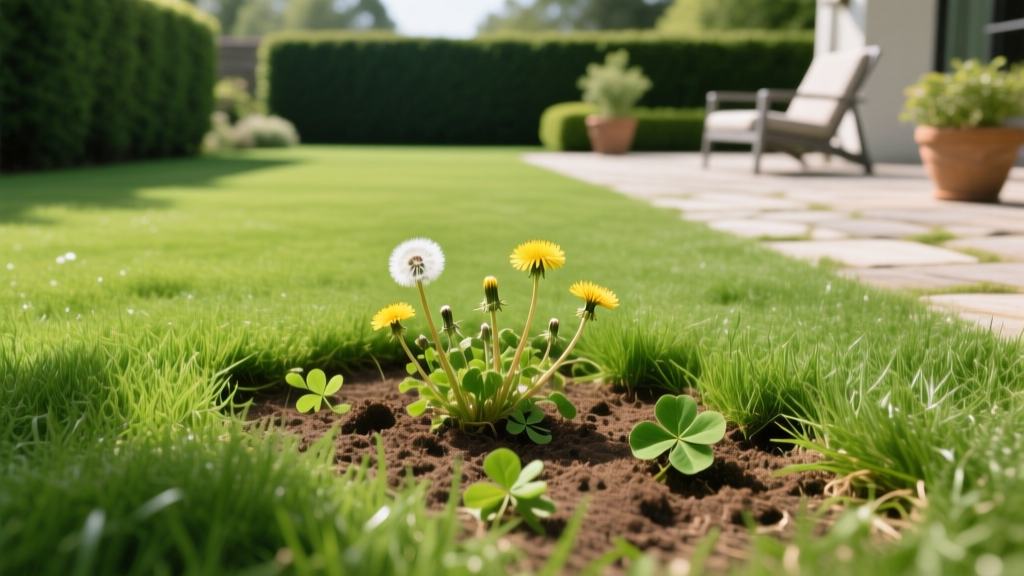
Spot-Treatment Guide: Eradicating Common Weeds in Lawns
Broadcast spraying an entire 10,000-square-foot lawn to eradicate a few isolated weed patches is an inefficient use of chemicals, money, and time. When managing common weeds in lawns, targeted spot-treatment reduces environmental impact, preserves soil microbiology, and cuts herbicide costs by up to 85% compared to blanket applications. However, spot-treating requires precise identification and exact chemical calibration; applying a broadleaf herbicide to a grassy weed will only waste product and stress the surrounding turf.
The Spot-Treatment Decision Matrix
Before mixing any chemicals, you must categorize the invader. Weeds are divided into three primary biological categories, each requiring a distinct mode of action. Use this matrix to select the correct active ingredient for your specific target.
| Weed Category | Target Species Examples | Primary Active Ingredient | Commercial Product Example |
|---|---|---|---|
| Broadleaf | Dandelion, White Clover, Plantain | 2,4-D + Dicamba + MCPP | SpeedZone, Trimec Southern |
| Grassy | Crabgrass, Goosegrass, Poa Annua | Quinclorac | Drive XLR8, Quincept 500 |
| Sedge | Yellow Nutsedge, Purple Nutsedge, Kyllinga | Halosulfuron-methyl | SedgeHammer, Prosedge |
Broadleaf Invaders: Dandelions and White Clover
Broadleaf weeds possess a vascular system that readily absorbs systemic herbicides like 2,4-D and Dicamba. According to the UC Statewide IPM Program, dandelions (Taraxacum officinale) develop taproots that can penetrate 6 to 12 inches into compacted turf soils. If you only kill the crown and leave the taproot, the weed will regenerate within 14 days.
Mixing Protocol for Broadleaf Spot-Treatment:
For a standard 1-gallon pump sprayer targeting isolated dandelions and clover, mix 1.5 fluid ounces of a 3-way ester herbicide (like SpeedZone) per gallon of water. This rate treats exactly 1,000 square feet. Because you are only spot-treating a 50-square-foot cluster, you will use roughly 1/10th of an ounce of product, costing pennies per application.
For a standard 1-gallon pump sprayer targeting isolated dandelions and clover, mix 1.5 fluid ounces of a 3-way ester herbicide (like SpeedZone) per gallon of water. This rate treats exactly 1,000 square feet. Because you are only spot-treating a 50-square-foot cluster, you will use roughly 1/10th of an ounce of product, costing pennies per application.
Ester formulations of 2,4-D are preferred over amine formulations for spot treatments in cooler spring or fall weather (below 70°F) because esters penetrate the waxy leaf cuticle of mature broadleaf weeds much faster. However, avoid ester applications when daytime temperatures exceed 85°F to prevent vapor drift, which can scorch nearby ornamental shrubs and desirable turfgrass.
Grassy Weeds: Crabgrass and the Tiller Stage
Grassy weeds are biologically similar to your desirable turf, making selective eradication difficult. Crabgrass (Digitaria sanguinalis) is the most pervasive annual grassy weed in North American lawns. The efficacy of Quinclorac, the industry-standard active ingredient for post-emergent crabgrass control, is entirely dependent on the weed's growth stage.
Quinclorac works exceptionally well on crabgrass before it reaches the 4th tiller stage (when the plant has produced four distinct lateral shoots from the base). Once crabgrass matures past this stage, it develops a thick, waxy cuticle and extensive lateral roots, requiring two applications spaced 21 days apart for complete control. Penn State Extension recommends adding a methylated seed oil (MSO) or a high-quality non-ionic surfactant (NIS) to Quinclorac mixes to break down this mature waxy barrier.
Warning: Temperature Restrictions
Never apply Quinclorac when ambient temperatures exceed 85°F. High heat causes the herbicide to translocate too rapidly, leading to severe phytotoxicity (yellowing and necrosis) in desirable cool-season grasses like Kentucky Bluegrass and Tall Fescue. Schedule applications for early morning when temperatures are below 80°F.
Never apply Quinclorac when ambient temperatures exceed 85°F. High heat causes the herbicide to translocate too rapidly, leading to severe phytotoxicity (yellowing and necrosis) in desirable cool-season grasses like Kentucky Bluegrass and Tall Fescue. Schedule applications for early morning when temperatures are below 80°F.
The Sedge Nightmare: Yellow Nutsedge
Yellow nutsedge (Cyperus esculentus) is frequently misidentified as a grassy weed due to its light-green, grass-like appearance. However, sedges have solid, triangular stems ("sedges have edges") and are immune to both broadleaf and standard grassy weed herbicides. As noted by NC State University TurfFiles, nutsedge reproduces primarily through underground tubers called "nutlets," with a single plant capable of producing hundreds of nutlets in a single season.
To spot-treat nutsedge, you must use a sulfonylurea herbicide, specifically Halosulfuron-methyl. This chemical inhibits the ALS enzyme, halting amino acid synthesis in the sedge while remaining safe for almost all warm- and cool-season turfgrasses.
Nutsedge Spot-Treatment Specifics
- Product: SedgeHammer (Halosulfuron-methyl 75%)
- Rate: One 0.9-gram water-soluble packet per 1 to 2 gallons of water.
- Adjuvant: The packet includes a built-in surfactant, but adding an extra 1/4 teaspoon of NIS per gallon accelerates foliar absorption.
- Timing: Apply when nutsedge is actively growing and has 3 to 5 visible leaves. Do not mow for 2 days before and 2 days after application.
Step-by-Step Spot-Spraying Protocol
Proper calibration prevents herbicide burn and ensures the chemical reaches the weed's crown. Follow this exact sequence for all spot-treatments:
- Calibrate the Sprayer: Fill a 1-gallon hand-pump sprayer with plain water. Spray a 100-square-foot area (e.g., 10x10 ft) at a steady walking pace. Measure how much water remains. If you used 0.5 gallons, your output is 2 gallons per 1,000 sq ft. Adjust your chemical mixing ratio based on this exact output.
- Add Water First: Always fill the sprayer halfway with water before adding the herbicide. This prevents the chemical from foaming excessively and ensures proper dilution.
- Include the Surfactant: Add your non-ionic surfactant (NIS) at a rate of 0.25% v/v (roughly 1/3 teaspoon per gallon). Surfactants reduce the surface tension of water, allowing the droplets to spread across the leaf surface rather than beading up and rolling onto the soil.
- Target the Crown: Do not just mist the top of the leaves. Use a solid stream or coarse spray pattern to thoroughly coat the foliage down to the base (crown) of the weed where new growth originates.
- Mark the Spot: Place a small landscaping flag or a dab of non-toxic paint on a nearby rock to mark the treated area. This prevents accidental double-application if multiple household members are managing the yard.
"The most common failure in spot-treatment isn't the wrong chemical; it's the wrong droplet size. A fine mist drifts away in the wind and fails to penetrate the weed canopy. Always use a coarse spray nozzle for targeted weed control."
Cost Analysis: Spot-Treatment vs. Broadcast Applications
Transitioning from broadcast to spot-treatment yields immediate financial dividends. Below is a cost breakdown comparing a full-yard broadcast application versus targeted spot-treatment for a standard 5,000-square-foot lawn dealing with isolated weed outbreaks in 2026.
| Application Method | Herbicide Required | Estimated Cost | Time Investment |
|---|---|---|---|
| Broadcast (Full Lawn) | ~7.5 oz (3-Way Ester) | $18.50 - $25.00 | 45 - 60 minutes |
| Spot-Treatment (500 sq ft total) | ~0.75 oz (3-Way Ester) | $1.80 - $2.50 | 10 - 15 minutes |
| Specialty Sedge (Nutsedge) | 1 Sachet (0.9g) | $12.00 - $15.00 | 5 - 10 minutes |
By reserving specialized, higher-cost chemicals like Halosulfuron-methyl exclusively for spot-treatments, homeowners can extend a single box of SedgeHammer sachets across multiple seasons, dramatically lowering the annual cost of turf maintenance while maintaining a pristine, weed-free landscape.

