
Lawn Care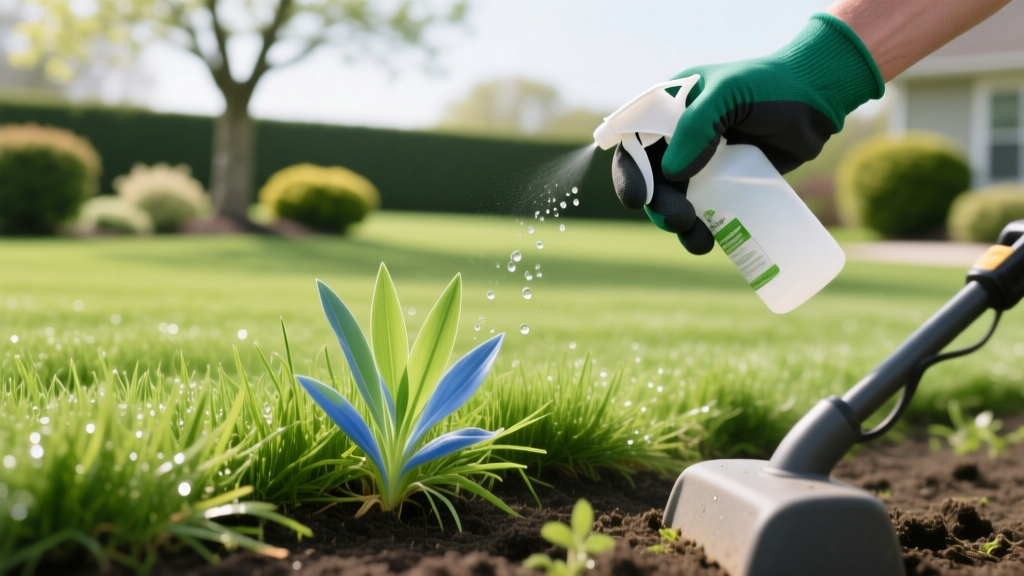
Targeted Grass Weed Prevention: Spot-Treating Grassy Weeds Early
The Shift from Blanket Sprays to Targeted Grass Weed Prevention
Historically, homeowners relied on blanket pre-emergent applications across the entire lawn to stop grassy weeds. While effective, this approach wastes active ingredients, increases soil chemical load, and disrupts the soil microbiome in areas where weeds are unlikely to germinate. Modern turfgrass management emphasizes targeted grass weed prevention—specifically, mapping high-risk microclimates and utilizing early post-emergent spot-treatments to eliminate grassy weeds before they tiller and spread.
Grassy weeds like crabgrass (Digitaria spp.), dallisgrass (Paspalum dilatatum), and annual bluegrass (Poa annua) share a critical vulnerability: they are easiest to eradicate during their first two weeks of emergence. By combining localized pre-emergent barriers with precise early post-emergent spot-treatments, you can achieve superior control while reducing overall herbicide volume by up to 40%.
Mapping Microclimates: Where Grassy Weeds Emerge First
Grassy weeds do not germinate uniformly. Soil temperature and moisture dictate emergence, meaning your lawn will have distinct 'hot zones' where weeds break through weeks before the rest of the yard. According to Purdue University Turfgrass Science, crabgrass requires a soil temperature of 55°F to 60°F at a 2-inch depth for three consecutive days to initiate germination.
Pro Tip: Use a Soil Thermometer
Do not rely on ambient air temperature or smartphone weather apps. Purchase a digital soil probe thermometer and measure the top 2 inches of soil in south-facing slopes, along concrete driveways, and near heated foundations. These areas will hit the 55°F threshold up to three weeks before the shaded center of your lawn.
Do not rely on ambient air temperature or smartphone weather apps. Purchase a digital soil probe thermometer and measure the top 2 inches of soil in south-facing slopes, along concrete driveways, and near heated foundations. These areas will hit the 55°F threshold up to three weeks before the shaded center of your lawn.
High-Risk Zones for Spot-Prevention
- Hardscape Edges: Driveways, sidewalks, and patios radiate heat, accelerating soil warming and creating ideal germination beds for crabgrass.
- Compacted Pathways: Areas with heavy foot traffic or poor aeration favor Poa annua and goosegrass, which thrive in low-oxygen soils where desirable turf roots struggle.
- Thin Canopy Areas: Underneath trees where turf is thin, sunlight reaches the soil surface, triggering photosynthesis in weed seeds.
Identifying the Big Three: A Spot-Treatment Matrix
Accurate identification at the seedling stage is critical for selecting the correct active ingredient. Misidentifying a grassy weed can lead to ineffective treatments and wasted chemical.
| Weed Species | Seedling Identification | Germination Temp | Optimal Spot-Treatment Window |
|---|---|---|---|
| Crabgrass | Broad, pale green leaves; distinct white/purple base; prostrate growth habit. | 55°F - 60°F (Spring) | 1 to 2-leaf stage (pre-tillering) |
| Dallisgrass | Folded vernation; prominent membranous ligule; rapid vertical growth. | 60°F - 65°F (Late Spring) | 3 to 5-leaf stage (requires MSMA or sequential quinclorac) |
| Poa Annua | Boat-shaped leaf tips; crinkled leaves; shallow white root system. | 50°F - 65°F (Fall) | Fall pre-emergent or early winter post-emergent |
Early Post-Emergent Spot-Treatment Protocols
When a pre-emergent barrier fails or was not applied, early post-emergent spot-treatment is your best defense. The goal is to target the weed while it is young and metabolically active, drawing the systemic herbicide down to the roots before the plant develops a thick, waxy cuticle.
Step 1: Select the Right Chemistry for Your Turf Type
Your turfgrass species dictates which active ingredients are safe for spot-treatment. Applying the wrong chemical will result in severe phytotoxicity.
- Cool-Season Lawns (Fescue, Bluegrass, Ryegrass): Mesotrione (Tenacity) is the gold standard for early crabgrass suppression and post-emergent control. It acts as a bleaching herbicide, inhibiting photosynthesis in the weed while remaining safe for most cool-season grasses.
- Warm-Season Lawns (Bermuda, Zoysia, St. Augustine): Quinclorac (Drive XLR8) or Topramezone (Pylex) are highly effective. Note: Quinclorac can cause temporary stunting in St. Augustine and Centipede grass if applied during high heat.
Step 2: Precision Calibration and Application
Spot-treating requires a dedicated 1-gallon or 2-gallon pump sprayer. Do not use a hose-end sprayer for targeted grass weed prevention, as the dilution ratio is impossible to control accurately.
- Calculate the Area: Measure the length and width of the weed patch. (e.g., a 10 ft x 10 ft driveway edge = 100 sq ft).
- Mix the Solution: For Mesotrione (40% active ingredient), the standard rate is 0.33 fluid ounces per 1,000 sq ft. For a 100 sq ft spot treatment, you need roughly 0.033 fl oz (approx. 1 mL) mixed into 1 quart of water.
- Add a Surfactant: Grassy weeds have hydrophobic leaf surfaces. Add a Non-Ionic Surfactant (NIS) at a rate of 0.25% v/v (roughly 1/2 teaspoon per gallon of water) to break the surface tension and ensure the herbicide adheres to the leaf.
- Spray to Wetness: Apply a fine mist until the weed leaves are uniformly wet, but not dripping. Avoid spraying the surrounding desirable turf if using a non-selective or marginally selective chemical.
Warning: The Bleaching Effect
When using Mesotrione on cool-season lawns, the targeted crabgrass and broadleaf weeds will turn stark white within 5 to 7 days. This is a sign the herbicide is working. However, desirable Kentucky Bluegrass may also experience temporary whitening of the leaf tips. This is normal and will grow out within two mowing cycles. Do not reapply to 'fix' the white weeds.
When using Mesotrione on cool-season lawns, the targeted crabgrass and broadleaf weeds will turn stark white within 5 to 7 days. This is a sign the herbicide is working. However, desirable Kentucky Bluegrass may also experience temporary whitening of the leaf tips. This is normal and will grow out within two mowing cycles. Do not reapply to 'fix' the white weeds.
2026 Product Arsenal & Cost Breakdown
Investing in professional-grade concentrates is vastly more economical than purchasing ready-to-spray consumer products, which are mostly water and weak active ingredients. Below is the current professional-grade lineup for targeted grass weed prevention.
| Product Name | Active Ingredient | Avg. Price | Cost per 1,000 sq ft | Best Use Case |
|---|---|---|---|---|
| Syngenta Tenacity | Mesotrione (40%) | $65 / 4 oz | $0.54 | Cool-season early post-emergent crabgrass |
| BASF Drive XLR8 | Quinclorac (18.92%) | $140 / 0.5 gal | $0.85 | Warm-season & mature crabgrass control |
| Corteva Dimension 2EW | Dithiopyr | $160 / 2.5 gal | $0.60 | Pre-emergent with early post-emergent (1-tiller) activity |
| Bayer Tribute Total | Foramsulfuron + Halosulfuron + Thiencarbazone | $110 / 5.3 oz | $1.20 | Bermuda/Zoysia dallisgrass and goosegrass spot-treatment |
Cultural Prevention: Outcompeting the Weeds
Chemical spot-treatments are only half of a successful grass weed prevention strategy. Penn State Extension notes that a dense turf canopy intercepts 95% of sunlight, preventing weed seeds from receiving the photoblastic trigger required for germination. Implement these cultural practices to make your lawn inherently hostile to grassy weeds:
- Elevate Mowing Heights: Maintain cool-season grasses at 3.5 to 4.0 inches during the summer stress months. Research from NC State University Turfgrass demonstrates that mowing Tall Fescue at 4.0 inches reduces crabgrass encroachment by over 70% compared to lawns mowed at 2.5 inches.
- Deep, Infrequent Irrigation: Grassy weeds like crabgrass have shallow root systems and thrive on frequent, light watering. Water your lawn deeply (0.5 to 0.75 inches per session) only 2 to 3 times a week to force desirable turf roots deep while starving shallow weed seedlings.
- Late-Summer Nitrogen Restriction: Avoid heavy nitrogen applications in late spring and early summer. Pushing rapid, succulent top-growth during peak crabgrass germination weakens the turf's cell walls and depletes carbohydrate reserves needed for summer survival.
Frequently Asked Questions
Can I mix pre-emergent and post-emergent herbicides in the same sprayer for a spot-treatment?
Yes, tank-mixing is common, but only if the chemicals are compatible. A popular strategy is mixing Dimension (Dithiopyr) with Tenacity (Mesotrione). The Dimension provides a localized pre-emergent barrier to stop new seeds, while the Tenacity kills the existing 1-to-2 leaf seedlings. Always check the product labels for specific tank-mix compatibility and surfactant requirements before combining.
Why did my spot-treatment fail on mature crabgrass?
Once crabgrass reaches the 4-tiller stage (usually by mid-summer), it develops a thick, waxy cuticle and a massive root system that resists systemic herbicides. At this stage, spot-treatment with Quinclorac or even a non-selective herbicide like Glyphosate (followed by immediate spot-seeding) is more effective than trying to salvage the patch with selective chemistry.

