
Lawn Care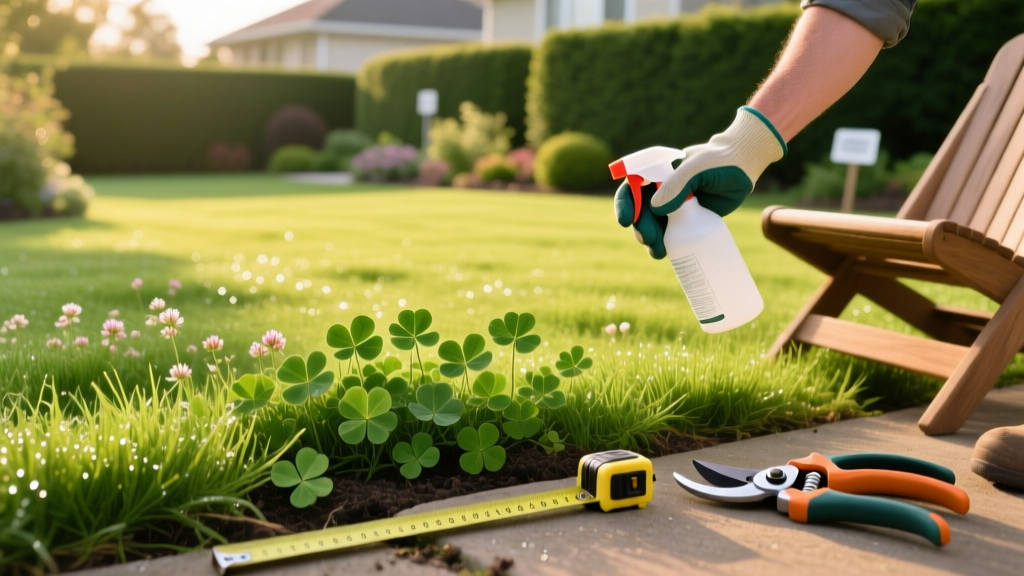
Reclaiming Your Lawn: Spot-Treatment Guide for Clover Yards
The Clover Yard Dilemma: Eco-Asset or Turf Weed?
Clover yards have surged in popularity as drought-tolerant, pollinator-friendly alternatives to traditional turfgrass. However, boundary disputes between eco-lawns and high-visibility turf zones are common. Whether you inherited a clover yard and want to reclaim your Kentucky Bluegrass, or you are managing a mixed eco-lawn where aggressive white clover is choking out your fine fescue, broadcast spraying is a destructive and inefficient solution. Targeted spot-treatment preserves your soil microbiome, protects non-target pollinators, and drastically reduces chemical costs.
This guide provides a professional-grade framework for identifying, treating, and rehabilitating turf in clover yards, utilizing 2026 herbicide formulations and precision application techniques.
Identifying Your Clover Species
Before selecting a spot-treatment protocol, you must accurately identify the intruder. Misidentifying wood sorrel (Oxalis) as true clover will lead to treatment failure, as Oxalis requires entirely different active ingredients.
| Species | Leaf Structure | Flower Color | Growth Habit | Primary Herbicide Target |
|---|---|---|---|---|
| White Clover (Trifolium repens) | Three oval leaflets with white V-marks | White to pale pink | Above-ground stolons | Triclopyr, FeHEDTA |
| Microclover (T. repens var. Pirouette) | Smaller three leaflets, less v-marking | White, sparse | Dense, low stolons | FeHEDTA (requires higher rates) |
| Oxalis (Wood Sorrel / False Clover) | Three heart-shaped leaflets | Bright yellow | Upright stems, taproot/bulbs | Sulfentrazone, 2,4-D |
Decision Framework: Keep, Convert, or Eradicate?
- Keep (Eco-Lawn): If clover covers >60% of the yard, stop fighting it. Overseed with microclover and fine fescue to create a stable, low-maintenance eco-lawn.
- Convert (Mixed Turf): If clover is 20-40%, use iron-based spot treatments to thin the clover, allowing existing grass to fill the void.
- Eradicate (High-Visibility Zones): For front yards or play areas where pure turf is desired, use synthetic selective herbicides followed by aggressive core aeration and overseeding.
Iron-Based Herbicides: The Organic Spot-Treatment Standard
For homeowners managing clover yards who want to avoid synthetic chemicals, Chelated Iron (FeHEDTA) is the undisputed standard. Marketed primarily under the brand name Fiesta by Nufarm, FeHEDTA exploits the physiological differences between broadleaf weeds and grasses. Clover absorbs the iron rapidly, leading to cellular necrosis and tissue desiccation within hours, while turfgrass safely metabolizes the excess iron.
Application Specifications for FeHEDTA
- Cost: Approximately $45 to $55 per gallon of concentrate (yields up to 10,000 sq ft of spot-treatment coverage).
- Mixing: No surfactant required. Mix at 20% v/v (approx. 2.5 oz per gallon of water) for spot treatments.
- Temperature Constraints: Apply when daytime temperatures are between 50°F and 75°F. Applications above 80°F risk phytotoxicity (leaf burn) to surrounding cool-season grasses.
- Re-treatment: White clover stores energy in its stolon nodes. A single application will burn the foliage, but the stolons will resprout. You must apply a second spot-treatment exactly 21 days later to exhaust the root reserves.
Synthetic Spot-Treatments for Stubborn Clover Yards
When dealing with deeply established clover yards or aggressive Oxalis infestations, synthetic selective herbicides provide a more definitive kill. The most effective formulation for true clover is a three-way blend of 2,4-D, Dicamba, and Triclopyr (commonly sold as Trimec or Ortho WeedClear for Lawns).
The Surfactant Requirement
Clover leaves possess a waxy cuticle that repels water-based sprays. If you are using a synthetic three-way herbicide, you must add a non-ionic surfactant (NIS) to your tank mix. According to University of Minnesota Extension guidelines, adding an NIS at a rate of 0.25% v/v (roughly 1 teaspoon per gallon) breaks the surface tension, allowing the herbicide to spread evenly across the clover leaf and penetrate the stoma. Skipping the surfactant will reduce efficacy by up to 60%.
Precision Application Tools for Spot-Treatment
The success of treating clover yards relies entirely on minimizing drift to desirable turf and pollinator habitats. Ditch the standard fan-nozzle pump sprayer for these precision tools:
- Foam Brush / Sponge Applicators: Ideal for borders and flower beds. Dip a 2-inch foam brush into your herbicide mix and physically paint the solution onto the clover leaves. Zero drift risk.
- Wick Applicators: These feature a rope or felt wick that draws herbicide from a reservoir. You simply wipe the wick over the top of the clover canopy. Because clover often grows slightly taller than stressed turf, wicks target the weed without touching the grass.
- Pin-Stream Nozzles: If you must use a pump sprayer (like the Chapin 1-Gallon Pro Series), swap the fan tip for a pin-stream nozzle. This delivers a tight, pencil-thin stream of liquid, allowing you to inject the herbicide directly into the center of the clover crown from a standing position.
Post-Treatment Soil Rehabilitation
Clover is a nitrogen-fixing legume. Its presence in your yard is a biological indicator that your soil is nitrogen-deficient. According to NC State Extension, simply killing the clover without addressing the soil chemistry guarantees that new weeds (like spurge or plantain) will immediately colonize the bare spots.
Rehab Protocol:
14 days after your final clover spot-treatment, apply a fast-release nitrogen fertilizer (such as Urea 46-0-0) at a rate of 0.5 lbs of actual nitrogen per 1,000 square feet. Water it in immediately. This flush of nitrogen stimulates the surrounding turfgrass to send out lateral rhizomes and stolons, naturally filling the voids left by the dead clover before crabgrass can germinate.
Frequently Asked Questions
Will horticultural vinegar kill clover in my yard?
While 20% acetic acid (horticultural vinegar) will burn the top growth of clover, it is a non-selective contact herbicide. It will severely burn any grass it touches, does not translocate to the clover's stolon roots, and temporarily acidifies the soil surface. For precision spot-treatment in clover yards, FeHEDTA (chelated iron) is vastly superior and safer for surrounding turf.
How long should I wait to overseed after spot-treating clover?
If you used an iron-based herbicide like Fiesta, you can overseed immediately, as iron does not leave a residual soil barrier. If you used a synthetic three-way herbicide containing 2,4-D or Dicamba, you must wait a minimum of 21 to 28 days before sowing new grass seed, as the soil residual will inhibit grass seedling germination.
Can I use a pre-emergent to stop clover from spreading?
Pre-emergent herbicides (like Prodiamine) only prevent seeds from germinating. White clover spreads primarily through vegetative stolons (above-ground runners), not just seed. Therefore, pre-emergents will not stop an existing clover patch from expanding across your yard. Post-emergent spot-treatment is mandatory.

