
Lawn Care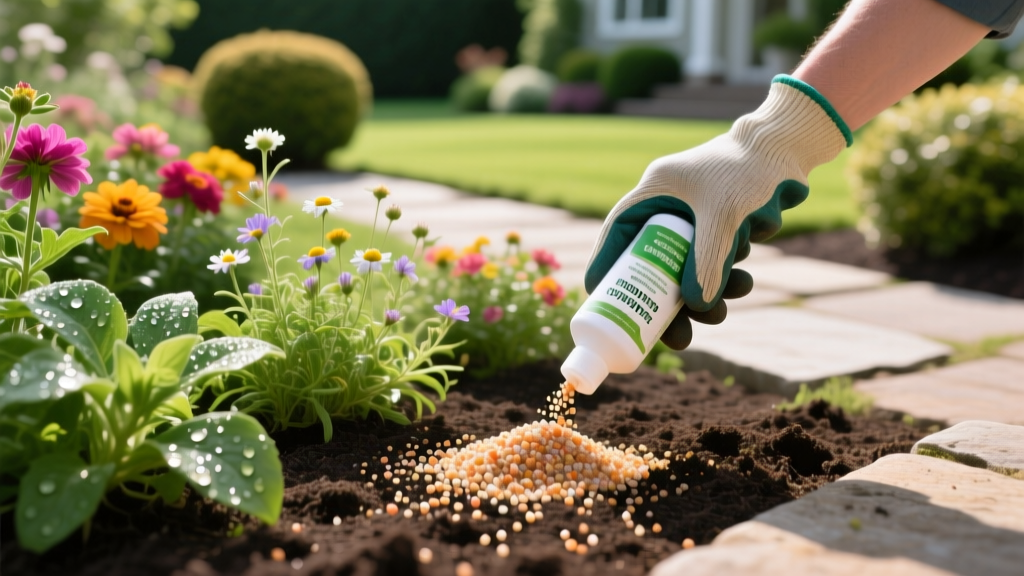
Spot-Treatment Guide: Best Weed Preventer for Flower Beds
Maintaining pristine ornamental landscapes requires a strategic approach to weed management. Unlike expansive turfgrass areas, flower beds contain a diverse mix of shallow-rooted annuals, deep-rooted perennials, and sensitive bulbs. Applying the wrong herbicide can stunt bloom production or cause severe phytotoxicity. When executing a weed species spot-treatment guide for ornamental zones, selecting the correct weed preventer for flower beds is about matching the active ingredient's mode of action to both the target weed species and the ornamental plants you wish to protect.
This guide details the chemical mechanics of pre-emergent herbicides, provides a species-specific decision matrix, and outlines exact calibration protocols for spot-treating garden borders without damaging high-value blooms.
The Chemistry of Pre-Emergent Weed Preventers for Ornaments
Pre-emergent herbicides do not stop seeds from germinating; rather, they inhibit cell division (mitosis) or cellulose synthesis in the developing radicle (root) or plumule (shoot) of the seedling. Understanding these mechanisms is critical when selecting a weed preventer for flower beds, as different ornamentals exhibit varying levels of tolerance to these chemical pathways.
Key Active Ingredients and Ornamental Safety
- Isoxaben (e.g., Gallery): A cellulose biosynthesis inhibitor. It is highly effective against broadleaf weeds like chickweed and spurge. Because it targets a specific enzyme pathway more prevalent in broadleaf seedlings, it is exceptionally safe for use around established ornamental shrubs, perennials, and most annual flowers.
- Prodiamine (e.g., Barricade 65 WDG): A mitosis inhibitor that excels at stopping grassy weeds like crabgrass and annual bluegrass. While safe for most established woody ornamentals, it can cause root stunting in shallow-rooted annual flowers (like impatiens or petunias) if applied directly over their root zones before they are fully established.
- Dithiopyr (e.g., Dimension 2EW): Offers both pre-emergent and early post-emergent control (up to the tiller stage) for grassy weeds. It is highly effective but requires careful spot-treatment to avoid drift onto sensitive foliage, as it can cause leaf burn on broadleaf ornamentals.
- Pendimethalin (e.g., Pendulum): A dinitroaniline herbicide that provides strong control of annual grasses and small-seeded broadleaves. It binds tightly to soil organic matter, making it ideal for beds with heavy mulch layers, though it can stain hardscapes yellow if not watered in promptly.
Warning: Never use non-selective post-emergent herbicides (like glyphosate or glufosinate) as a 'preventer.' These will kill your ornamental plants upon contact or through root uptake. Always verify that the product label explicitly states it is safe for 'ornamental landscape beds' before application.
Spot-Treatment Decision Matrix: Weed Species vs. Active Ingredient
Effective spot-treatment relies on identifying the primary weed pressure in your specific microclimate. The following matrix maps common flower bed invaders to their optimal pre-emergent solutions, based on data from the University of Florida IFAS Extension and regional horticultural trials.
| Target Weed Species | Scientific Name | Recommended Active Ingredient | Application Window |
|---|---|---|---|
| Spotted Spurge | Euphorbia maculata | Isoxaben or Oryzalin | Early Spring (Soil temp 55°F) |
| Creeping Woodsorrel | Oxalis corniculata | Isoxaben + Prodiamine mix | Late Fall & Early Spring |
| Common Purslane | Portulaca oleracea | Pendimethalin | Late Spring (Soil temp 65°F) |
| Annual Bluegrass | Poa annua | Prodiamine or Dithiopyr | Late Summer / Early Fall |
| Hairy Bittercress | Cardamine hirsuta | Isoxaben | Late Fall (Before germination) |
Step-by-Step Calibration and Application Protocol
Applying a weed preventer for flower beds requires precision. Over-application can lead to soil toxicity and root burn, while under-application creates gaps in the chemical barrier, allowing weed breakthroughs. Follow this protocol for granular formulations (e.g., 0.48% Prodiamine or 0.86% Isoxaben granules).
1. Bed Preparation and Debris Removal
Before application, manually remove all existing, visible weeds. Pre-emergents will not kill established weeds. Rake the mulch layer back slightly if it exceeds 3 inches in depth; excessive mulch can intercept the herbicide, preventing it from reaching the soil surface where the weed seed bank resides.
2. Calibrating the Spread Rate
Most ornamental beds are irregularly shaped, making broadcast spreaders impractical. Use a calibrated handheld rotary spreader or a narrow drop spreader for borders. For a standard 0.48% Prodiamine granular, the label rate for a 4-month barrier is typically 2.3 lbs per 1,000 square feet. To calibrate your handheld spreader:
- Measure a 100 sq ft test area (e.g., 10 ft x 10 ft).
- Weigh out exactly 0.23 lbs (approx. 3.7 ounces) of product.
- Adjust the spreader dial until you run out of product exactly as you finish covering the 100 sq ft area.
3. Activation via Irrigation
The chemical barrier must be moved into the top 1 to 2 inches of the soil profile. According to guidelines published by Penn State Extension Green Industry Resources, you must apply 0.5 inches of irrigation or rainfall within 48 hours of application. If natural rain is not in the forecast, use a sprinkler with a catch-can to measure exactly half an inch of water. Failure to water in the product will result in UV degradation of the active ingredient within 7 to 10 days.
Organic Alternatives: Corn Gluten Meal and Mulch Synergy
For gardeners managing highly sensitive heirloom bulbs, edible flower borders, or organic-certified landscapes, synthetic herbicides may be off-limits. Corn Gluten Meal (CGM) is the primary organic weed preventer for flower beds. CGM inhibits root formation during germination through a natural desiccation process.
Organic Application Note: CGM contains approximately 10% nitrogen by weight. If applied at the required preventive rate of 20 lbs per 1,000 sq ft, you are simultaneously applying 2 lbs of nitrogen. This acts as a heavy fertilizer. Ensure your ornamental plants can tolerate high nitrogen loads, or risk excessive vegetative growth at the expense of flower blooms.
To maximize organic weed prevention without over-fertilizing, combine a reduced rate of CGM (10 lbs per 1,000 sq ft) with a rigorous physical barrier. Apply a 2-inch layer of coarse arborist wood chips. The Environmental Protection Agency (EPA) notes that integrated pest management (IPM) strategies combining physical mulch barriers with reduced-rate organic preventers yield the highest long-term success rates in ornamental beds.
Critical Failure Modes in Flower Bed Spot-Treatment
Even when using the best weed preventer for flower beds, homeowners frequently encounter breakthroughs. Analyzing these failure modes is essential for refining your spot-treatment strategy.
- Breaking the Chemical Barrier: Hoeing, aggressive raking, or deep-tilling the bed after application fractures the continuous chemical film at the soil surface. Once broken, weed seeds in the lower soil profile can germinate and push through the gap. Limit bed cultivation to the top 0.5 inches after application.
- Misjudging Soil Temperature Triggers: Applying summer annual preventers when the soil is too cold wastes the product's residual lifespan before the weeds actually germinate. Use a digital soil probe to verify that the temperature at a 2-inch depth has consistently reached 50°F to 55°F for three consecutive days before applying spurge or crabgrass preventers.
- The Mulch Interception Error: Applying granular preventer directly on top of 4 inches of fresh pine bark mulch is a primary cause of failure. The herbicide binds to the organic matter in the mulch and never reaches the mineral soil. Always apply the preventer to the soil surface, water it in, and then apply your decorative mulch layer.
"The most effective weed management program in landscape beds relies on timing the pre-emergent application to the specific germination window of the target weed, rather than a fixed calendar date. Soil temperature dictates weed biology, not the month on the calendar."
By matching the precise active ingredient to your specific weed pressure, calibrating your spread rates to the square foot, and respecting the biological triggers of weed germination, you can maintain immaculate flower beds that allow your ornamental plants to thrive without competition.

