
Lawn Care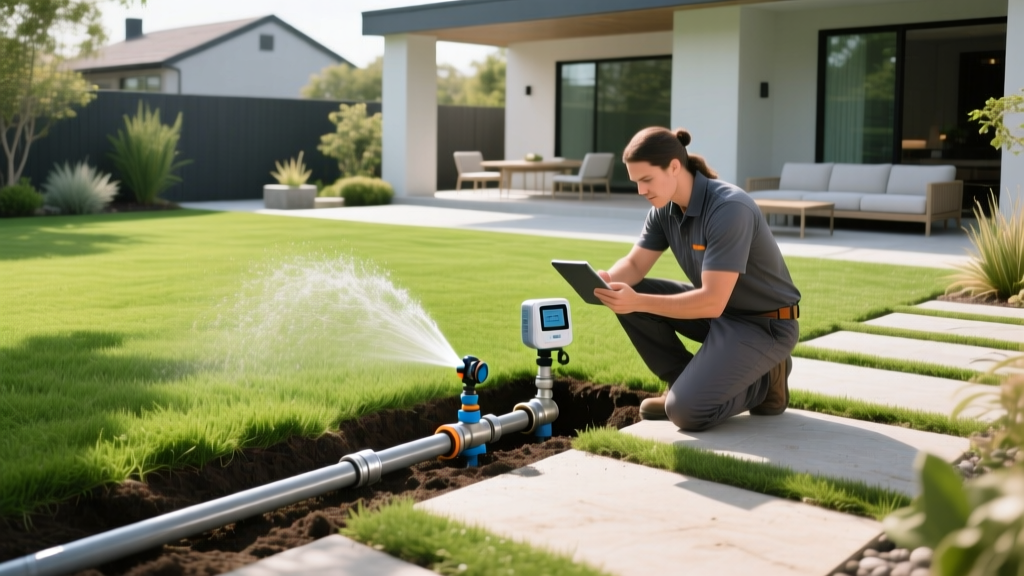
How Much Does It Cost to Install Sprinklers in 2026?
The 2026 National Average: What You Will Actually Pay
For a standard 10,000-square-foot lot (approximately 1/4 acre), the national average cost to install an in-ground sprinkler system in 2026 is $3,450. Most homeowners pay between $2,100 and $4,800 depending on yard complexity, soil conditions, and the tier of irrigation components selected. Rather than pricing by total square footage, professional irrigation contractors bid by the zone. A typical 1/4-acre lot requires 4 to 5 zones, with each zone costing between $600 and $1,050 to install.
Quick Cost Snapshot (1/4 Acre / 5 Zones):
• National Average: $3,450
• Low End (Basic Poly Pipe, Manual Valves): $2,100
• High End (Schedule 40 PVC, Smart Wi-Fi Controller, Drip Zones): $5,200+
• Cost Per Zone: $600 - $1,050
• National Average: $3,450
• Low End (Basic Poly Pipe, Manual Valves): $2,100
• High End (Schedule 40 PVC, Smart Wi-Fi Controller, Drip Zones): $5,200+
• Cost Per Zone: $600 - $1,050
Cost Breakdown by Irrigation System Type
Not all sprinkler systems are built identically. The delivery method dictates both the upfront installation cost and the long-term water efficiency. According to the EPA WaterSense program, selecting the right distribution method for your specific plant material can reduce outdoor water use by up to 50%.
| System Type | Cost Per Sq. Ft. | Total Cost (1/4 Acre) | Best Application |
|---|---|---|---|
| In-Ground Rotor/Spray | $0.20 - $0.45 | $2,200 - $4,800 | Standard turfgrass lawns |
| Drip Irrigation | $0.15 - $0.35 | $1,500 - $3,500 | Flower beds, shrubs, gardens |
| Above-Ground / Portable | $0.02 - $0.05 | $150 - $400 | Renters, temporary setups |
| Smart Integrated (Hybrid) | $0.35 - $0.60 | $3,800 - $6,500 | High-end landscaping, water-restricted zones |
Pricing by Yard Size and Zone Count
The primary driver of your final invoice is the number of zones your property requires. A zone is a group of sprinkler heads connected to a single valve, limited by your home's water pressure (PSI) and flow rate (GPM). Most residential water meters support 10 to 15 GPM, meaning a standard zone can only run 3 to 4 rotor heads or 8 to 10 spray heads simultaneously.
The Zone Multiplier Effect
- 1/8 Acre (approx. 5,000 sq ft): 2 to 3 zones. Expected cost: $1,400 - $2,600.
- 1/4 Acre (approx. 10,000 sq ft): 4 to 5 zones. Expected cost: $2,800 - $4,500.
- 1/2 Acre (approx. 20,000 sq ft): 8 to 10 zones. Expected cost: $5,500 - $9,000.
- 1 Acre+ (40,000+ sq ft): 15+ zones. Expected cost: $11,000 - $18,000+ (often requires upgrading to a 1.5-inch or 2-inch mainline pipe).
Material and Component Costs: Where the Money Goes
Understanding the specific components your contractor is using will help you evaluate the fairness of their quote. Cutting corners on materials leads to blown valves and cracked pipes within three to five years.
Piping Materials
- Schedule 40 PVC: The gold standard for mainlines and high-pressure zones. Costs $0.60 - $1.30 per linear foot installed. Highly resistant to crushing from foot traffic or shallow aeration.
- Class 200 / Class 160 PVC: Thinner-walled PVC often used for lateral lines to save money. Costs $0.40 - $0.80 per linear foot. Prone to cracking if tree roots shift the soil.
- Polyethylene (Poly Pipe): Flexible black tubing inserted via a vibratory plow without open trenching. Costs $0.30 - $0.70 per linear foot. Excellent for rocky soil, but fittings are prone to leaking if not secured with double hose clamps.
Valves and Backflow Preventers
Do not accept plastic backflow preventers if your municipality requires a testable brass unit. A standard Watts 007 or Febco 765 brass backflow preventer costs between $180 and $350 for the part alone. For zone valves, insist on commercial-grade models like the Hunter PGV-100 or Irritrol 2500 (approx. $35-$50 per valve), which feature replaceable internal diaphragms and brass bleed screws, unlike cheap big-box store alternatives that must be entirely replaced when they fail.
Smart Controllers vs. Standard Timers
Upgrading to a Wi-Fi-enabled smart controller is the highest ROI decision you can make. According to the USU Extension Irrigation Guide, weather-based smart controllers reduce outdoor water waste by adjusting schedules based on local evapotranspiration (ET) data.
- Standard Timer (e.g., Hunter X-Core): $120 - $160 installed.
- Smart Controller (e.g., Rachio 3 Pro or Hunter Pro-HC): $280 - $450 installed. Many local water municipalities offer $50 to $100 rebates for installing EPA WaterSense-certified smart controllers.
⚠️ Warning: Hidden Costs and Edge Cases
Before signing a contract, verify how the installer handles these common budget-killers:
• Rocky or Heavy Clay Soil: Hand-digging trenches in rocky soil adds $400 - $900 in labor. Ensure your contract specifies whether rock removal is included or billed at an hourly overage rate.
• Utility Line Locating: Calling 811 is free, but if private utility lines (like a detached garage sub-panel or landscape lighting) are hit, repairs cost $500+.
• Permit and Inspection Fees: Most counties require a plumbing permit for the backflow preventer tie-in. Expect $75 - $250 in municipal fees.
Before signing a contract, verify how the installer handles these common budget-killers:
• Rocky or Heavy Clay Soil: Hand-digging trenches in rocky soil adds $400 - $900 in labor. Ensure your contract specifies whether rock removal is included or billed at an hourly overage rate.
• Utility Line Locating: Calling 811 is free, but if private utility lines (like a detached garage sub-panel or landscape lighting) are hit, repairs cost $500+.
• Permit and Inspection Fees: Most counties require a plumbing permit for the backflow preventer tie-in. Expect $75 - $250 in municipal fees.
DIY vs. Professional Installation: A Financial Analysis
Can you install a sprinkler system yourself? Yes, but the financial advantage is narrower than most homeowners assume due to equipment rental costs.
The DIY Cost Reality
To install a 5-zone system yourself, you will need to rent a Ditch Witch vibratory plow ($150 - $250 per day) and a compact trencher for the deeper mainline pipe ($120 per day). Add the cost of PVC primer, cement, Teflon tape, and specialized tools like a poly-pipe crimping tool. A 5-zone DIY build typically costs $1,600 to $2,200 in materials and rentals, taking 3 to 5 full weekends of grueling physical labor.
The Professional Advantage
A professional crew of three can install the same 5-zone system in 1.5 to 2 days using commercial-grade trenchers and pipe-bursting equipment that minimizes lawn destruction. While you pay a premium (bringing the total to $3,400+), you receive a 2-to-5-year warranty on parts and labor, proper head-to-head coverage mapping, and code-compliant backflow installation. For lawns with complex grading or extensive hardscaping, professional installation is strictly recommended to avoid catastrophic water pooling against your home's foundation.
How to Calculate Your Exact Quote (Decision Framework)
Use this step-by-step framework to audit the quotes you receive from local irrigation contractors:
- Calculate your irrigable square footage: Subtract the footprint of your house, driveway, and patios from your total lot size.
- Determine zone count: Divide irrigable square footage by 2,000. (e.g., 8,000 sq ft / 2,000 = 4 zones).
- Multiply by the local zone rate: In most US markets, multiply your zone count by $750 to find the baseline professional installation cost.
- Add mainline and backflow costs: Add a flat $600 - $900 for the connection from your water meter to the first valve.
- Factor in smart upgrades: Add $250 if upgrading from a basic dial timer to a Wi-Fi smart controller.
Frequently Asked Questions
Does installing a sprinkler system increase my water bill?
If you transition from haphazard hose-end sprinklers to a properly zoned in-ground system with a smart controller, your water bill will likely decrease by 15% to 30%. However, if you previously relied solely on natural rainfall, expect your summer water bill to increase by $40 to $120 per month depending on local utility rates.
How much does annual sprinkler maintenance cost?
Budget for two annual service calls. A spring activation and winterization (blowout) typically costs $75 to $150 per visit. Additionally, most municipalities require an annual backflow preventer test by a certified inspector, which costs $50 to $100.
What is the best time of year to install a sprinkler system?
The optimal window is early spring (March to April) or early fall (September to October). Installing during these periods allows the turf to recover from trenching before the stress of summer heat or winter freeze. Avoid mid-summer installations, as the exposed trench lines will dry out and kill the surrounding grass roots within 48 hours.

