
Lawn Care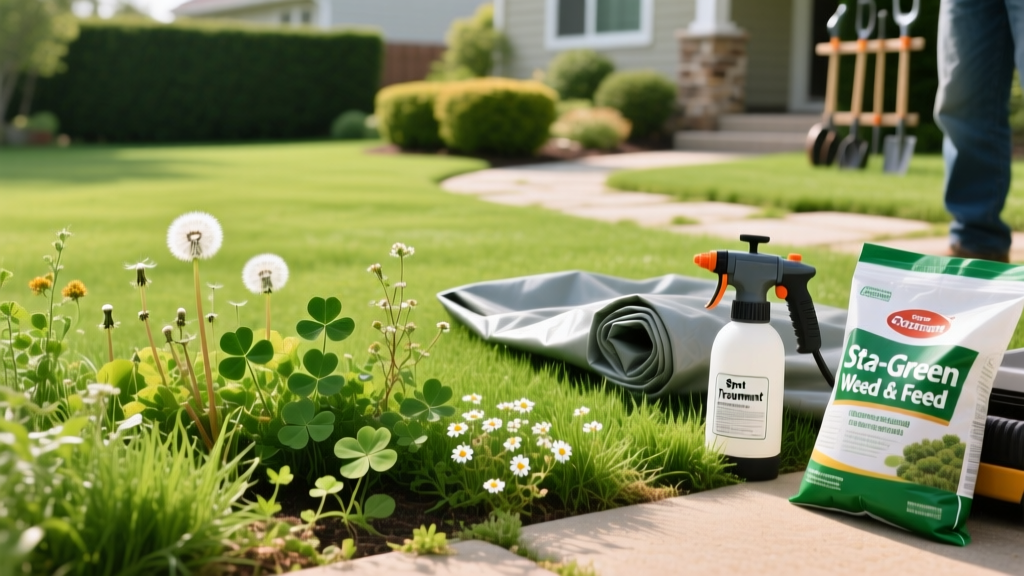
Sta-Green Weed & Feed vs Spot Treatment: A Weed Species Guide
The Broadcast vs. Spot-Treatment Dilemma
Homeowners frequently default to broadcasting granular Sta-Green Weed & Feed across their entire lawn, assuming a blanket application will eradicate all visible weeds while feeding the turf. While this strategy works for specific broadleaf species under ideal conditions, it fails dramatically against others. The agronomic reality is that granular weed-and-feed formulations rely on physical contact with the weed's foliage to transfer the herbicide. If the granule bounces off a waxy leaf or falls to the soil before dissolving, the active ingredient is wasted, and the weed survives.
According to turfgrass researchers at Penn State Extension, matching the herbicide delivery method to the specific weed species' growth habit and leaf morphology is the single most critical factor in achieving control. This guide breaks down exactly when to deploy Sta-Green granular products and when to pivot to targeted liquid spot-treatments for resistant species.
Decoding the Sta-Green Formulation Matrix
Before treating any weed, you must verify which Sta-Green formulation is safe for your specific turfgrass. Applying the wrong chemistry will result in severe phytotoxicity (turf burn or death).
2026 Sta-Green Active Ingredient Breakdown
- Sta-Green Broadleaf Weed & Feed (14-0-4): Designed for Fescue, Kentucky Bluegrass, and Bermudagrass. Contains 0.58% 2,4-D, 0.15% Dicamba, and 0.12% MCPP. Priced at approximately $28-$32 per 14lb bag (covers 5,000 sq ft).
- Sta-Green Southern Weed & Feed: Designed exclusively for St. Augustine and Centipedegrass. The primary active ingredient is Atrazine (typically 0.38% to 0.50%). Warning: Never apply Atrazine-based products to Bermudagrass or Fescue, as it will kill the turf.
Species-by-Species Efficacy & Treatment Pivot Points
Not all weeds absorb granular herbicides equally. The table below outlines which species respond to Sta-Green broadcast applications and which require an immediate pivot to liquid spot-treatments.
| Weed Species | Growth Habit & Leaf Profile | Sta-Green Granular Efficacy | Spot-Treatment Backup Protocol |
|---|---|---|---|
| Dandelion (Taraxacum officinale) | Rosette growth, broad leaves, deep taproot. | High. Granules stick easily to broad, textured leaves. | Not usually required unless mature seed heads have formed. |
| White Clover (Trifolium repens) | Low creeping stolons, waxy trifoliate leaves. | Low. Granules roll off the waxy cuticle; low profile avoids mower-deck contact. | Liquid Triclopyr + 2,4-D spot spray with a non-ionic surfactant. |
| Ground Ivy (Glechoma hederacea) | Aggressive creeping vine, scalloped round leaves. | Moderate. Requires heavy morning dew for granule adhesion. | Liquid Dicamba or Triclopyr spot application in early fall. |
| Crabgrass (Digitaria) | Grassy annual, low prostrate growth. | Zero. Post-emergent broadleaf herbicides in Sta-Green do not kill grassy weeds. | Liquid Quinclorac spot-spray for post-emergent control. |
| Dollarweed (Hydrocotyle) | Round, peltate leaves, thrives in wet soil. | Low. Waxy leaf surface repels granular coatings. | Liquid Atrazine (for Southern lawns) or 2,4-D spot treatment. |
Critical Failure Modes: Why Your Broadcast Application Failed
If you applied Sta-Green Weed & Feed and noticed weeds persisting two weeks later, you likely triggered one of the following agronomic failure modes. Data from NC State TurfFiles indicates that environmental timing accounts for over 70% of granular herbicide failures.
1. The Moisture Deficit Error
Granular weed-and-feed products require the weed's foliage to be wet so the granule sticks, dissolves, and penetrates the leaf cuticle. Applying Sta-Green to a bone-dry lawn at 2:00 PM means the granules will simply bounce off the weed and fall into the soil, where the broadleaf herbicides (2,4-D and Dicamba) are largely inactive and will degrade without being absorbed by the roots.
The Fix: Apply only in the early morning when heavy dew is present, or irrigate the lawn lightly (0.1 inches) 12 hours before application. Do not water again for 48 hours.
2. The Temperature Threshold Violation
Applying ester-based or amine-based herbicides when daytime highs exceed 85°F causes rapid volatilization. The herbicide turns into a gas, drifting onto and burning desirable ornamental plants, trees, and even your own turfgrass. Furthermore, weeds under heat stress close their stomata to conserve water, completely halting herbicide translocation to the roots.
Agronomic Warning: Never apply Sta-Green Weed & Feed if the forecast predicts temperatures above 85°F within 48 hours of application. The risk of turf phytotoxicity outweighs the benefit of weed control.
3. Premature Mowing
Mowing the lawn 12 hours after a granular application physically removes the weed foliage that is currently absorbing the herbicide. The active ingredients require a minimum of 48 to 72 hours to translocate from the leaf tissue down to the root crown.
The Spot-Treatment Pivot Protocol
When dealing with low-profile, waxy-leaved weeds like White Clover, Ground Ivy, or Violet, broadcasting granular Sta-Green is an inefficient use of time and money. Instead, utilize a targeted liquid spot-treatment protocol. According to University of Minnesota Extension, liquid applications with adjuvants increase herbicide uptake in resistant species by up to 40%.
Step-by-Step Liquid Spot-Treatment Guide
- Select the Right Chemistry: Purchase a concentrated liquid herbicide containing Triclopyr and 2,4-D (e.g., Ortho WeedClear for Lawns or a generic Trimec formulation). Triclopyr is specifically lethal to clover and ground ivy, which often resist standard 2,4-D alone.
- Add a Surfactant: Mix a non-ionic surfactant (like methylated seed oil or a dedicated turf surfactant) at a rate of 0.5% by volume (roughly 1 teaspoon per gallon of mixed spray). This breaks the surface tension of the water, allowing the liquid to spread across the waxy clover leaf rather than beading up and rolling off.
- Calibrate the Sprayer: Use a 1-gallon or 2-gallon pump sprayer with a cone-nozzle tip. Adjust the nozzle to produce a coarse droplet size to prevent wind drift onto desirable garden beds.
- Target the Foliage: Spray only until the weed leaves are visibly wet (the 'glisten' point). Do not spray to the point of runoff, which wastes chemical and increases soil contamination.
- Wait and Observe: Susceptible weeds will show epinasty (twisting and curling of the stems) within 48 hours. Complete root death takes 14 to 21 days. Do not reapply during this window.
Cost & Coverage Analysis: Broadcast vs. Spot
From a financial perspective, understanding when to use Sta-Green versus a spot-treatment liquid saves significant capital over a single growing season.
2026 Seasonal Cost Comparison (5,000 sq ft Lawn)
Scenario A: 100% Broadcast Granular
Applying Sta-Green Weed & Feed twice per season (Spring/Fall) = 2 bags x $30 = $60.00.
Result: Excellent dandelion control, but clover and ground ivy will likely survive, requiring a secondary purchase anyway.
Scenario B: Hybrid Approach (Granular + Spot)
One Spring application of Sta-Green ($30) + One 32oz bottle of concentrated liquid Triclopyr/2,4-D ($18) used strictly for spot-treating isolated clover patches.
Total = $48.00.
Result: Superior overall control, lower total chemical load introduced to the soil, and $12 in savings.
Final Agronomic Takeaway
Sta-Green Weed & Feed remains a highly effective, cost-efficient tool for managing upright, broadleaf weeds like dandelions, plantain, and chickweed when applied to moist foliage in moderate temperatures. However, it is not a panacea. For low-growing, waxy, or grassy weeds, abandoning the broadcast spreader in favor of a calibrated pump sprayer and a targeted liquid chemistry is the only scientifically sound path to a pristine lawn.

