
Lawn Care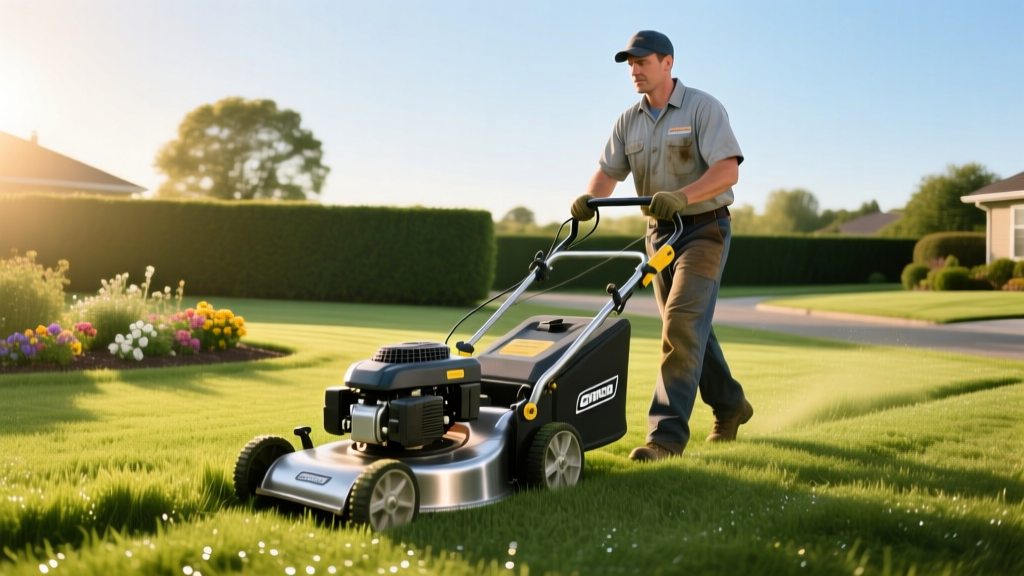
How to Start a Lawn Mowing Business: Costs & Equipment
Launching a profitable lawn care company requires the same strategic phased approach as establishing a high-end turfgrass lawn. You cannot simply scatter seed on compacted soil and expect a pristine yard; similarly, you cannot buy a cheap mower and expect a sustainable business. The landscaping industry generates over $150 billion annually, but the failure rate for new operators is high due to poor route density, underpricing, and equipment mismanagement.
This guide breaks down exactly how to start a lawn mowing business, focusing on the hard numbers, specific equipment models, and the critical transition from basic maintenance to high-margin lawn establishment services.
Phase 1: Legal & Administrative Seeding
Before purchasing a single piece of equipment, you must establish the legal root system of your business. Operating as a sole proprietor leaves your personal assets vulnerable to lawsuits—a common risk when operating heavy machinery near expensive property.
- Entity Formation: Register a Limited Liability Company (LLC). State filing fees range from $50 to $500. The Small Business Administration (SBA) provides state-specific guidelines for structuring your entity to protect personal assets from commercial liabilities.
- Tax Identification: Obtain an Employer Identification Number (EIN) from the IRS. This is free and required to open a business bank account and establish trade credit with landscape suppliers. You can apply directly via the IRS online portal.
- Insurance Matrix: Do not skip this. You need a minimum of $1,000,000 per occurrence in General Liability. Providers like Hartford or Hiscox typically charge $400 to $800 annually for a solo operator. Once you add a branded truck, Commercial Auto insurance will add $1,200 to $2,500 to your annual overhead. Workers' compensation is mandatory in most states the moment you hire your first W-2 employee.
Phase 2: The Equipment Arsenal
Equipment selection dictates your hourly output. A residential push mower limits you to 15,000 square feet per hour, while a commercial zero-turn can cut 35,000+ square feet in the same timeframe. Match your equipment to your target market.
The Bootstrapped Residential Setup
If you are starting with under $5,000, target dense suburban neighborhoods with small lots (under 8,000 sq ft). You need a wide-cut walk-behind to maximize speed without the footprint of a zero-turn.
- Primary Mower: Toro TimeMaster 30-inch (Model 20099). Priced around $1,300, the 30-inch deck cuts 20% more grass per pass than standard 21-inch mowers.
- Secondary Mower: Honda HRX217VKA (approx. $850) for tight backyards and fenced areas where the 30-inch deck cannot fit.
- Trimming: Stihl FS 94 R string trimmer ($450) and Stihl HSA 56 hedge trimmer ($300).
The Commercial Pro Setup
For large properties, HOAs, and commercial parks, you need a commercial zero-turn with a fabricated deck and a suspended operator platform to prevent fatigue over 8-hour shifts.
- Primary Mower: Scag Patriot (61-inch deck, 27HP Kawasaki engine) or Exmark Lazer Z. Expect to pay between $11,500 and $14,000. These machines feature hydraulic oil coolers and commercial-grade spindles that withstand daily abuse.
- Trailer: A 6x10 or 7x14 single-axle mesh trailer (e.g., Big Tex or Carry-On). Mesh is mandatory to prevent wind drag and allow grass clippings to fall through. Cost: $2,200 to $3,800.
- Maintenance Gear: MAG-9000 blade sharpener ($450). Dull blades tear turf, inviting fungal pathogens like brown patch. Sharpen commercial blades every 8 to 10 hours of operation.
Startup Cost Matrix: Bootstrapped vs. Professional
| Item Category | Bootstrapped Setup (Residential) | Professional Setup (Commercial) | Notes & Edge Cases |
|---|---|---|---|
| Mowing Equipment | $2,150 | $13,500 | Pro setup includes a commercial stand-on or zero-turn with fabricated deck. |
| Handhelds (Trimmers/Blowers) | $750 | $2,800 | Pros need backup battery-operated units for noise-restricted HOAs. |
| Trailer & Hitch | $800 (Used utility) | $4,500 (New mesh + install) | Include $300 for a commercial hitch receiver and wiring harness. |
| Truck / Vehicle | $0 (Use personal SUV) | $25,000 (Used 3/4 ton) | Half-ton trucks (F-150/1500) often lack the payload for heavy wet mowers. |
| Insurance & Legal | $600 | $2,500 | Commercial auto and inland marine (tool) coverage added for pro tier. |
| Software & Marketing | $150 | $1,200 | Includes CRM subscription, branded uniforms, and initial geo-targeted ads. |
| Total Estimated Capital | $4,450 | $49,500 | Pro setup usually requires an SBA microloan or equipment financing. |
Phase 3: Route Density and Hourly Yield
The most common reason new lawn care businesses fail is poor route density. If you spend 40% of your day driving between houses, your effective hourly rate plummets. Your goal is 'cluster routing'—securing 4 to 6 lawns within a single one-mile radius.
Utilize field service management software like Jobber (starts at $39/month) or Yardbook (free tier available). These platforms allow you to draw polygons on a map and only accept marketing leads that fall within your established clusters. Implement a strict 'minimum cut price' (e.g., $55) to ensure that even small lawns cover your base operational costs, which typically run $35 to $45 per hour when factoring in fuel, insurance, and equipment depreciation.
Operator Tip: The 5-Minute Rule
Track your 'windshield time' versus 'blade time'. If a property requires more than 5 minutes of setup (opening gates, moving excessive yard debris, dragging hoses) before you can start mowing, you must charge a property prep surcharge or drop the client. High-friction properties destroy route efficiency.
Phase 4: Beyond the Mow - Upselling Lawn Establishment
Mowing is a low-margin, high-volume service. To build real equity in your business, you must transition clients from basic maintenance to high-ticket lawn establishment and renovation services. Homeowners will haggle over a $5 difference in mowing prices, but they will gladly pay $3,500 for a complete lawn transformation.
High-Margin Establishment Services to Offer:
- Sod Installation: Buying pallets of certified turf (e.g., Zenith Zoysia or TifTuf Bermuda) from local sod farms and installing them. Material costs run $0.40 to $0.80 per sq ft; you charge $1.20 to $2.00 per sq ft installed. A standard 5,000 sq ft front yard yields $4,000 to $6,000 in revenue with a 40% profit margin.
- Core Aeration and Overseeding: The ultimate fall cash cow. Renting a commercial walk-behind aerator (like a Ryan Lawnaire IV) costs $150/day. Charging $150-$250 per lawn for aeration, plus $100 for premium TTTF (Tall Fescue) seed, allows you to net $300+ per hour in the fall.
- Grading and Hydroseeding: For new construction or severely eroded lots, offering hydroseeding (spraying a slurry of seed, mulch, and tackifier) is highly lucrative. A 100-gallon hydroseeding machine costs around $3,500, and material costs are less than $0.05 per square foot, allowing you to charge $0.15 to $0.25 per square foot.
Always begin establishment projects with a professional soil test from a lab like Logan Labs or Waypoint Analytical ($25-$35 per sample). Presenting a client with a detailed pH and NPK (Nitrogen, Phosphorus, Potassium) breakdown establishes immediate authority and justifies premium pricing for soil amendments and specialized seed blends.
Safety and Compliance
Landscaping consistently ranks among the most dangerous professions due to machinery, heat stress, and roadway exposure. The Occupational Safety and Health Administration (OSHA) mandates strict adherence to PPE (Personal Protective Equipment) and heat illness prevention protocols. Mandate ANSI Z87.1 rated safety glasses, steel-toe boots, and hearing protection for all operators. Implement a mandatory hydration schedule when the heat index exceeds 90°F to prevent worker compensation claims that can bankrupt a young company.
Frequently Asked Questions
Do I need a landscaping license to mow lawns?
In most states, basic lawn mowing and trimming do not require a specialized contractor's license. However, if you expand into hardscaping, retaining walls, or installing irrigation systems, a state-issued landscape contractor license is usually mandatory. Always check your local municipal clerk's office for local business privilege license requirements.
How many lawns do I need to mow to replace a full-time salary?
If your target net income is $70,000 and your average profit per lawn (after fuel, labor, and overhead) is $45, you need to complete roughly 1,550 cuts annually. Assuming a 35-week mowing season, that equates to 44 lawns per week. With a commercial zero-turn and dense routing, a solo operator can achieve this in 4 to 5 days.
Should I charge by the square foot or a flat rate?
Charge a flat rate based on your estimated time. Clients prefer predictable billing. Use square footage only as an internal metric to calculate your bid. If a 6,000 sq ft lawn takes 35 minutes and your target hourly rate is $75, charge $45. Never reveal your internal square-footage math to the client, as it invites arguments over property line measurements.

