
Lawn Care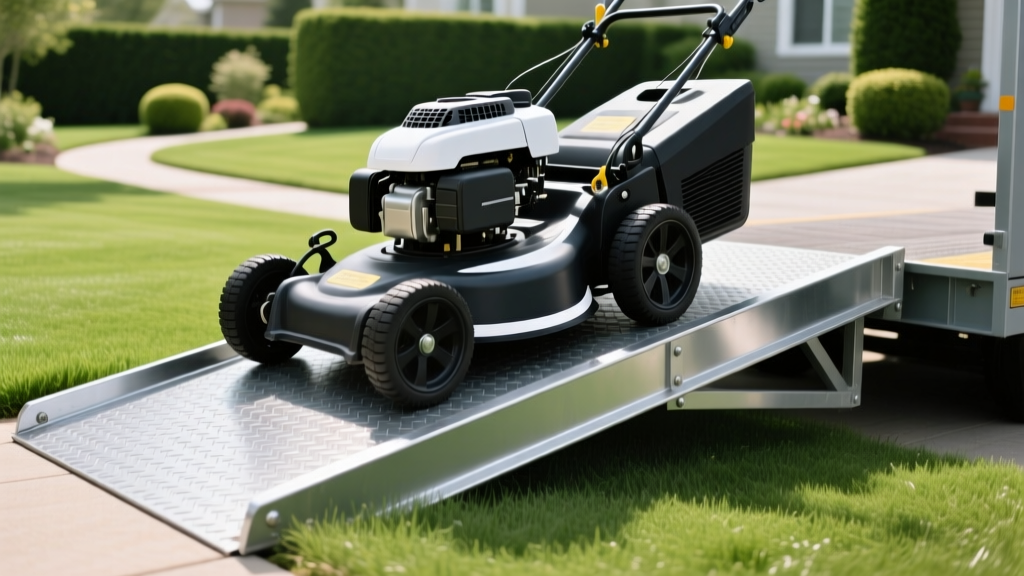
Why Steel Loading Ramps Are Used to Load a Lawn Mower Safely
Transporting a 1,200-pound commercial zero-turn mower or a heavy estate garden tractor requires more than a makeshift plank of wood. The structural integrity of your loading equipment is the only barrier between a routine maintenance trip and a catastrophic equipment failure. This is precisely why steel loading ramps are used to load a lawn mower in professional and serious residential settings. While aluminum ramps dominate the lightweight ATV market, steel ramps offer distinct mechanical advantages for the concentrated, dynamic point-loads generated by heavy lawn equipment.
The Physics of Mower Loading: Static vs. Dynamic Weight
When evaluating loading equipment, manufacturers list a static weight capacity. However, a lawn mower in motion generates dynamic forces that drastically alter the load distribution. A standard 60-inch commercial zero-turn mower weighs between 900 and 1,300 pounds. When the front caster wheels hit the transition lip of a truck bed, or when the rear drive wheels slip and suddenly catch traction on the ramp rungs, the kinetic energy transfers into a massive momentary spike in weight on a single ramp.
According to agricultural safety guidelines from Penn State Extension, dynamic loading can increase the effective weight on a single ramp by up to 40% during the transition phase. Steel loading ramps are used to load a lawn mower because steel's high tensile strength and modulus of elasticity resist the micro-bending and metal fatigue that plague aluminum under these specific shock-load conditions.
Material Comparison for Heavy Lawn Equipment
| Material | Tensile Strength | Dynamic Load Response | Best Application | Typical Cost (Pair) |
|---|---|---|---|---|
| Heavy-Gauge Steel | High (Yields slowly) | Absorbs shock; minimal deflection under point-loads | Commercial Zero-Turns, Garden Tractors (1,000+ lbs) | $250 - $450 |
| Extruded Aluminum | Moderate (Brittle failure) | High deflection; prone to sudden cracking under shock | Push mowers, lightweight ATVs, dirt bikes | $180 - $350 |
| Reinforced Wood | Variable (Degrades) | Unpredictable; susceptible to moisture rot and splintering | Temporary emergency loading only | $0 - $50 |
Critical Specifications for Steel Loading Ramps
Selecting the correct steel ramp requires matching three specific metrics to your mower's chassis and your vehicle's bed height. Failure to calculate these metrics results in the two most common loading accidents: bottoming out and ramp kick-out.
1. Weight Capacity and Load Distribution
Never buy ramps based on the combined weight of the mower. You must look at the per-ramp capacity. For a 1,200 lb mower, you need ramps rated for a minimum of 1,500 pounds each (3,000 pounds combined). This 20% buffer accounts for the dynamic weight transfer when the mower climbs the incline and the center of gravity shifts backward onto the drive wheels.
2. Ramp Length and Breakover Angle
The breakover angle is the angle formed between the ramp and the truck bed. If the ramp is too short, the angle becomes too steep, and the mower's cutting deck (which typically hangs 4 to 6 inches below the chassis) will scrape violently against the tailgate edge.
- Standard Pickup Bed (30-36" height): Requires an 8-foot ramp to maintain a safe loading angle of 22 to 25 degrees.
- Lifted Truck / High Bed (40-48" height): Requires a 10-foot or 12-foot ramp to keep the angle below 25 degrees.
WARNING: The Kick-Out Failure Mode
Ramp kick-out occurs when the mower's torque pushes the ramp downward and outward, causing it to slip off the tailgate. Steel ramps are used to load a lawn mower safely primarily because their sheer weight (often 40-60 lbs per ramp) and heavy-duty steel safety cables provide superior anchoring compared to lightweight alternatives. Always use the provided ratchet straps to secure the ramp hooks to the truck's frame, not just the bumper.
Ramp kick-out occurs when the mower's torque pushes the ramp downward and outward, causing it to slip off the tailgate. Steel ramps are used to load a lawn mower safely primarily because their sheer weight (often 40-60 lbs per ramp) and heavy-duty steel safety cables provide superior anchoring compared to lightweight alternatives. Always use the provided ratchet straps to secure the ramp hooks to the truck's frame, not just the bumper.
3. Tread Pattern and Rung Spacing
Lawn mower tires are typically pneumatic with a turf-saver or chevron tread. The ramp rungs must be spaced closely enough (maximum 4 to 5 inches apart) to prevent the tire from dipping between the rungs, which can cause a sudden loss of forward momentum and stall the mower on the incline.
Step-by-Step Safe Loading Protocol
Even the heaviest steel ramps are useless if deployed incorrectly. Follow this sequence to eliminate variable risks during the loading process.
- Prepare the Vehicle: Park the truck or trailer on a flat, level surface. Engage the parking brake and place wheel chocks on the front tires. Never load a mower onto a truck parked on an incline.
- Deploy and Secure Ramps: Unfold the steel ramps and seat the hooks firmly onto the truck bed rails. Attach the primary safety cables to the truck's structural frame or heavy-duty tie-down points. Give the ramps a firm downward strike with a mallet to seat the hooks into the metal.
- Align the Mower: Position the mower squarely in front of the ramps. Ensure the front caster wheels are locked in a straight-forward position. If your mower has a rollover protection system (ROPS), ensure it is fully raised and locked.
- Ascend at a Steady RPM: Drive the mower up the ramps at a slow, constant speed. Do not stop, start, or change direction while on the incline. Stopping mid-ramp causes the center of gravity to shift, increasing the risk of the front end lifting.
- Transition the Lip: As the front casters hit the truck bed lip, maintain steady throttle. The rear wheels will bear the brunt of the weight. Once all four wheels are on the bed, lower the mower deck slightly to stabilize the center of gravity.
For deeper insights into heavy machinery loading protocols and operator safety, the Purdue University Agricultural Engineering Safety database provides extensive documentation on center-of-gravity management during incline transitions.
Steel Ramp Maintenance and Storage
Steel is highly susceptible to oxidation, especially when exposed to the elements, road salt, and moisture trapped beneath mower tires. To ensure your steel loading ramps remain structurally sound for years, implement the following maintenance routine:
- Rust Prevention: Inspect the ramps bi-annually for surface rust. Sand any compromised areas with 80-grit sandpaper and apply a cold-galvanizing compound or a heavy-duty enamel paint designed for structural steel. Avoid painting the tread rungs, as smooth paint creates a severe slip hazard for rubber tires.
- Hinge Lubrication: Bi-fold steel ramps rely on heavy steel hinges and locking pins. Apply a lithium-based grease to the hinge pins every spring to prevent seizing. Check the locking pins for shear stress marks; if the pin is bent or heavily grooved, replace it immediately with a grade-8 steel bolt.
- Proper Storage: Do not leave steel ramps leaning against the exterior of a shed where ground moisture can wick into the bottom rungs. Store them horizontally on a rack in a dry, ventilated garage.
Troubleshooting Common Loading Issues
The Mower Stalls Halfway Up the Ramp
If the mower loses power or stalls on the incline, do not attempt to reverse down the ramps. Reversing shifts the center of gravity forward, unweighting the rear drive tires and causing them to spin out, which often leads to the mower sliding off the side of the ramps. Instead, lower the cutting deck completely to rest on the ramps (if clearance allows) to act as a mechanical brake, disengage the PTO, and carefully back the mower down using the lowest possible gear and light braking.
The Ramps Bow Excessively Under Load
If you notice the steel ramps bowing more than 2-3 inches in the center as the mower crosses, the ramp capacity is insufficient for the dynamic load, or the ramp span is too long for the steel gauge being used. Immediately halt the loading process. You must upgrade to a heavier gauge steel ramp or utilize a trailer with a lower deck height to reduce the required ramp length and minimize the unsupported span.
Proper equipment selection eliminates the variable of structural failure. By understanding the specific mechanical demands of your mower and utilizing appropriately rated steel loading ramps, you ensure that equipment transport remains the safest part of your groundskeeping operation.

