
Lawn Care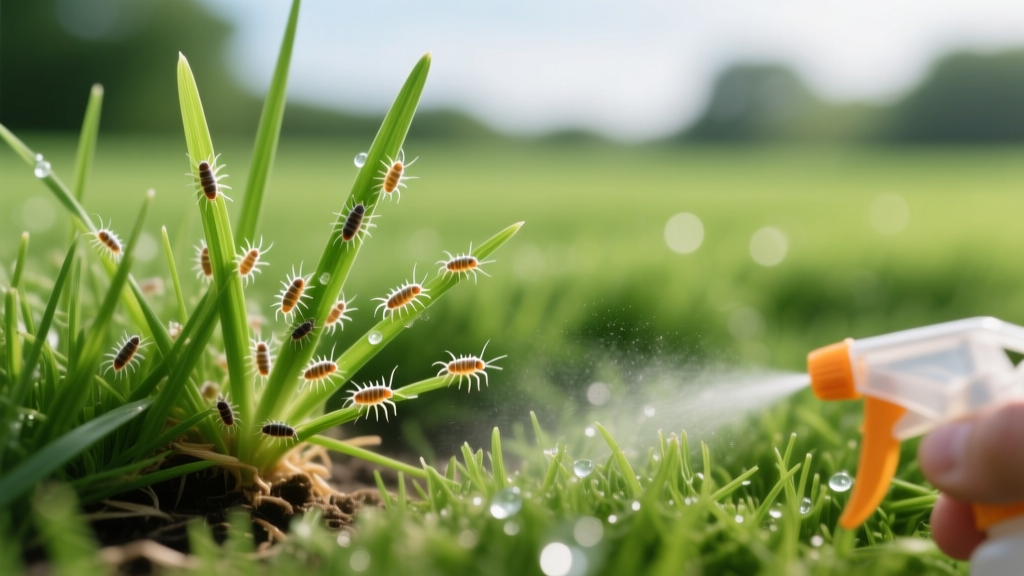
Step-by-Step Grass Mites Eradication: Identification and Treatment
Grass mites are microscopic to barely visible arachnids that can rapidly degrade turf quality and, in severe cases, invade residential structures. When homeowners refer to "grass mites," they are typically dealing with one of two primary culprits: the Clover Mite (Bryobia rubrioculus) or the Banks Grass Mite (Oligonychus pratensis). Both species thrive in hot, dry conditions and feed on the cellular sap of turfgrass, leaving behind stippled, yellowing, or bronzed blades.
Eradicating these pests requires more than a superficial application of generic insecticides. Because mites reside deep within the thatch layer and soil cracks, successful elimination demands a precise, multi-step maintenance protocol. Below is the definitive, step-by-step procedure for identifying, treating, and permanently preventing grass mite infestations in your lawn.
The Threat Profile: Clover Mites vs. Banks Grass Mites
Before initiating treatment, you must identify the specific mite species, as their behavioral patterns dictate your maintenance strategy. According to Colorado State University Extension, understanding the seasonal peaks of these mites is critical for timing your interventions.
| Characteristic | Clover Mite (B. rubrioculus) | Banks Grass Mite (O. pratensis) |
|---|---|---|
| Appearance | Reddish-brown, distinctively long front legs | Pale green to yellowish-brown, oval-shaped |
| Peak Activity | Spring (60°F–70°F) and Fall | Mid-to-Late Summer (Hot, dry conditions) |
| Turf Damage | Minimal direct turf damage; primarily a nuisance | Severe stippling, bronzing, and turf dieback |
| Home Invasion Risk | Extremely High (migrates into foundations) | Low (stays in the turf canopy) |
| Overwintering Site | Soil cracks, under bark, foundation crevices | Thatch layer, crowns of perennial grasses |
Step 1: The White Paper Diagnostic Test
Because grass mites are exceptionally small (roughly 0.5 to 0.8 millimeters), visual confirmation with the naked eye is unreliable. To confirm an active infestation, perform the white paper diagnostic test.
- Prepare the Testing Surface: Cut a standard 8.5 x 11-inch sheet of bright white printer paper. Fold it in half to create a stiff backing.
- Sample the Turf: Select a damaged or suspicious area of your lawn, specifically near the soil-thatch interface. Hold the paper flat against the ground.
- Dislodge the Pests: Vigorously shake the grass blades over the paper, or gently scrape the thatch layer with your fingers.
- Observe and Count: Wait 30 seconds. If mites are present, you will see tiny, slow-moving specks crawling across the white background. Clover mites will appear as dark red dots, while Banks grass mites will look like pale yellow or greenish specks.
- Threshold Assessment: If you count more than 10 to 15 mites per sheet across multiple sample areas, the population has crossed the economic injury threshold and immediate chemical intervention is required.
Step 2: Targeted Eradication Protocols
Once the threshold is exceeded, you must deploy a targeted miticide. Standard broad-spectrum insecticides often fail to penetrate the thatch layer where mites harbor. Furthermore, as noted by University of Kentucky Entomology, crushing certain mite species can cause severe property damage, making chemical control preferable to mechanical disruption.
⚠️ CRITICAL WARNING: The Staining Hazard
Never sweep, vacuum aggressively, or squash Clover Mites on hard surfaces. When crushed, their hemolymph (blood) leaves a permanent, rust-colored stain on carpets, drapes, and painted walls. If they invade your home, use a soft-brush vacuum attachment and immediately dispose of the vacuum bag outdoors.
Chemical Treatment: Bifenthrin Application
For severe outdoor infestations, an oil-based pyrethroid like Bifen XTS (25.1% Bifenthrin) is the industry standard. The xylene-based solvent allows the active ingredient to penetrate dense thatch and soil cracks far better than water-based alternatives like Talstar P.
- Mixing Rate: 0.33 fl oz (approx. 2 teaspoons) of Bifen XTS per 1,000 square feet.
- Carrier Volume: Dilute the chemical in 1.5 to 2.0 gallons of water per 1,000 sq ft. Higher water volume is mandatory to wash the chemical down from the grass blades into the thatch.
- Equipment: Use a 2-gallon pump sprayer equipped with a flat-fan nozzle (e.g., TeeJet 8002VS) to ensure uniform broadcast coverage.
- Cost Expectation: A 32 oz bottle of Bifen XTS retails for approximately $45 to $55 in 2026 and will treat over an acre of turf, making it highly cost-effective.
- Re-Entry Interval (REI): Keep pets and children off the treated lawn until the application is completely dry (usually 2 to 4 hours).
Organic Alternative: Insecticidal Soaps
If you maintain an organic lawn care program, utilize a potassium salts of fatty acids solution (Insecticidal Soap). This requires direct contact with the mites and degrades rapidly in UV light.
- Mixing Rate: 2.5 fl oz of concentrated insecticidal soap per gallon of water.
- Application Timing: Apply strictly in the early morning or late evening. Applying soap solutions during mid-day heat (above 85°F) will cause severe phytotoxicity (leaf burn) to your turfgrass.
- Frequency: Reapply every 5 to 7 days for three consecutive cycles to break the reproductive cycle, as soap does not kill mite eggs.
Step 3: Cultural Maintenance and Thatch Management
Chemical treatments provide immediate relief, but long-term eradication requires altering the microclimate of your lawn. Grass mites thrive in hot, dry, and heavily thatched environments.
Thatch Reduction
Mites use the thatch layer (the spongy mat of dead and living organic matter between the soil and grass blades) as a shield against predators and desiccation. Measure your thatch depth using a soil probe or a sharp trowel. If the thatch layer exceeds 0.5 inches, schedule core aeration and vertical mowing (dethatching). Removing this layer exposes mite populations to natural predators like predatory thrips and lady beetles, while allowing your miticide applications to reach the soil surface.
Strategic Irrigation
Banks grass mites explode in population during drought stress. Implement a deep, infrequent watering schedule. Apply 1 to 1.5 inches of water per week, delivered in two separate sessions. The physical impact of heavy water droplets disrupts mite webbing and washes them into the soil, while the increased humidity naturally suppresses their reproduction rates. Avoid light, daily sprinkling, which only hydrates the thatch layer and creates an ideal mite nursery.
Mowing Height Adjustments
Raise your mower deck to maintain a cutting height of 2.5 to 3.5 inches, depending on your grass species. Taller grass shades the soil and thatch layer, lowering the surface temperature and retaining moisture—conditions that are inherently hostile to grass mites.
Step 4: Perimeter Defense and Winterization
For homeowners battling Clover Mites, the lawn is only half the battlefield. These mites frequently migrate from the turf to the foundation of the house, eventually breaching weatherstripping and entering living spaces.
- Create a Physical Barrier: Remove all turfgrass, mulch, and leaf litter within a 12-to-18-inch perimeter immediately adjacent to your home's foundation. Replace this area with inorganic gravel or crushed stone. Mites struggle to cross hot, dry gravel and will not harbor in it.
- Seal Entry Points: Inspect the foundation, weep holes, and window sills. Seal cracks with high-quality silicone caulk. For weep holes in brickwork, insert corrugated plastic inserts or fine copper mesh to block mite entry while maintaining necessary drainage.
- Perimeter Chemical Banding: In late fall (before the first hard freeze) and early spring, apply a microencapsulated bifenthrin or lambda-cyhalothrin spray directly to the foundation wall, treating 2 feet up the wall and 3 feet out into the soil. This creates a lethal barrier that intercepts migrating mites before they reach the siding.
Troubleshooting Edge Cases
Problem: I applied Bifen XTS, but the mites returned in three weeks.
Solution: Pyrethroids do not possess ovicidal (egg-killing) properties. The initial spray killed the active nymphs and adults, but a subsequent generation hatched from protected eggs in the soil. You must apply a second treatment exactly 14 days after the first application to intercept the newly hatched nymphs before they can lay new eggs.
Problem: Mites are crawling up my exterior vinyl siding.
Solution: Do not spray the siding with oil-based concentrates, as they can stain or degrade certain plastics. Instead, use a garden hose with a high-pressure nozzle to physically wash the mites off the siding daily during peak migration weeks, and rely on your foundation gravel barrier to prevent re-accumulation.

