
Lawn Care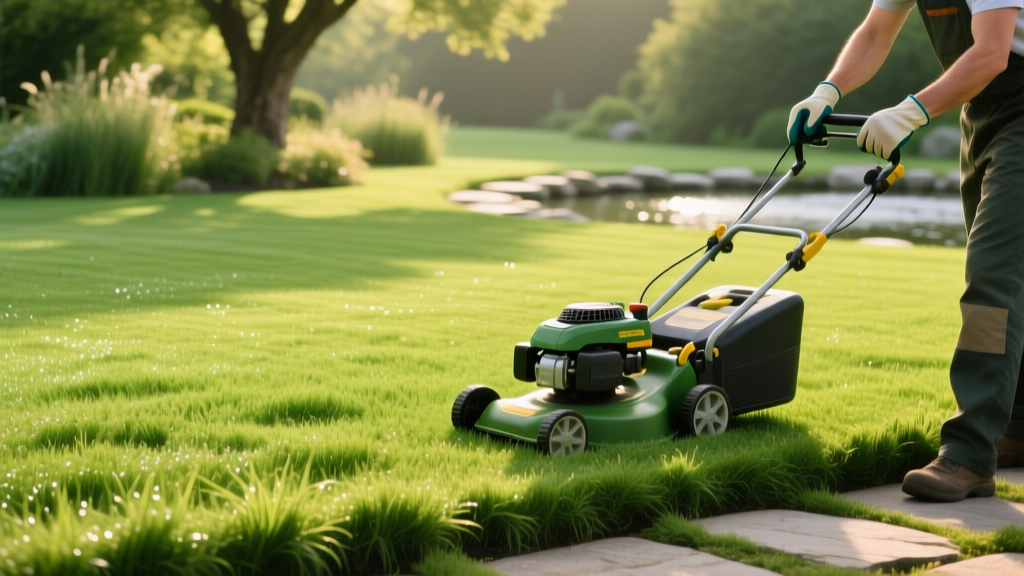
How to Maintain Perennial Grass Plants: A Step-by-Step Guide
The Biology of Perennial Grass Plants in Turf Systems
Maintaining perennial grass plants requires a fundamentally different approach than managing annual crops or seasonal color beds. Because species like Kentucky Bluegrass (KBG), Tall Fescue, Bermudagrass, and Zoysia persist year after year, their root systems must endure continuous defoliation (mowing), seasonal temperature extremes, and soil compaction. The secret to a dense, weed-resistant lawn lies in aligning your maintenance inputs with the specific biological growth cycles of your chosen perennial turfgrass.
According to the Penn State Extension Turfgrass Program, the most common cause of perennial turf decline is not pest pressure, but rather a mismatch between maintenance timing and the plant's natural carbohydrate storage cycles. Below is a precise, step-by-step protocol for maintaining perennial grass plants across all seasons.
Matrix: Cool-Season vs. Warm-Season Perennial Grass Plants
Before executing any maintenance step, you must identify your grass type. Applying warm-season protocols to cool-season perennial grass plants will result in severe nitrogen burn and winter kill.
| Characteristic | Cool-Season (KBG, Fescue, Ryegrass) | Warm-Season (Bermuda, Zoysia, Centipede) |
|---|---|---|
| Optimal Growth Temp | 60°F to 75°F (Soil Temp) | 80°F to 95°F (Soil Temp) |
| Peak Growing Season | Spring and Fall | Mid-Summer |
| Annual Nitrogen Need | 2.0 to 4.0 lbs per 1,000 sq ft | 1.0 to 3.0 lbs per 1,000 sq ft |
| Ideal Mowing Height | 2.5 to 4.0 inches | 0.5 to 2.5 inches |
| Best Time to Aerate | Early Fall (Late Aug - Sept) | Late Spring (May - June) |
Phase 1: Spring Awakening and Soil Preparation
Step 1: Baseline Soil Testing and Amendment
Perennial grass plants cannot efficiently uptake synthetic fertilizers if the soil pH is locked. In early spring (when soil temps hit 50°F), extract 15 core samples from your lawn at a 4-inch depth using a stainless steel soil probe. Mix the samples and send them to a professional lab like Logan Labs or your local university extension (cost: $15–$30).
Expert Tip: If your soil test reveals a pH below 6.0, apply pelletized calcitic lime at a rate of 50 lbs per 1,000 sq ft. Do not apply lime simultaneously with synthetic fertilizers, as it will cause the nitrogen to volatilize into ammonia gas. Wait 14 days between applications.
Step 2: Pre-Emergent Weed Control
To protect your perennial grass plants from resource competition, apply a pre-emergent herbicide like Prodiamine 65 WDG when Forsythia bushes drop their yellow blooms (soil temp 53°F–55°F for five consecutive days). Mix 0.33 oz of Prodiamine per gallon of water to cover 1,000 sq ft. This creates a chemical barrier in the top inch of soil, halting crabgrass cell division without harming established perennial turf roots.
Phase 2: Summer Defoliation and Hydration Protocols
Step 3: Precision Mowing and the One-Third Rule
Mowing is the most stressful activity inflicted on perennial grass plants. You must strictly adhere to the 'One-Third Rule': never remove more than 33% of the leaf blade in a single pass. Removing more shocks the plant, forcing it to cannibalize root carbohydrates to regenerate leaf tissue.
- Cool-Season Summer Cut: Raise the mower deck to 3.5 or 4.0 inches. Taller blades shade the soil, reducing evaporation and suppressing weed seed germination.
- Warm-Season Summer Cut: Maintain at 1.5 inches for Bermuda, 2.0 inches for Zoysia. Reel mowers (like the McLane 20-inch) provide a cleaner scissor-cut than rotary mowers at these low heights, preventing brown, frayed leaf tips.
Step 4: Deep Root Hydration via Cycle-and-Soak
Perennial grass plants require 1.0 to 1.5 inches of water per week during peak summer. However, applying this all at once on compacted or clay-heavy soils leads to runoff. Use the 'Cycle-and-Soak' method:
- Run your irrigation zone for 10 minutes (applying roughly 0.3 inches).
- Turn the zone off and wait 45 minutes for the water to infiltrate the soil profile.
- Run the zone for another 15 minutes to push the moisture front down to the 6-inch root zone.
Phase 3: Fall Root Building and Winterization
Step 5: Core Aeration and Overseeding
According to Texas A&M AgriLife Extension, soil compaction restricts oxygen flow to the rhizosphere, suffocating perennial grass plants. In early fall (for cool-season) or late spring (for warm-season), rent a walk-behind core aerator (approx. $85 for 4 hours). Extract 3-inch deep plugs spaced 3 inches apart.
Immediately after aeration, overseed cool-season lawns with a certified weed-free seed blend (e.g., Jonathan Green Black Beauty Ultra, $65 for 10 lbs) at a rate of 6 lbs per 1,000 sq ft. The aeration holes provide direct seed-to-soil contact, increasing germination rates from 40% to over 85%.
Step 6: Late-Fall Nitrogen Loading
The most critical fertilizer application for cool-season perennial grass plants occurs in late October or November, when top-growth has ceased but roots are still active. Apply 1.0 lb of actual nitrogen per 1,000 sq ft using a fast-release source like Urea (46-0-0) or a high-quality winterizer like Scotts Turf Builder WinterGuard (approx. $38 per 12,000 sq ft bag). The plant will store these carbohydrates in its crown and rhizomes, resulting in an aggressive, early-spring green-up without the excessive top-growth that requires frequent mowing.
Troubleshooting Common Perennial Grass Plant Failures
When maintenance protocols fail, perennial grass plants exhibit specific visual symptoms. Use this diagnostic matrix to identify and correct the underlying issue.
| Visual Symptom | Probable Cause | Corrective Action |
|---|---|---|
| White, frayed tips 24 hours after mowing | Dull mower blade tearing the leaf tissue instead of slicing it. | Sharpen or replace the mower blade. Blades require sharpening every 25 hours of runtime. |
| Shallow roots pulling up like carpet | Frequent, light watering (e.g., 15 mins daily) keeping roots near the surface. | Switch to deep, infrequent watering (1 inch twice a week) to force roots to chase moisture downward. |
| Circular brown patches with 'smoke ring' borders | Brown Patch fungus (Rhizoctonia solani), common in high humidity and night temps >68°F. | Apply a systemic fungicide like Azoxystrobin 23SC (Heritage G) at 2.5 lbs per 1,000 sq ft. Water only in the early morning. |
| Thinning in heavily shaded zones | Insufficient Photosynthetically Active Radiation (PAR). Perennial grass plants need 4+ hours of direct sun. | Prune tree canopies to raise the light angle, or transition the shaded zone to a groundcover like Liriope or shade-tolerant Fine Fescue. |
Pro-Level Equipment and Input Budgeting
Maintaining a high-density stand of perennial grass plants requires reliable equipment. Here is a realistic budget and tool list for a standard 5,000 sq ft residential lawn:
- Rotary Mower: Toro Recycler 22-inch with Personal Pace drive ($380–$420). The vortex blade design excels at mulching clippings back into the canopy.
- Backpack Sprayer: Chapin 4-Gallon Pro Series ($110). Essential for uniform liquid pre-emergent and fungicide applications.
- Spreaders: Lesco High Wheel Fertilizer Spreader ($160). Drop spreaders cause striping; a high-wheel broadcast spreader ensures edge-to-edge overlap for uniform nutrient distribution.
- Annual Inputs Cost: Expect to spend $250–$400 annually on premium seed, slow-release fertilizers, and preventative chemicals for a 5,000 sq ft property.
By strictly following these seasonal phases and respecting the biological limits of your specific turf species, your perennial grass plants will develop the deep root mass and carbohydrate reserves necessary to outcompete weeds and survive environmental stress.

