
Lawn Care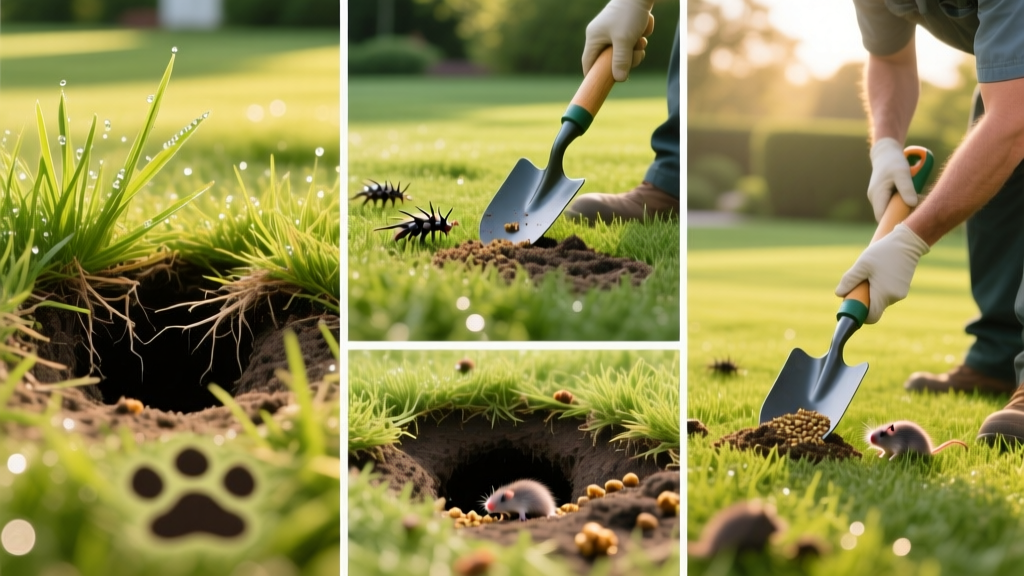
Diagnosing and Fixing Holes in Grass: Step-by-Step Guide
Waking up to a lawn that looks like it has been subjected to artillery fire is a frustrating reality for many homeowners. Whether you are dealing with tiny divots, deep craters, or winding surface tunnels, identifying the culprit is only half the battle. The true challenge lies in executing a systematic repair protocol that prevents the damage from returning. If you simply toss topsoil into a void without addressing the underlying cause or collapsing the subterranean architecture, the ground will inevitably sink again.
This guide provides a rigorous, step-by-step lawn maintenance procedure to diagnose, treat, and permanently repair holes in grass, utilizing industry-standard turfgrass management techniques.
The Diagnostic Framework: What is Digging Your Lawn?
Before purchasing fill dirt or grass seed, you must accurately identify the architect of the damage. Misidentifying the pest leads to wasted money on ineffective deterrents. Use the diagnostic matrix below to match the physical evidence in your yard to the correct culprit.
| Culprit | Hole Size & Shape | Dirt Mound Present? | Surface Signs & Behavior |
|---|---|---|---|
| Moles | 2+ inches wide; deep vertical shafts | Yes (Volcano-shaped mounds) | Raised soil ridges (tunnels) connecting mounds; feed on earthworms and grubs, not roots. |
| Voles | 1 to 1.5 inches (golf ball size) | No (Dirt is pushed aside) | Visible surface runways through grass; gnawed bark at the base of nearby trees and shrubs. |
| Skunks / Raccoons | 3 to 4 inches wide; shallow divots | No (Grass is flipped over) | Torn-up sod resembling peeled carpet; occurs at night while hunting for white grubs. |
| Earthworms | Tiny, granular clusters | Yes (Small granular castings) | Most prominent in spring/fall; indicates highly healthy, organic-rich soil. Do not eradicate. |
| Cicada Killers | 0.5 inches wide with a dirt halo | Yes (Loose soil fanned out) | Appears in mid-to-late summer; large wasps hovering near bare patches in thin turf. |
For a deeper understanding of subterranean rodent behavior, consult the University of Maryland Extension's guide on Moles and their companion resource on managing Voles in landscapes. Proper identification dictates your entire eradication strategy.
Step 1: Eradicate the Root Cause
You cannot repair holes in grass if the excavators are still active. Tailor your eradication method to the specific pest identified in the diagnostic phase.
Targeting Moles and Voles
Forget ultrasonic spikes and castor oil sprays; university turfgrass studies consistently show these are largely ineffective for severe infestations.
- For Moles: Use a bromethalin-based worm bait like Talpirid Mole Bait (approx. $22 for 20 worms). Place the bait directly inside the active tunnel using a specialized probe, then seal the entry hole with a clod of dirt. Moles consume the bait, mistaking it for their primary food source (earthworms), and expire underground within 24 to 48 hours.
- For Voles: Modify the habitat. Voles require cover to avoid hawks and owls. Clear all mulch, heavy leaf litter, and dense groundcover at least 3 feet away from tree trunks and garden beds. If populations persist, deploy standard wooden snap traps baited with a mix of peanut butter and oatmeal, placed perpendicular to their surface runways.
Stopping Skunks and Raccoons
These nocturnal foragers are not digging holes for shelter; they are digging for food. If your lawn is being torn up, you have a white grub infestation. Apply a preventative grub control containing Chlorantraniliprole (such as Scotts GrubEx1) at a rate of 2.87 lbs per 1,000 square feet in late spring or early summer. For immediate curative action in the fall, use a Trichlorfon-based product like Bayer Advanced 24 Hour Grub Killer Plus. Eliminating the grubs removes the food source, stopping the digging immediately.
Warning: Never use zinc phosphide or strychnine baits in areas where pets or children have access to the lawn. Always opt for EPA-registered products and strictly follow the label application rates.
Step 2: Prep the Crater and Collapse Tunnels
The most common mistake homeowners make when fixing holes in grass is simply dumping topsoil into the void. If the subterranean tunnel remains intact, the soil will wash away during the next heavy rain, and the hole will reappear.
- Probe the Void: Insert a piece of rebar or a long screwdriver into the hole to map the direction and depth of the tunnel.
- Fracture the Soil: Use a spading fork or a digging bar to stab into the ground along the tunnel's path. Collapse the roof of the tunnel by applying heavy downward pressure.
- Excavate Compromised Edges: Use a sharp half-moon edger or a square spade to cut away any dead, hanging grass around the lip of the hole. You need clean, vertical edges to ensure the new seed and soil knit seamlessly with the existing turf.
Step 3: Fill, Level, and Seed (The Repair Protocol)
With the tunnel collapsed and the edges prepped, it is time to rebuild the soil profile and re-establish the turf canopy.
The Ideal Topsoil Mix for Hole Repair
Do not use straight topsoil or pure compost. Straight topsoil compacts and restricts drainage, while pure compost shrinks significantly as it decomposes, causing the repair to sink.
The 50/30/20 Repair Recipe:
Mix 50% screened topsoil (for structural bulk), 30% finished compost (for microbial activity and moisture retention), and 20% coarse masonry sand (to prevent compaction and ensure drainage). Blend thoroughly in a wheelbarrow before application.
Mix 50% screened topsoil (for structural bulk), 30% finished compost (for microbial activity and moisture retention), and 20% coarse masonry sand (to prevent compaction and ensure drainage). Blend thoroughly in a wheelbarrow before application.
Execution Steps
- Overfill the Hole: Shovel the mixed soil into the crater, mounding it about 1 inch higher than the surrounding grade. This accounts for natural settling over the next few weeks.
- Tamp the Base: Use a hand tamper or the flat back of a steel rake to firmly compact the soil. Water the area lightly to help the soil settle into any remaining micro-voids.
- Sow the Seed: Select a grass seed that exactly matches your existing lawn (e.g., Kentucky Bluegrass for cool-season, Bermudagrass for warm-season). Broadcast the seed at a heavy rate—aim for roughly 5 to 6 seeds per square inch within the repair zone.
- Apply Starter Fertilizer: Use a high-phosphorus starter fertilizer (like a 24-25-4 NPK ratio) to accelerate root development. Apply at the rate specified on the bag, usually around 3 lbs per 1,000 sq ft.
- Top-Dress and Water: Lightly rake a 1/8-inch layer of peat moss or compost over the seed to retain moisture. Water immediately until the top 2 inches of soil are saturated, and maintain daily light waterings until germination occurs (typically 7 to 14 days).
Step 4: Post-Repair Maintenance and Deterrence
Once the seed has germinated and the new grass reaches mowing height (usually 3 inches), transition to your standard deep-and-infrequent watering schedule. To deter future excavators, maintain a dense, thick turf canopy. Pests like cicada killers and diggers prefer thin, bare soil.
For ongoing mole deterrence, consider applying a castor-oil-based granular repellent like Bonide Mole & Vole Repellent ($18 for 10 lbs) every 3 weeks during peak spring and fall foraging seasons. While not a cure for heavy infestations, it acts as an excellent perimeter defense to keep neighboring rodents from migrating into your freshly repaired lawn.
Frequently Asked Questions
Will rolling my lawn flatten mole tunnels and fix the holes?
Using a heavy lawn roller will flatten the surface ridges, but it will not collapse the deep primary tunnels, nor will it fix the vertical air shafts. Furthermore, rolling wet soil causes severe subsoil compaction, which restricts root growth and water infiltration. Always collapse tunnels manually with a spading fork before filling.
How long does it take for repaired holes to blend in with the rest of the lawn?
Under optimal growing conditions (soil temperatures between 65°F and 75°F), seed will germinate in 7 to 14 days. The patch will require 4 to 6 weeks of active growth and at least two mowing cycles to visually blend with the surrounding mature turf. Cool-season grasses repaired in late fall may remain visibly distinct until the spring green-up.
Should I fill earthworm holes in my grass?
No. Earthworm castings are a sign of exceptional soil health. They provide natural aeration and deposit nutrient-rich organic matter into the root zone. If the castings make the lawn bumpy, wait for the soil to dry completely and gently drag a stiff push broom or a piece of chain-link fence across the turf to break up the mounds and distribute the nutrients.

