
Lawn Care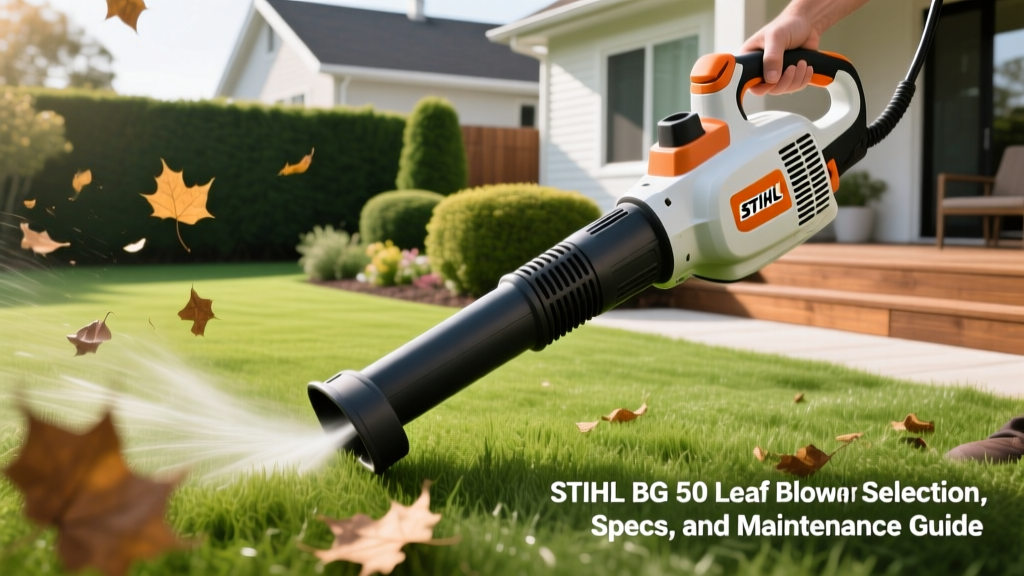
STIHL BG 50 Leaf Blower: Selection, Specs, and Maintenance Guide
Is the STIHL BG 50 the Right Blower for Your Property?
The STIHL BG 50 leaf blower occupies a highly specific niche in the outdoor power equipment market: it is an entry-level, gas-powered handheld blower designed for homeowners with properties under half an acre. Powered by a 27.2cc STIHL-engineered 2-stroke engine, it delivers 412 cubic feet per minute (CFM) of air volume at a maximum velocity of 159 miles per hour (MPH). Weighing just 9.5 pounds, it bridges the gap between underpowered cordless electric models and heavy-duty commercial gas blowers.
However, selecting the STIHL BG 50 requires an honest assessment of your property's debris profile. It excels at clearing dry autumn leaves from hardscapes, blowing grass clippings off driveways, and cleaning out garden beds. It is not designed for moving wet, matted leaves, heavy pine cones, or gravel. If your primary need is clearing wet debris or large acreage, you will need to step up to a backpack blower like the STIHL BR 200 or a higher-CFM handheld model.
STIHL BG 50 Quick Specs & Current Pricing
- Engine: 27.2 cc 2-stroke
- Air Volume: 412 CFM
- Air Velocity: 159 MPH
- Weight: 9.5 lbs (without fuel)
- Fuel Capacity: 24.4 oz
- Average Retail Price: $219.00 - $239.00
STIHL BG 50 vs. Competing Entry-Level Gas Blowers
When shopping in the $200 to $250 price bracket, you will encounter several competitors. Below is a functional comparison of how the STIHL BG 50 stacks up against other popular entry-level gas blowers currently on the market.
| Model | Engine (cc) | Max CFM | Max MPH | Weight |
|---|---|---|---|---|
| STIHL BG 50 | 27.2 | 412 | 159 | 9.5 lbs |
| Echo PB-250LN | 25.4 | 450 | 170 | 8.6 lbs |
| Husqvarna 125B | 28.0 | 430 | 170 | 9.4 lbs |
| Troy-Bilt TB2BP EC | 32.0 | 450 | 150 | 10.5 lbs |
While the Echo PB-250LN offers slightly higher CFM and a lighter chassis, the STIHL BG 50 is renowned for its anti-vibration system and long-term dealer support network. STIHL's proprietary engine technology also tends to idle more smoothly and resist flooding better than competitors when using standard 2-stroke fuel mixtures.
Critical Maintenance for the 27.2cc 2-Stroke Engine
The longevity of the STIHL BG 50 leaf blower depends entirely on how you manage its 2-stroke engine. Unlike 4-stroke engines with dedicated oil reservoirs, the BG 50 relies on oil mixed directly into the fuel for internal lubrication. Neglecting these protocols will lead to catastrophic piston scoring within hours of operation.
Fuel Mixing and Ethanol Degradation
You must mix fuel at a strict 50:1 ratio (2.6 ounces of 2-stroke oil per 1 gallon of gasoline). Use only ISO-L-EGD certified synthetic 2-stroke oil, such as STIHL HP Ultra. According to the Environmental Protection Agency (EPA), modern gasoline contains up to 10% ethanol (E10). Ethanol is highly hygroscopic, meaning it absorbs moisture from the air. In a vented 24.4 oz fuel tank, this leads to phase separation, where water and ethanol drop to the bottom of the tank and are drawn directly into the carburetor, causing severe corrosion and lean-running conditions.
Warning: Never Use E15 or E85
Using fuel with more than 10% ethanol will melt the BG 50's internal fuel lines and destroy the carburetor diaphragms. Always purchase fresh, 89-octane (minimum) fuel and add a marine-grade stabilizer like STA-BIL if the fuel will sit for more than 30 days.
Using fuel with more than 10% ethanol will melt the BG 50's internal fuel lines and destroy the carburetor diaphragms. Always purchase fresh, 89-octane (minimum) fuel and add a marine-grade stabilizer like STA-BIL if the fuel will sit for more than 30 days.
Spark Arrestor and Muffler Carbon Buildup
The BG 50 is equipped with a spark arrestor screen inside the muffler to prevent hot carbon particles from igniting dry brush. Over time, unburned 2-stroke oil bakes onto this screen, restricting exhaust flow. When exhaust is restricted, the engine bogs down under load and overheats. Every 100 hours of operation, remove the muffler cover, extract the spark arrestor screen, and clean it with a brass wire brush and carburetor cleaner. Never use a steel wire brush, as it can damage the mesh and allow sparks to escape.
Troubleshooting Common BG 50 Failure Modes
When the STIHL BG 50 leaf blower fails to perform, the issue is almost always traceable to air, fuel, or spark. Use this diagnostic framework to identify and resolve the problem without immediately resorting to a dealership visit.
- Symptom: Engine cranks but will not fire.
Cause: Flooded combustion chamber from over-priming or leaving the choke on too long.
Fix: Turn the choke to the OFF position (open). Depress the throttle trigger fully and lock it in place. Pull the starter cord sharply 5 to 8 times to clear the excess fuel. Once it sputters, return the trigger to idle and pull normally. - Symptom: Engine starts but dies when throttle is applied.
Cause: Clogged fuel filter or degraded fuel line.
Fix: Drain the tank and use a bent wire hook to fish out the fuel filter. If the filter is dark or the fuel lines feel spongy or cracked, replace them. Ethanol degradation typically requires fuel line replacement every 3 to 4 years. - Symptom: Loss of top-end RPM and excessive smoke.
Cause: Fouled spark plug or clogged air filter.
Fix: Remove the NGK BPMR7A spark plug. If the electrode is black and wet with oil, replace it. Do not attempt to clean a fouled 2-stroke plug; the gap (0.020 inches) and electrode integrity are critical. Simultaneously, tap out the felt air filter; never wash it with water or solvent.
Winterizing and Off-Season Storage Protocol
Improper winter storage is the leading cause of springtime carburetor failures. The University of Minnesota Extension notes that stale fuel varnishes inside the tiny jets of 2-stroke carburetors in as little as 60 days. To properly winterize your STIHL BG 50 leaf blower, follow this exact sequence:
- Add Stabilizer: Add a double dose of fuel stabilizer to the gas in your storage can, shake well, and fill the BG 50's tank to the brim. This leaves minimal air space for condensation to form.
- Circulate the Fuel: Start the blower and let it run at a moderate throttle for 5 minutes. This ensures the stabilized fuel mixture is drawn through the fuel lines, carburetor jets, and into the combustion chamber.
- Fog the Cylinder: While the engine is still running, remove the air filter and spray a 2-second burst of 2-stroke fogging oil directly into the carburetor throat. The engine will smoke heavily and stall. This coats the piston rings and crankshaft bearings with a protective oil film.
- Relieve Compression: Pull the starter cord slowly until you feel the compression stroke (the point of highest resistance), then stop. This positions the piston to cover the exhaust and intake ports, preventing the cylinder walls from rusting over the winter.
- Store Properly: Keep the unit in a climate-controlled environment if possible, away from direct sunlight which can degrade the plastic housing and rubber grips over time.

