
Lawn Care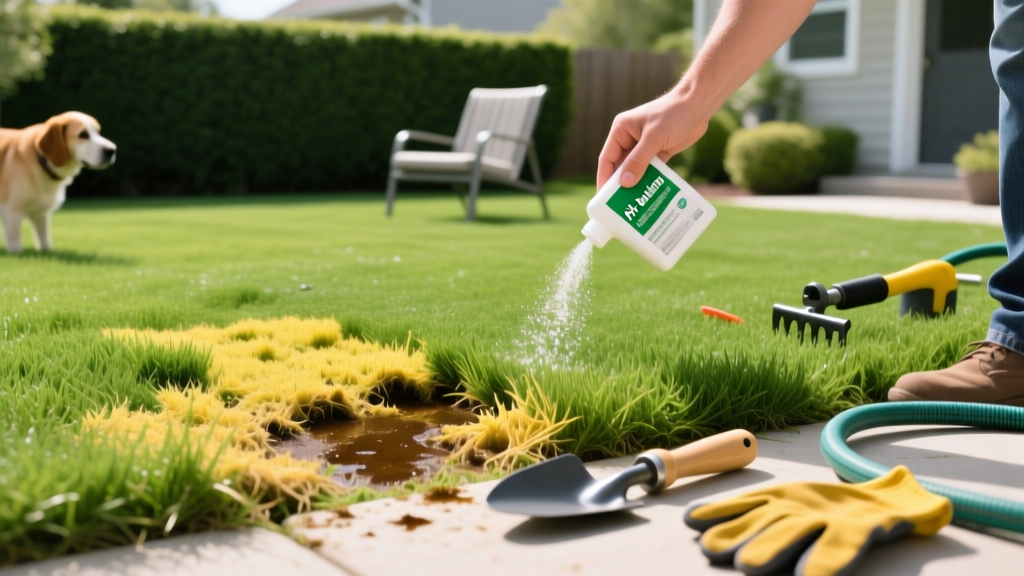
How to Stop Dog Pee From Killing Grass: A Remediation Playbook
The Science of Urine Burn: Nitrogen vs. pH
The most pervasive myth in lawn care is that dog urine kills grass because it is too acidic. Veterinary and agronomic analyses confirm that canine urine typically registers a pH between 6.0 and 8.0, which is well within the tolerable range for most turfgrasses. The actual culprit is nitrogen overload and osmotic stress.
Dog urine contains high concentrations of urea (a nitrogen compound) and dissolved salts. When a dog urinates, it deposits the equivalent of a heavy dose of synthetic liquid fertilizer into a concentrated 6-inch circle. According to turfgrass pathology reports from Penn State Extension, this massive localized nitrogen spike causes osmotic stress, pulling water out of the grass roots and resulting in rapid tissue desiccation (the 'burn'). The outer ring of dark green grass often seen around the dead spot is simply the result of the nitrogen diluting at the periphery, acting as a mild fertilizer.
Stop Using Baking Soda: Applying baking soda, lime, or tomato juice to your dog's diet to 'alkalize' their urine will not prevent lawn burn. Altering a dog's systemic pH can lead to severe urinary tract infections and struvite crystal formation. The damage is caused by nitrogen volume, not acidity.
Immediate Triage: The 8-Hour Flush Protocol
Once urine hits the soil, urea begins to hydrolyze into ammonia and carbon dioxide. You have an approximately 8-hour window to dilute the nitrogen concentration before irreversible root desiccation occurs. Do not rely on rain; manual intervention is required.
- Volume Requirement: Apply exactly 1.5 to 2.0 gallons of water directly to the spot. A standard garden hose on a gentle spray nozzle for 45-60 seconds achieves this volume.
- Use a Surfactant: Soil surface tension often causes water to pool and run off. Add a yucca-based soil surfactant (such as Simple Lawn Solutions Liquid Aerating Soil Loosener, approx. $24.99 per 32oz bottle) to your hose-end sprayer. This breaks the water's surface tension, forcing the diluted urea deep into the soil profile and away from the shallow root zone.
- Avoid Sprinkler Reliance: Standard irrigation systems deliver roughly 0.5 inches of water per hour, which is vastly insufficient to dilute a concentrated urine deposit. Manual spot-watering is mandatory.
Soil Remediation Matrix: Fixing Existing Dead Spots
When the 8-hour window is missed and the grass dies, the soil is left with a toxic accumulation of sodium and nitrogen salts. Simply throwing grass seed on a dead urine spot will result in immediate germination failure. You must remediate the soil chemistry first.
| Remediation Agent | Mechanism of Action | Application Rate | Estimated Cost |
|---|---|---|---|
| Calcium Sulfate (Gypsum) | Displaces sodium ions in the soil, improving drainage and flushing salts below the root zone without altering soil pH. | 2 lbs per 100 sq ft, watered in heavily. | ~$15.00 / 30 lbs (e.g., Pennington Fast Acting) |
| Granular Biochar | Highly porous carbon structure absorbs excess nitrogen and salts, acting as a chemical sponge while retaining moisture. | Top-dress 1/4 inch thick over bare spots before seeding. | ~$22.00 / 4 lbs |
| Enzymatic Cleaners | Uses urease-producing bacteria to biologically break down residual urea into harmless atmospheric gases. | Spray until saturated; requires 48 hours to process. | ~$18.00 / 32 oz (e.g., NaturVet Yard Odor) |
Repair Protocol: After applying Gypsum and flushing the soil, rake out the dead thatch. Apply a 1/4 inch layer of biochar or compost, and overseed at a rate of 5 to 8 lbs per 1,000 square feet. Keep the seed continuously moist for 14 days.
Dietary Interventions: Myths vs. Reality
The pet supplement industry profits heavily from products claiming to alter urine chemistry. The American Kennel Club and veterinary nutritionists warn against manipulating a dog's systemic pH. Instead, focus on dilution.
❌ What Fails (or Harms)
- Tomato Juice: Does not alter urine pH; adds unnecessary sodium to the dog's diet, worsening the salt load on your lawn.
- DL-Methionine: An amino acid used to acidify urine. It will not stop nitrogen burns and can cause severe liver and kidney stress in dogs.
- 'Dog Rocks' (Mineral Stones):strong> Placed in water bowls, these claim to filter nitrates. Independent agronomic testing shows zero measurable change in urine nitrogen output.
✅ What Works (Dilution)
- Hydration Increase: Add 4 to 8 ounces of low-sodium bone broth to your dog's daily water bowl. Increased water intake naturally dilutes the urea concentration in their bladder.
- Wet Food Transition: Switching from dry kibble (10% moisture) to canned or raw diets (70-80% moisture) significantly reduces the specific gravity and nitrogen density of the urine.
Grass Selection for High-Traffic Urine Zones
If you have multiple dogs or a small yard, agronomic defense is your best strategy. Turfgrass species vary wildly in their tolerance to nitrogen spikes and salt accumulation.
- Tall Fescue (High Tolerance): Varieties like Jonathan Green Black Beauty feature deep, extensive root systems (up to 2 feet deep) that can bypass the shallow zone where urine salts accumulate. This is the premier choice for dog-heavy cool-season lawns.
- Perennial Ryegrass (Moderate Tolerance / Fast Repair): While slightly less tolerant than Tall Fescue, Ryegrass germinates in 5-7 days. It is the ideal 'patch repair' seed to keep on hand for rapid spot-fixes throughout the growing season.
- Kentucky Bluegrass (Low Tolerance): Avoid this in dog zones. Its shallow root system and reliance on rhizomes make it highly susceptible to osmotic shock from urea.
- Bermudagrass (Warm-Season Option): For southern climates, Bermudagrass recovers rapidly due to aggressive stolon growth, but it will still brown if the nitrogen load is too high. Zoysia is a better warm-season alternative due to its denser thatch layer which slows urine penetration to the roots.
Long-Term Landscape Design: The 'Potty Post' Strategy
The ultimate solution to stop dog pee from killing grass is behavioral landscaping. Dogs naturally prefer to urinate on vertical objects to mark territory. You can exploit this instinct to save your turf.
Construct a 4x4 foot 'potty zone' in a corner of your yard using a border of steel edging. Fill the interior with 3 inches of pea gravel or cedar mulch, and place a large decorative stone, a driftwood log, or a commercial 'pee post' in the center. Train your dog to use this zone using high-value treats. The pea gravel allows urine to percolate rapidly into the subsoil without damaging surface vegetation, and the vertical object satisfies their marking instinct.
By combining immediate 8-hour triage, chemical soil remediation, and strategic landscape design, you can maintain a pristine lawn without compromising your dog's health or resorting to ineffective chemical supplements.

