
Lawn Care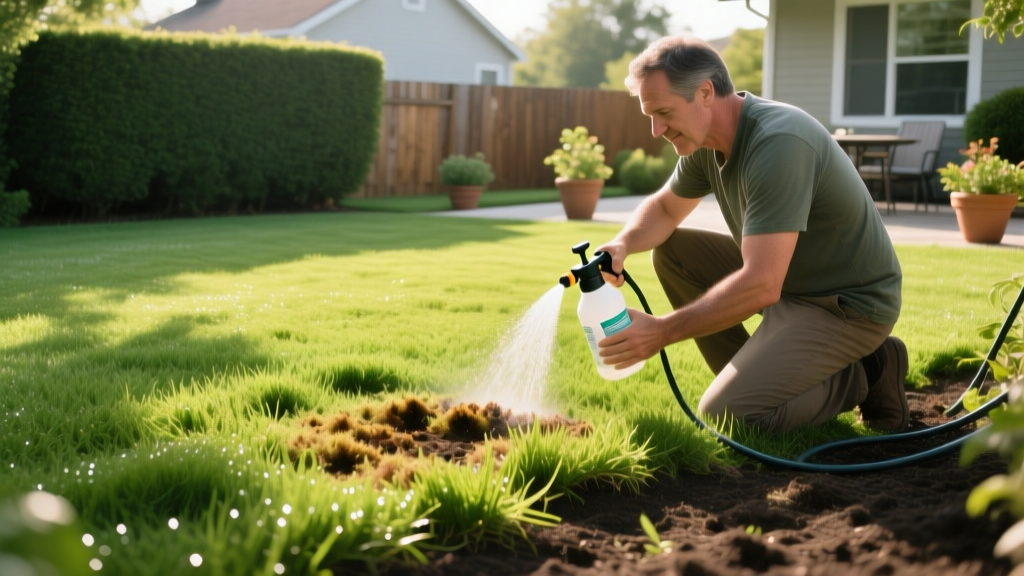
How to Stop Dog Pee Ruining Grass: Step-by-Step Repair Guide
If you are dealing with dog pee ruining grass, you are fighting a chemistry problem, not a gardening one. The distinct brown spots surrounded by a lush, dark green ring are the hallmark of nitrogen toxicity. While many homeowners mistakenly believe dog urine is highly acidic and burns the grass through pH imbalance, the real culprit is urea. When urea breaks down, it releases a massive, concentrated dose of nitrogen and salts directly into the root zone, effectively overdosing the turf.
The Science Behind the Burn: Nitrogen Toxicity vs. pH Myths
A typical dog deposits between 10 and 30 grams of nitrogen per liter of urine. When a 50-pound dog squats, it releases roughly 3 to 5 ounces of urine into a tight 10-inch circle. This localized dump equates to an application rate of over 4 pounds of nitrogen per 1,000 square feet in that single spot. To put that in perspective, a standard lawn fertilization treatment applies about 1 pound of nitrogen per 1,000 square feet. Your dog is applying four times the recommended seasonal fertilizer rate in one localized squirt.
The 'halo' effect—the bright green ring around the dead center—occurs where the urine was diluted just enough by the surrounding soil to act as a high-quality fertilizer rather than a toxic burn. According to the Colorado State University Extension, female dogs typically cause more severe damage than males because they squat and deposit their entire bladder volume in one concentrated area, whereas males tend to mark multiple vertical surfaces with smaller amounts.
⚠️ WARNING: The pH Alteration Myth
Never add tomato juice, baking soda, or commercial pH-altering supplements (like DL-Methionine) to your dog's water or food to prevent lawn burn. Dog urine is naturally slightly acidic to neutral (pH 6.0 to 7.0). Altering your dog's systemic pH to make their urine more acidic can lead to severe, life-threatening urinary tract stones (struvite or calcium oxalate), as noted by the Cornell University College of Veterinary Medicine. Focus on soil repair and dilution, not altering your pet's biology.
Step-by-Step Repair Procedure for Dead Urine Spots
Repairing urine-burned turf requires leaching the excess salts and nitrogen out of the root zone before introducing new seed. Follow this exact sequence for the highest germination success rate.
Step 1: The 2-Gallon Flush Rule (Immediate Action)
If you catch your dog in the act, immediately flood the area with water. You need a minimum of 2 gallons of water per square foot of the affected spot to push the urea and salts below the 6-inch root zone. A standard garden hose on a gentle shower setting for 30 to 45 seconds is usually sufficient. If the spot is already brown and dead, skip to Step 2, as flushing will no longer save the existing grass blades.
Step 2: Mechanical Thatch Removal
Dead urine spots leave behind a mat of necrotic thatch that repels water and blocks seed-to-soil contact. Use a steel-tine thatch rake to aggressively scratch the surface of the dead spot. You are not just removing dead grass; you need to scarify the top 1/4 inch of the soil to break up the crusted surface caused by urine salts. Rake until you see loose, aerated soil.
Step 3: Apply Gypsum (Calcium Sulfate) for Soil Conditioning
Urine deposits high levels of sodium salts, which destroy soil structure and cause clay particles to bind tightly together, preventing water drainage. Apply pelletized gypsum (calcium sulfate) at a rate of 2 pounds per 100 square feet directly over the scarified spots. The calcium in the gypsum displaces the sodium ions in the soil, restoring porosity and allowing the remaining nitrogen to leach away. A 40-pound bag of standard lawn gypsum costs around $18 to $22 in 2026 and will treat hundreds of individual spots. Water the gypsum in deeply immediately after application.
Step 4: Overseed with Urine-Tolerant Cultivars
Once the gypsum has been watered in and the soil is moist but not muddy, apply a high-quality seed blend. Avoid Kentucky Bluegrass, which is highly susceptible to nitrogen burn. Instead, use a mix heavy in Tall Fescue or Perennial Ryegrass. Top-dress the seeded area with 1/4 inch of peat moss or compost to retain moisture, and water lightly twice a day for 14 days until germination occurs.
Grass Species Urine Tolerance Matrix
Not all turfgrass reacts to urea and salts equally. If dog damage is a chronic issue, consider gradually transitioning your lawn to a more tolerant species during your fall or spring aeration and overseeding cycles.
| Grass Species | Urine Tolerance | Recovery Speed | Best Use Case |
|---|---|---|---|
| Tall Fescue | High | Moderate | Cool-season lawns; deep roots resist salt burn. |
| Perennial Ryegrass | Moderate-High | Very Fast | Quick patch repairs; germinates in 5-7 days. |
| Bermudagrass | Low | Fast (if alive) | Warm-season; highly prone to severe spotting. |
| Kentucky Bluegrass | Very Low | Slow | Avoid if dogs use the lawn frequently. |
Preventative Maintenance: Landscaping and Dietary Adjustments
Repairing spots is labor-intensive. Implementing preventative strategies will save you hours of raking and reseeding throughout the growing season.
- Hydration Hacks: The most effective way to reduce urine concentration is to increase your dog's water intake. Add low-sodium bone broth to their water bowl, or soak their dry kibble in warm water for 10 minutes before serving. This naturally dilutes the urea concentration in their bladder without altering their systemic pH.
- The 'Potty Post' Hardscape: Train your dog to use a designated area of the yard. Build a 4x4 foot bed filled with pea gravel or cedar mulch. Dogs are naturally drawn to distinct textures and scents. Bury a few of their previous droppings or a urine-soaked piece of sod in the gravel to establish the scent marker.
- Strategic Planting: If you have a specific fence line or tree where your dog repeatedly marks, plant urine-resistant shrubs like Elfin Creeping Thyme or Irish Moss in the splash zone to protect the primary turfgrass.
Frequently Asked Questions
Do 'Dog Rocks' actually prevent grass burn?
Dog Rocks are a popular commercial product consisting of naturally occurring mineral stones placed in your dog's water bowl. The manufacturer claims they filter out nitrates and heavy metals. However, independent turfgrass and veterinary analyses show that the primary cause of lawn burn is urea (which breaks down into ammonia and nitrogen), not nitrates in the tap water. While they are harmless to your pet, they do not significantly reduce the nitrogen load in your dog's urine and will not stop grass burn on their own.
Can I just sprinkle lime on the dead spots to fix the soil?
No. Agricultural lime (calcium carbonate) is used to raise the pH of acidic soils. Because dog urine is not highly acidic, and the damage is caused by nitrogen toxicity rather than pH drops, adding lime will not neutralize the burn. Furthermore, excess lime can lock up essential micronutrients like iron and manganese, leading to chlorosis (yellowing) in the surrounding healthy grass. Stick to gypsum (calcium sulfate), which improves soil structure and leaches salts without drastically altering soil pH.
How long does it take for a repaired spot to blend in?
If you follow the scarification, gypsum, and overseeding steps using Perennial Ryegrass, you will see germination in 5 to 7 days. The spot will require 3 to 4 weeks of consistent moisture to establish a root system deep enough to withstand foot traffic and mowing. Keep the mower blade set to a minimum of 3 inches to allow the new fescue or ryegrass blades to photosynthesize efficiently and shade out opportunistic weeds like crabgrass.

