
Lawn Care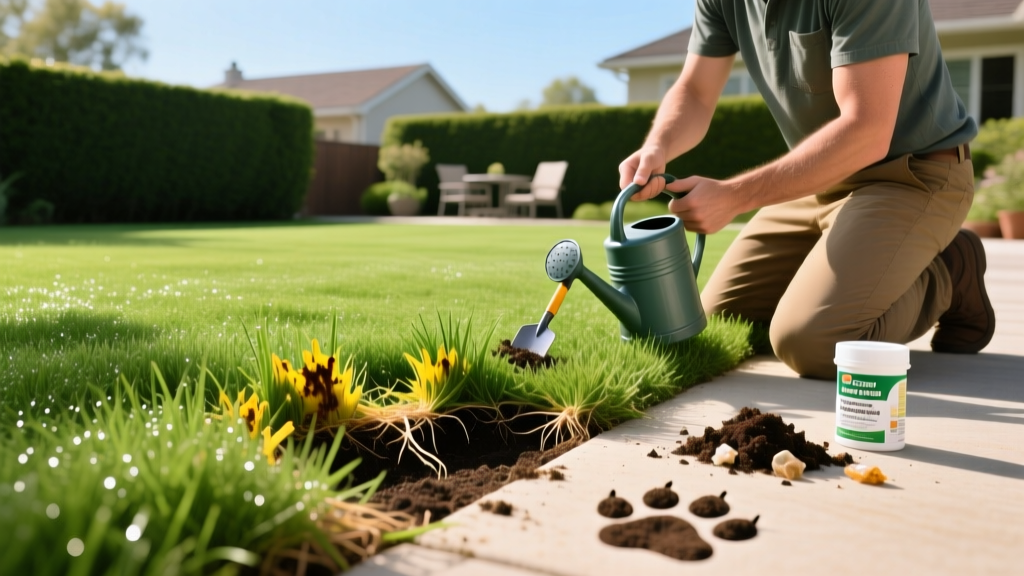
How to Stop Dog Urine From Killing Grass: Remediation Playbook
The Chemistry of Urine Burn: Nitrogen Overload vs. pH Myths
To understand how to stop dog urine from killing grass, you must first discard the most pervasive myth in lawn care: that urine burns grass because it is too acidic. Canine urine typically has a pH between 6.0 and 6.5, which is slightly acidic but well within the tolerance range of most turfgrasses. The actual culprit is a massive, localized overdose of nitrogen and salt.
When a dog squats, it deposits 150 to 300 milliliters of urine in a concentrated 12-inch circle. This single event delivers up to 20 grams of nitrogen per square foot. By comparison, standard lawn fertilization protocols recommend applying 1 to 4 grams of nitrogen per 1,000 square feet per application. The urine spot receives the equivalent of 10 to 20 times the recommended fertilizer rate, resulting in severe osmotic stress, root desiccation, and rapid tissue necrosis. The dark green ring often seen around the dead brown center is the "fertilizer effect" where the nitrogen concentration drops to a beneficial level at the periphery.
⚠️ CRITICAL WARNING: The Supplement Trap
Do not feed your dog "lawn-saving" supplements containing DL-Methionine or ascorbic acid. These products attempt to alter the dog's urine pH or increase thirst. Altering urine pH does not reduce the nitrogen load, and artificially acidifying a dog's urinary tract can precipitate dangerous calcium oxalate or struvite bladder stones. Always consult a veterinarian before altering your pet's diet for lawn aesthetics.
The Immediate Response Protocol (0-24 Hours)
If you catch the dog in the act or notice a fresh wet spot, immediate dilution is the only proven method to prevent the burn before it starts. Soil neutralization products cannot reverse osmotic damage once the salts have drawn the moisture out of the grass roots.
- Flush the Zone: Apply 1 to 2 gallons of plain water directly to the spot within 8 hours of urination. This dilutes the urea concentration below the phytotoxic threshold and pushes the salts past the root zone.
- Avoid Mechanical Agitation: Do not rake or aggressively scrub the wet grass. The leaf blades are already under chemical stress; physical friction will accelerate tissue tearing and crown damage.
- Mark the Spot: Use a biodegradable landscaping flag to mark the area so you can monitor it for necrosis and apply remediation treatments 48 hours later.
Soil Neutralization and Remediation (Days 1-7)
Once the initial nitrogen shock has occurred and the grass begins to yellow, your goal shifts from dilution to soil remediation. You must displace the accumulated sodium salts and restore the soil's cation exchange capacity (CEC). Below is a breakdown of the most effective soil amendments for treating established urine spots.
| Product / Amendment | Active Mechanism | Application Rate | Est. Cost (2026) |
|---|---|---|---|
| Gypsum (Calcium Sulfate) e.g., Espoma Organic Gypsum |
Calcium displaces sodium ions from soil clay particles, allowing salts to be flushed away without altering soil pH. | 2 lbs per 100 sq ft; water in heavily. | $18 / 40 lb bag |
| Liquid Humic Acid e.g., Simple Lawn Solutions |
Binds to excess salts, buffers soil toxins, and stimulates microbial activity to break down residual urea. | 2 oz per gallon of water; spray directly on spots. | $30 / gallon |
| Enzymatic Soil Cleaner e.g., BioTurf Enzymatic Treatment |
Introduces urease-producing bacteria that accelerate the breakdown of uric acid crystals and urea into harmless gases. | 4 oz per gallon; apply at dusk to avoid UV degradation. | $25 / 32 oz bottle |
According to turfgrass specialists at Bob Vila's landscaping network, combining a granular gypsum application with a liquid humic acid spray yields the fastest recovery for moderate burns. Apply the gypsum first, water it into the soil profile, and follow up with the humic acid spray three days later to stimulate root regeneration.
Long-Term Substrate and Behavioral Interventions
If soil remediation becomes a weekly chore, structural changes to the landscape offer a permanent solution. Training your dog to use a designated elimination zone removes the chemical threat from your primary turf areas entirely.
Building a Designated Potty Zone
- Substrate Selection: Avoid mulch or wood chips, which retain odor and harbor fungi. Use 3/8-inch washed pea gravel or crushed limestone over a base of permeable landscape fabric. Gravel drains instantly and can be sanitized monthly with a hose-down.
- Spatial Dimensions: A single dog requires a minimum 4x4 foot zone. For multiple dogs, scale up to 4x8 feet to prevent substrate saturation.
- Visual Barriers: Dogs prefer semi-private areas for elimination. Frame the gravel zone with ornamental bunchgrasses (like Karl Foerster Feather Reed) or a low wooden trellis to encourage consistent use.
Overseeding with Urine-Resistant Grass Cultivars
Not all grasses react to nitrogen and salt loads equally. If you are renovating a lawn heavily trafficked by pets, selecting the right cultivar is your first line of defense. Data compiled by The Spruce's turf care experts highlights significant variance in salt tolerance and crown recovery among common cool- and warm-season species.
Top Urine-Resistant Cultivars
- Tall Fescue (RTF or Titan Ultra): The undisputed champion for pet owners in transition and cool-season zones. Tall fescue possesses a deep, extensive root system (up to 3 feet deep) that dilutes surface salt concentrations and recovers rapidly from crown damage. Cost: ~$8/lb for premium seed.
- Perennial Ryegrass (Palmer IV): Highly tolerant of salt and rapid to germinate (5-7 days). While it lacks the deep roots of Tall Fescue, it is the best choice for quickly overseeding dead urine spots mid-season. Cost: ~$6/lb.
- Bermudagrass (TifTuf): For warm-season zones, TifTuf offers exceptional drought and salt tolerance. Its aggressive stolon growth allows it to creep into and fill dead spots within weeks during the summer growing season. Cost: Available primarily as sod (~$0.45/sq ft).
Cultivars to Avoid
Kentucky Bluegrass (KBG) and Fine Fescues have shallow root systems and low salt tolerance. A single urine event will typically kill KBG down to the crown, requiring complete physical removal of the dead thatch and reseeding.
Frequently Asked Questions
Will baking soda neutralize dog urine on grass?
No. Baking soda (sodium bicarbonate) is a salt. Adding it to a urine spot introduces more sodium into the soil, which exacerbates osmotic stress and worsens root desiccation. It does not neutralize the nitrogen load.
How do I repair a dead spot that is older than two weeks?
Once the grass crown is dead and brown, no liquid treatment will revive it. You must physically rake out the dead thatch, flush the bare soil with 3 gallons of water to leach out residual salts, apply a thin layer of compost, and overseed with Perennial Ryegrass or Tall Fescue. Keep the seed constantly moist for 14 days.
Does the sex of the dog affect lawn damage?
Yes, primarily due to urination posture, not urine chemistry. Female dogs and older males typically squat, depositing their entire bladder volume in a single, highly concentrated 12-inch circle. Intact males tend to mark vertically on trees or posts, distributing smaller volumes over a wider area, which rarely causes turf necrosis.

