
Lawn Care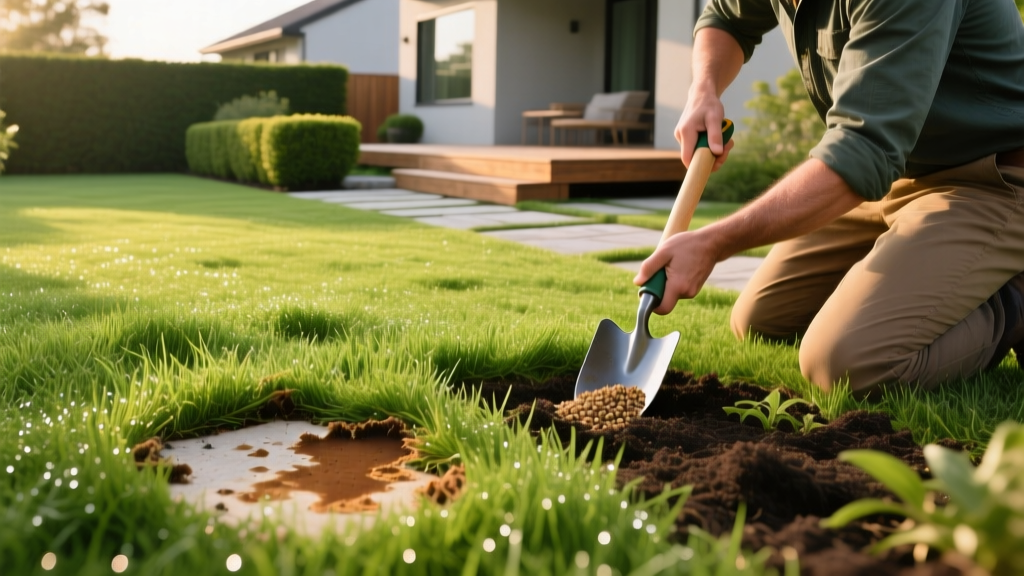
How Do You Stop Dog Wee Killing Grass? A Turf Repair Playbook
The Science of Canine Urine Burn: Nitrogen, Not pH
If you are researching how do you stop dog wee killing grass, you have likely encountered dozens of products claiming to neutralize acidic urine. These products are based on a fundamental misunderstanding of turfgrass pathology. Dog urine typically has a pH between 6.0 and 7.5, which is well within the tolerable range for most lawn species. The true culprit behind the necrotic, yellow-ringed dead spots is nitrogen toxicity and osmotic salt stress.
Canine urine contains roughly 10 to 15 grams of nitrogen per liter, primarily in the form of urea. When a 50-pound dog squats and deposits 150 ml of urine in a concentrated 6-inch circle, it delivers an equivalent application rate of over 60 pounds of nitrogen per 1,000 square feet. For context, a healthy lawn requires only 1 to 4 pounds of nitrogen per 1,000 square feet per entire year. This massive, localized overdose chemically burns the grass blades and dehydrates the root zone via salt accumulation.
Veterinary Warning: Avoid dietary supplements containing DL-Methionine marketed to 'acidify' your dog's urine. According to the American Kennel Club, altering your dog's urinary pH can lead to severe metabolic issues, including the formation of calcium oxalate bladder stones. Never sacrifice your pet's urinary tract health for your lawn's aesthetics.
Immediate Mitigation: The 60-Second Dilution Rule
The only scientifically proven method to prevent a urine spot from developing into a dead patch is immediate volumetric dilution. You must flush the urea and salts past the root zone before osmotic dehydration occurs.
- The Window: You have exactly 60 to 90 seconds after the dog urinates to dilute the spot effectively.
- The Volume: Apply 1 to 1.5 gallons of water directly to the spot. A quick spray from a hose nozzle is insufficient; you need enough volume to push the nitrogen 4 to 6 inches deep into the soil profile.
- The Tool: Keep a 2-gallon pressurized pump sprayer (filled with plain water) on your patio for instant deployment. This is vastly more efficient than unspooling a garden hose.
Soil Amendments vs. Dietary Supplements
When prevention fails and the lawn suffers chemical burns, homeowners often turn to soil amendments or dietary additives. Below is a data-driven comparison of common interventions to help you allocate your budget effectively.
| Intervention | Mechanism of Action | Efficacy | Estimated Cost |
|---|---|---|---|
| Immediate Water Dilution | Flushes urea past the root zone | High | $0.00 (Municipal water) |
| Pelletized Gypsum (Calcium Sulfate) | Displaces sodium ions, improves soil drainage | Medium | $15.00 per 50lb bag |
| Tomato Juice / Baking Soda | Alters urinary pH (Myth - does not reduce nitrogen) | None | $5.00 - $12.00 |
| DL-Methionine Pills | Acidifies urine (High risk for bladder stones) | Dangerous | $18.00 - $30.00 |
According to turfgrass researchers at Colorado State University Extension, applying gypsum to existing dead spots can help leach accumulated salts from the soil, but it will not neutralize the nitrogen burn that has already killed the grass crown. Gypsum is a rehabilitative soil conditioner, not a preventative shield.
Selecting Urine-Resistant Grass Species
If you are renovating a lawn heavily trafficked by dogs, your choice of turfgrass species is your primary line of defense. Grass species vary wildly in their ability to metabolize sudden spikes in soil nitrogen and tolerate salt stress.
The Resistant Tier
- Tall Fescue (Festuca arundinacea): The gold standard for dog owners. Its deep root system (often reaching 2 to 3 feet) and wide leaf blades allow it to dilute and metabolize urea spikes far better than fine-bladed grasses. Look for modern turf-type tall fescue (TTTF) cultivars like 'Titan Ultra' or 'Falcon IV'.
- Perennial Ryegrass (Lolium perenne): Highly resistant to urine burn and boasts an incredibly fast germination rate (5-7 days), making it ideal for overseeding damaged patches.
The Susceptible Tier
- Kentucky Bluegrass (Poa pratensis): While it spreads beautifully via rhizomes to fill in bare spots, its shallow root system makes it highly susceptible to osmotic salt stress from dog urine.
- Bermudagrass (Cynodon dactylon): A warm-season grass that suffers severe necrotic burning from concentrated urine spots, despite its general drought tolerance.
The Dead Spot Rehabilitation Protocol
Once the grass crown is dead, no amount of watering or fertilizing will bring it back. You must physically rehabilitate the soil and reseed. Follow this exact 5-step protocol to restore necrotic urine spots.
- Scarify the Patch: Use a steel thatch rake to aggressively remove the dead, yellowed grass blades and the top 1/2 inch of hydrophobic soil. You must expose bare, loose dirt for seed-to-soil contact.
- Apply Gypsum and Compost: Broadcast 1 cup of pelletized gypsum over a 1-square-foot area to displace residual sodium. Follow this with a 1/4-inch layer of screened, organic compost to reintroduce microbial life and retain moisture.
- Overseed with a Resistant Blend: Apply a certified weed-free seed mix containing at least 60% Tall Fescue and 40% Perennial Ryegrass. The seeding rate should be heavy: approximately 10 seeds per square inch.
- Top-Dress and Tamp: Cover the seed with another 1/8 inch of compost or peat moss. Walk over the patch or use a hand tamper to press the seed firmly into the soil bed. This prevents the seed from washing away during irrigation.
- Hydrate and Protect: Water the spot lightly twice a day (morning and late afternoon) to keep the top inch of soil consistently damp for 14 days. Place a physical barrier, such as a wire cloche or a decorative garden fence, over the spot to prevent the dog from returning to the same location while the seedlings establish.
Frequently Asked Questions
Does training my dog to use a specific 'potty area' work?
Yes, but it requires consistent operant conditioning. Designate a 3x3 foot area in a low-visibility corner of your yard and fill it with pea gravel or cedar mulch. Pea gravel drains instantly, preventing the nitrogen from pooling. Reward your dog with high-value treats (like freeze-dried liver) immediately after they eliminate in the target zone. Expect 3 to 4 weeks of consistent leash-guided training to solidify the habit.
Will adding apple cider vinegar to my dog's water save my lawn?
No. Apple cider vinegar marginally lowers the pH of the dog's stomach and urinary tract but does absolutely nothing to reduce the urea (nitrogen) concentration in the urine. Furthermore, chronic ingestion of acidic water can erode your dog's tooth enamel and cause gastrointestinal distress. Stick to volumetric water dilution on the lawn itself.
Why do female dogs seem to cause worse spots than males?
This is a matter of physics, not chemistry. The urine composition between male and female dogs is virtually identical. However, female dogs typically squat and release their entire bladder volume in a single, concentrated 6-inch circle. Male dogs tend to 'mark' vertical objects, releasing small amounts of urine over a wide surface area, which naturally distributes the nitrogen load below the threshold that causes turf burn.

