
Lawn Care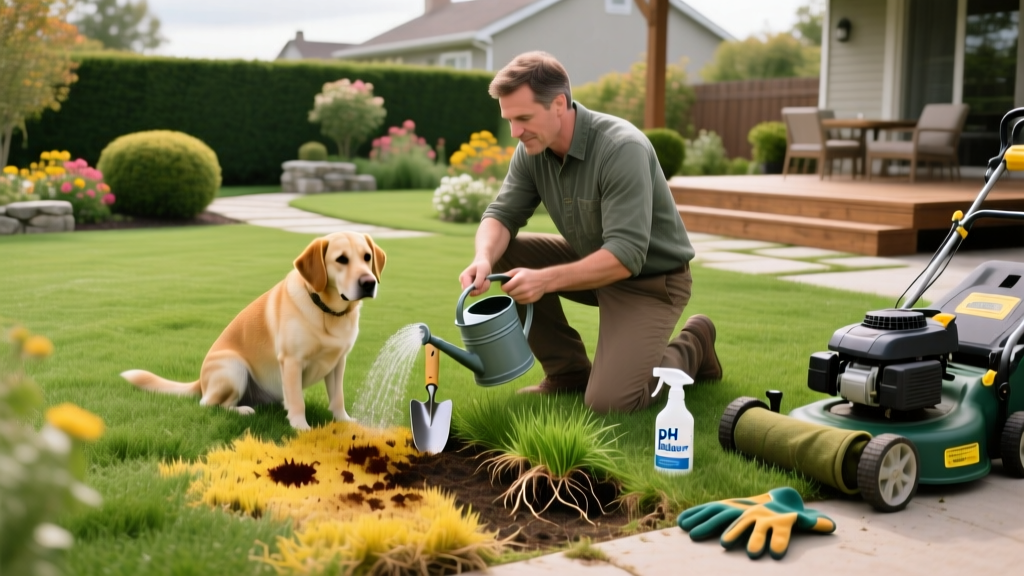
How to Stop Dog Wee Killing Lawn: Step-by-Step Repair Guide
The Science of Dog Urine Damage: Debunking the pH Myth
If you are dealing with dog wee killing lawn grass, the first step to effective repair is understanding the actual chemistry of the damage. A pervasive myth in lawn care is that dog urine is highly acidic and burns grass by lowering soil pH. This is scientifically incorrect. According to Penn State Extension, canine urine typically has a pH between 6.5 and 8.0, which is slightly alkaline, not acidic.
WARNING: Avoid pH-Altering Home Remedies
Feeding your dog tomato juice, baking soda, or apple cider vinegar to alter urine pH will not prevent lawn burn and can cause severe urinary tract or metabolic issues. The damage is caused by nitrogen overload and salt desiccation, not acidity.
The true culprit behind the dead, yellow-ringed spots is a combination of urea (nitrogen) overload and soluble salts. When a dog squats, it deposits a highly concentrated pool of nitrogen—often 10 to 15 times what the lawn can safely absorb in a single localized area. Simultaneously, the high concentration of soluble salts (sodium, potassium, and chlorides) creates an osmotic gradient that pulls water out of the grass roots, causing rapid desiccation. The characteristic 'fried' look with a dark green outer ring is the result of the center dying from salt burn, while the diluted outer edges receive a fertilizer boost.
Step 1: The 8-Hour Flush Protocol
Time is the most critical variable in preventing permanent necrosis. Once the urine hits the soil, you have an 8-hour window to dilute the salts before they bind to the root zone and desiccate the turf.
- Identify the Impact Zone: Female dogs and large breeds cause the most severe damage because they squat, releasing 3 to 5 ounces of urine in a concentrated 6-inch radius. Male dogs marking vertical objects cause less turf damage.
- Apply High-Volume Water: Use a watering can or hose to apply exactly 2 to 3 gallons of water over the affected 1-square-foot area. A light sprinkle is insufficient; you must physically push the salts past the root zone (6-8 inches deep) into the subsoil.
- Repeat if Necessary: If the dog urinates in the exact same spot daily, flush the area every 48 hours to prevent salt accumulation in the topsoil.
Step 2: Soil Amendment and Salt Displacement
If the spot has already turned brown and the grass is dead, flushing alone will not repair it. The soil profile is likely saturated with sodium salts, which destroy soil structure and prevent water infiltration. To fix this, you must displace the sodium using calcium.
Espoma Organic Garden Gypsum (Calcium Sulfate) is the industry standard for this process. The calcium in gypsum replaces the sodium on the soil cation exchange sites, allowing the sodium to be flushed away with subsequent watering.
| Soil Amendment | Primary Function | Application Rate | Effectiveness on Urine Burn |
|---|---|---|---|
| Pelletized Gypsum | Displaces sodium salts, improves drainage | 5 lbs per 100 sq ft | High (Best for repair) |
| Humic Acid | Chelates salts, stimulates microbial activity | 2 oz per 1,000 sq ft | Medium (Best for prevention) |
| Fast-Acting Lime | Raises soil pH | 5 lbs per 1,000 sq ft | Low (Can worsen ammonia volatilization) |
Apply the gypsum directly to the dead spots, rake it lightly into the top 1/2 inch of soil, and water deeply to activate the cation exchange process.
Step 3: Reseeding with Urine-Tolerant Cultivars
Once the salts are displaced, the dead turf must be replaced. Not all grasses handle nitrogen and salt spikes equally. According to University of Minnesota Turf Science, selecting the right seed blend is critical for long-term resilience.
Grass Species Tolerance Matrix
- Highly Tolerant: Perennial Ryegrass, Tall Fescue. (These deep-rooted, cool-season grasses can metabolize high nitrogen loads without immediate necrosis).
- Moderately Tolerant: Zoysiagrass, Bermudagrass. (Warm-season grasses recover via aggressive stolons, but will still show temporary yellowing).
- Highly Susceptible: Kentucky Bluegrass, Fine Fescues, Centipedegrass. (Shallow root systems make them highly vulnerable to osmotic salt stress).
Reseeding Procedure: 1. Remove the dead thatch and soil crust using a hand rake. 2. Topdress the area with 1/4 inch of screened compost. 3. Sow Pennington Smart Seed Tall Fescue Mix or a pure Perennial Ryegrass blend at a rate of 5-6 seeds per square inch. 4. Keep the top 1 inch of soil constantly moist for 14 days until germination occurs.
Step 4: Landscape Design and Long-Term Prevention
If flushing and reseeding become a weekly chore, modify your landscape architecture to accommodate your dog's habits. Designate a specific 'potty zone' in a low-traffic corner of the yard.
Building a Dog-Friendly Potty Zone
- Surface Material: Use pea gravel, cedar mulch, or artificial pet turf. Avoid cocoa mulch, which is highly toxic to dogs if ingested.
- Drainage Base: Excavate the area 4 inches deep and lay a base of crushed gravel before adding the surface material to prevent nitrogen pooling in the subsoil.
- Training Aid: Place a piece of sod or a commercial pheromone post in the center of the zone to encourage targeted elimination.
- Hydration Strategy: Increasing your dog's water intake naturally dilutes their urine. Add low-sodium bone broth to their water bowl or switch to a wet-food diet (consult your veterinarian first) to reduce the nitrogen concentration per ounce of urine.
Troubleshooting Decision Tree
Use this rapid diagnostic guide to determine the exact state of the affected turf and your immediate next steps.
- IF the spot is dark green and growing faster than the surrounding grass THEN it is a mild nitrogen boost; no action is needed, just mow normally.
- IF the center is yellow but the grass blades are still attached and firm THEN the roots are alive; immediately flush with 3 gallons of water and apply liquid humic acid to chelate the salts.
- IF the grass pulls up easily with zero root resistance and the soil smells faintly of ammonia THEN the roots are dead from salt burn; rake out the dead material, apply 1/2 cup of gypsum, wait 7 days, and reseed.
- IF the spots are irregular, large, and appear overnight without a green ring THEN you are likely dealing with a fungal pathogen like Brown Patch or Dollar Spot, not dog urine; apply a systemic fungicide like Scotts DiseaseEx.
By abandoning the pH myth and focusing strictly on salt displacement, deep flushing, and cultivar selection, you can maintain a pristine, durable lawn that coexists peacefully with your pets.

