
Lawn Care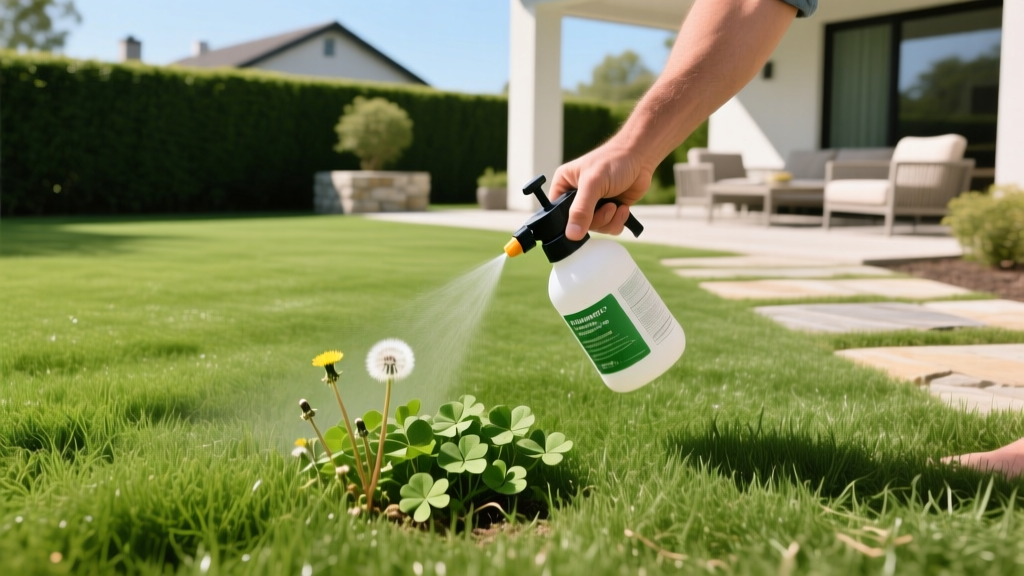
How to Stop Weeds From Growing: Lawn Spot-Treatment Guide
The Anatomy of a Weed Infestation: Why Spot-Treatment Works
Broadcast spraying entire lawns with broad-spectrum herbicides is an outdated, ecologically damaging approach that wastes chemicals and accelerates herbicide resistance. When figuring out how to stop weeds from growing, precision is your most effective tool. Spot-treatment targets individual weeds or isolated clusters using specialized active ingredients, minimizing chemical load on your turfgrass and soil microbiome. Modern turfgrass science emphasizes identifying the specific weed species, matching it to a mode-of-action-specific herbicide, and applying it with the correct adjuvant to ensure cellular uptake. This guide breaks down the exact chemistry, equipment, and protocols required to eradicate stubborn lawn weeds without damaging your surrounding grass.
Weed Identification Matrix: Match the Species to the Solution
The most common failure mode in DIY weed control is applying a broadleaf herbicide to a sedge, or a pre-emergent to an actively growing grassy weed. Herbicides are highly specific. Below is a decision matrix to help you select the correct chemical profile based on the weed species invading your turf.
| Weed Category | Common Species | Visual Identification | Active Ingredient Required | Top Product Pick & Avg Cost |
|---|---|---|---|---|
| Broadleaf | Dandelion, Clover, Plantain | Wide leaves, deep taproots, showy flowers | 2,4-D Choline, Dicamba, MCPP | Ortho WeedClear ($15/qt) |
| Grassy Weed | Crabgrass, Foxtail, Goosegrass | Narrow blades, rapid lateral spread, fibrous roots | Quinclorac, Fenoxaprop-p-ethyl | Bayer Advanced Crabgrass Killer ($22/32oz) |
| Sedge | Yellow Nutsedge, Purple Nutsedge | Triangular stem ('sedges have edges'), shiny leaves | Halosulfuron-methyl, Sulfentrazone | SedgeHammer ($18/13.5g packet) |
| Cool-Season Annual | Annual Bluegrass (Poa annua) | Light green, boat-shaped leaf tips, shallow roots | Mesotrione (for selective control) | Syngenta Tenacity ($60/4oz) |
Step-by-Step Spot-Treatment Protocol
Executing a flawless spot-treatment requires more than just pointing a nozzle at a weed. Follow this exact sequence to maximize herbicide efficacy and prevent turf phytotoxicity.
- Calibrate Your Equipment: Use a 1-gallon or 2-gallon pump sprayer equipped with a flat-fan nozzle (8002 or 8004 tip) rather than a cone nozzle. Flat-fan nozzles provide uniform droplet distribution and reduce drift compared to cone tips.
- Condition the Water: Municipal water is often alkaline (pH 7.5+) and 'hard' (high in calcium and magnesium). High pH causes alkaline hydrolysis, degrading herbicides like 2,4-D and Quinclorac before they even reach the leaf. Add a water conditioner or Ammonium Sulfate (AMS) at a rate of 2.5 ounces per gallon to lower the pH to the ideal 5.5–6.5 range and tie up hard water minerals.
- Mix the Adjuvant: Add a Non-Ionic Surfactant (NIS) at 1 teaspoon (0.16 oz) per gallon of water. This reduces the surface tension of the water droplet, allowing the chemical to spread evenly across the waxy cuticle of the weed leaf rather than beading up and rolling off.
- Add the Herbicide: Measure the exact dose using a dedicated syringe or measuring cup. For SedgeHammer, this is typically 0.9 grams per gallon. For liquid concentrates, follow the label's spot-treatment rate (usually 1.5 to 2.0 oz per gallon).
- Apply to the Point of Runoff: Spray the weed until the leaves are thoroughly wet and just beginning to drip. Do not drench the surrounding soil, as systemic herbicides need to be absorbed through the foliar tissue first before translocating to the roots.
⚠️ Temperature Warning: Never apply herbicides containing 2,4-D or Dicamba when ambient temperatures exceed 85°F. High heat causes these chemicals to volatilize (turn into a gas) and drift onto nearby desirable plants, trees, and garden beds, causing severe cupping and necrosis.
Advanced Herbicide Chemistry: Systemic vs. Contact
Understanding how to stop weeds from growing permanently requires knowing the difference between systemic and contact herbicides. Contact herbicides (like Carfentrazone) burn off the top growth of the weed within 24 hours but leave the root system intact, leading to rapid regrowth. Systemic herbicides (like Quinclorac and Halosulfuron-methyl) are absorbed through the leaf and translocated down into the rhizomes and taproots via the plant's phloem.
The Surfactant Multiplier Effect
The waxy cuticle on a weed's leaf is designed by nature to repel water. If you apply a systemic herbicide without a surfactant, up to 70% of the active ingredient will bounce off the leaf and hit the soil, where it may be rendered inactive by soil microbes. A methylated seed oil (MSO) or non-ionic surfactant penetrates this cuticle, creating microscopic channels that pull the active ingredient directly into the plant's vascular system. According to the Environmental Protection Agency (EPA) guidelines on safe herbicide application, using the correct adjuvant not only increases kill rates but allows you to use lower overall concentrations of the active chemical, reducing environmental impact.
Troubleshooting: Why Your Weeds Keep Coming Back
If you have applied the correct herbicide and the weed is still thriving, one of the following failure modes is likely at play:
- Mowing Too Soon: Systemic herbicides require 48 to 72 hours to translocate from the leaf to the root. Mowing your lawn 12 hours after application physically removes the herbicide-treated tissue before it can reach the root crown.
- Drought Stress Application: Weeds close their stomata (pores) during drought stress to conserve water. If you spray a wilted weed, the herbicide sits on the surface and degrades in the UV light. Always irrigate the lawn 24 hours before treatment to ensure the weeds are actively growing and their stomata are open.
- Wrong Growth Stage: Grassy weeds like crabgrass are highly resistant to Quinclorac once they reach the 'tillering' stage (when they develop multiple lateral stems). You must treat crabgrass when it is young (1-2 leaves). For mature crabgrass, a two-application protocol spaced 14 days apart is required.
- Ignoring the Seed Bank: Spot-treating kills the visible weed, but a single mature dandelion or nutsedge plant has already dropped thousands of seeds into the soil profile. Post-emergent spot-treatment must be paired with a fall pre-emergent application (like Prodiamine) to stop the next generation from germinating.
💡 Pro Tip for Nutsedge: Never pull yellow nutsedge by hand. The plant reproduces via underground tubers (nutlets). Pulling the stem snaps it off above the tubers, and the physical trauma actually stimulates the dormant tubers to sprout multiple new plants. Always use a Halosulfuron-methyl herbicide to kill the entire subterranean network.
Authoritative Resources & Further Reading
For localized advice on weed species specific to your hardiness zone and state regulations regarding restricted-use pesticides, consult your local university extension office. The University of Missouri Extension publication G6790 on Weed Control in Lawns provides an excellent, deeply researched framework for identifying regional broadleaf and grassy weeds, including exact application timing for cool-season and warm-season turfgrasses. Additionally, the EPA Pesticide Fact Sheet for 2,4-D offers critical safety data, environmental fate profiles, and re-entry intervals for the most common broadleaf herbicide used in residential lawn care.

