
Lawn Care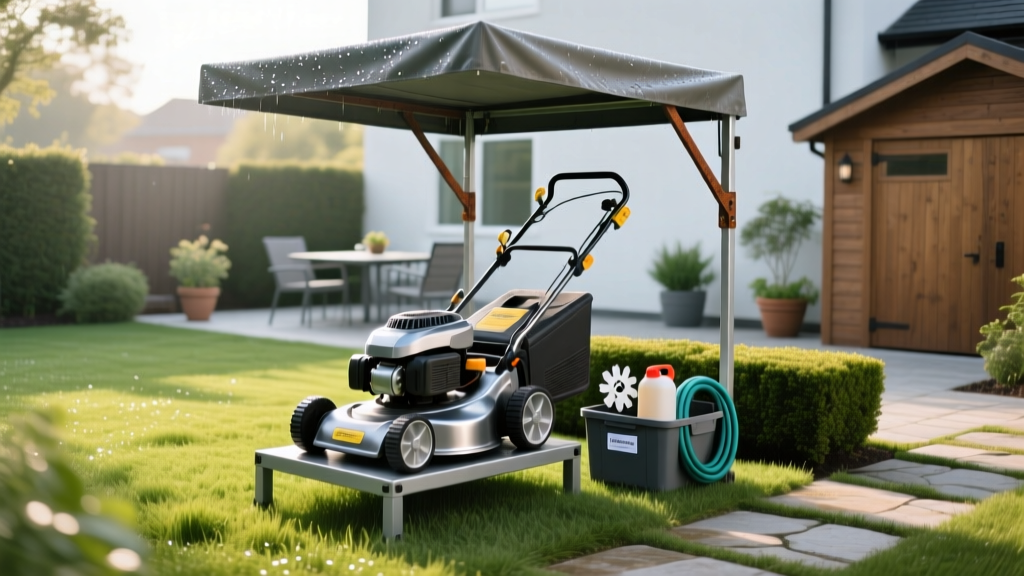
How to Store Lawn Mower Outside: Weatherproof Setup Guide
The Hidden Costs of Improper Outdoor Mower Storage
Storing a lawn mower outside without adequate preparation accelerates depreciation far beyond normal wear and tear. When exposed to the elements, ultraviolet (UV) radiation degrades plastic housings and rubber belts, while ambient moisture triggers rapid oxidation on the steel cutting deck. According to small engine repair data, carburetor corrosion and rodent-infested air filters account for nearly 40% of all springtime mower failures. Learning exactly how to store lawn mower outside requires a systematic approach to fuel stabilization, moisture barriers, and physical sheltering.
Warning: Never rely on a standard blue polyethylene tarp as your primary defense. Tarps trap ground moisture underneath, creating a high-humidity microclimate that guarantees rust formation on the mower deck and engine block within weeks.
Step 1: Engine and Fuel System Winterization
Modern gasoline contains up to 10% ethanol (E10), which is hygroscopic—meaning it actively absorbs moisture from the air. When left in a carburetor bowl for more than 30 days, this moisture causes 'phase separation,' where water and ethanol sink to the bottom, leading to severe internal corrosion and clogged jets. The University of Minnesota Extension emphasizes that fuel management is the most critical step in off-season equipment storage.
The Stabilizer vs. Drain Method
For standard carbureted engines (like the Briggs & Stratton 163cc series), you have two viable options:
- The Stabilizer Method (Recommended for Fuel Injection & Complex Carbs): Add a fuel stabilizer like STA-BIL Storage (1 oz per 2.5 gallons) to a nearly full tank. Run the engine for 10 minutes to circulate the treated fuel through the carburetor and fuel lines. This prevents varnish buildup and keeps rubber seals from drying out.
- The Drain Method (Best for Simple Carburetors): Shut off the fuel valve, disconnect the fuel line, and drain the tank completely. Start the engine and let it run until it stalls, burning off the remaining fuel in the carburetor bowl.
Step 2: Deck and Undercarriage Preservation
Grass clippings are highly acidic and retain moisture. If left caked on the underside of your mower deck, they will eat through the protective paint and cause structural rust. Before moving the mower to its outdoor storage location, tilt it on its side (always tilt with the carburetor and air filter facing UP to prevent oil from flooding the cylinder).
- Scrape: Use a 2-inch plastic putty knife to remove all compacted clippings. Avoid metal scrapers, which will gouge the factory paint.
- Clean: Wipe the deck with a degreaser like Simple Green Pro HD Heavy-Duty Cleaner.
- Protect: Apply a liberal coating of CRC 3-36 Multi-Purpose Corrosion Inhibitor or Fluid Film NAS to the bare metal and spindle shafts. These lanolin-based and petroleum-based sprays displace moisture and create a self-healing barrier that lasts up to 12 months outdoors.
Step 3: Choosing the Right Exterior Shelter
When figuring out how to store lawn mower outside, the physical barrier you choose dictates the machine's lifespan. Below is a comparison of the three most common outdoor storage solutions.
| Storage Method | Material / Specs | Pros & Cons | Estimated Cost |
|---|---|---|---|
| Fitted Mower Cover | 600D Marine-Grade Polyester with PU coating | Breathable, UV-resistant, exact fit. Cons: Can blow off in high winds if not secured with hem cords. | $35 - $60 |
| Mini Resin Shed | High-density polyethylene (HDPE) or Suncast resin | Total weather and rodent protection, lockable. Cons: High upfront cost, requires flat footprint. | $250 - $450 |
| Generic Tarp | 5-mil woven polyethylene | Cheap, readily available. Cons: Traps condensation, tears easily, causes rust. | $15 - $25 |
For dedicated outdoor storage without a shed, a 600D Oxford cloth fitted cover with taped seams and air vents is the absolute minimum requirement. The vents allow trapped humidity to escape while keeping rain out. Brands like Classic Accessories or Tough Shield offer model-specific fits that prevent wind from lifting the hem.
Step 4: Rodent and Moisture Deterrence Tactics
Mice and voles seek out warm, dry spaces in the winter, and a mower's air filter box and exhaust port are prime real estate. A single rodent nesting in your air intake can destroy a $25 paper filter and chew through the wiring harness, resulting in a $150+ repair bill.
Pro Tip: Do not use steel wool to block exhaust ports. Steel wool rusts rapidly when exposed to outdoor humidity, leaving rust stains on your engine block and eventually disintegrating. Instead, use Stuf-Fit copper mesh. Copper does not rust, and rodents cannot chew through it.
Stuff a small piece of copper mesh into the exhaust pipe and the air intake horn. Additionally, place two hanging DampRid Moisture Absorber bags inside the cover or shed to pull ambient humidity out of the air, protecting the spark plug wire and electrical connections from corrosion.
Battery-Powered Mower Exceptions: The Lithium-Ion Rule
If you are storing a battery-powered mower (such as the EGO Power+ 21-inch 56V or Ryobi 40V HP series) outside, the rules change drastically. Lithium-ion batteries are highly sensitive to freezing temperatures. Storing a Li-ion battery below 32°F (0°C) can cause the electrolyte inside the cells to freeze, leading to permanent capacity loss and internal dendrite formation that ruins the battery.
The Golden Rule for Electric Mowers: The mower body can stay outside under a weatherproof cover, but the battery must be removed and stored indoors in a climate-controlled environment between 40°F and 80°F. Store the battery at a 50% to 70% state of charge; storing it at 100% for months degrades the maximum cell capacity.
Spring Recommissioning Checklist
When temperatures consistently stay above 50°F, follow this checklist before your first cut:
- Remove copper mesh from the exhaust and air intake.
- Check the oil level; condensation can cause the oil level to rise above the full mark. Drain and replace with SAE 30 or 10W-30 if it looks milky.
- Inspect the air filter for nesting materials or moisture damage.
- Check tire pressure (typically 14-20 PSI for pneumatic tires).
- Sharpen or replace the blade if edge rolling is visible.
By following these precise protocols, you ensure that figuring out how to store lawn mower outside doesn't result in a costly trip to the small engine repair shop when spring arrives. Proper preparation takes less than 45 minutes and saves hundreds of dollars in preventable environmental damage.

