
Lawn Care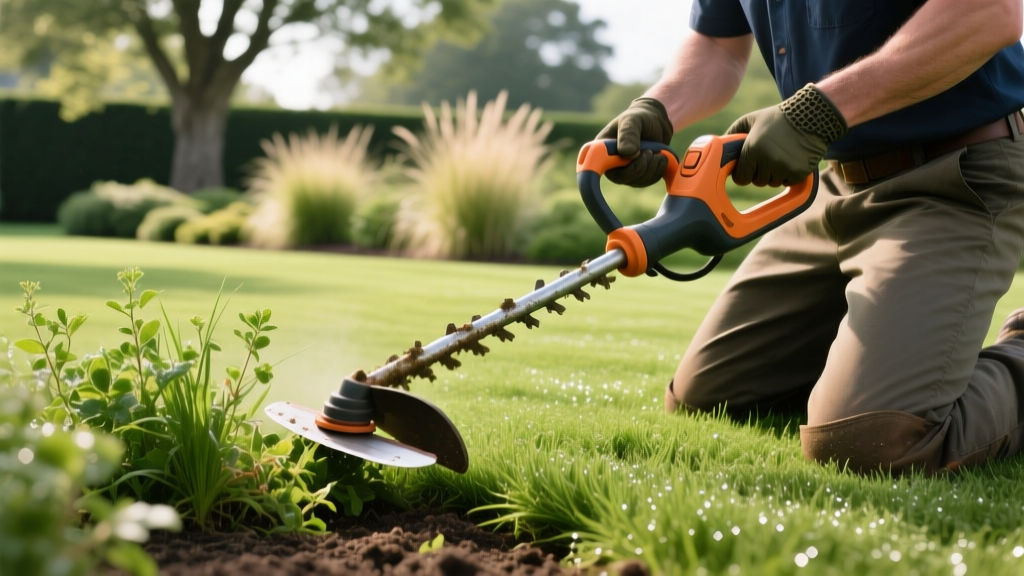
Strategic Weed-Eating for Spot-Treatment and Seed Control
The Role of Mechanical Weed-Eating in Spot-Treatment Protocols
When most homeowners think of weed-eating, they picture edging sidewalks or clearing overgrown fence lines. However, in advanced turfgrass management, strategic weed-eating serves a highly specific purpose: mechanical canopy reduction. For mature, broadleaf, and grassy weeds that have developed thick, waxy cuticles, broadcast and spot-spraying herbicides often fail. The chemical simply beads up and rolls off the leaf surface, wasting product and failing to reach the root system.
By integrating targeted weed-eating techniques into your spot-treatment guide, you physically remove the older, cuticle-heavy foliage. This forces the weed to initiate new, tender growth that is highly susceptible to systemic herbicides. According to turfgrass researchers at the University of Minnesota Extension, disrupting the physical structure of a mature weed can increase herbicide uptake efficiency by up to 40%, significantly reducing the volume of chemicals needed for effective control.
Pro Tip: The Canopy Clearance Concept
Do not scalp the weed down to the soil. The goal of strategic weed-eating is to remove the top 30% to 50% of the leaf canopy. This exposes the meristematic tissue (the growing point) and younger leaves, which absorb liquid herbicides far more rapidly than mature, sun-hardened leaves.
Do not scalp the weed down to the soil. The goal of strategic weed-eating is to remove the top 30% to 50% of the leaf canopy. This exposes the meristematic tissue (the growing point) and younger leaves, which absorb liquid herbicides far more rapidly than mature, sun-hardened leaves.
Trimmer Line Selection for Targeted Weed Species
Using the wrong trimmer line for weed-eating spot-treatments will result in shredded, ragged cuts that cause the plant to rapidly seal its wounds (suberization), blocking herbicide translocation. You need clean, sharp decapitation. In 2026, commercial-grade trimmer lines have evolved significantly, offering specialized shapes and polymers designed for specific weed stalks.
| Trimmer Line Profile | Diameter | Target Weed Species | Cut Quality |
|---|---|---|---|
| Round (Standard Nylon) | 0.065 - 0.080 inch | Young crabgrass, annual bluegrass, chickweed | Tears soft tissue; acceptable for young weeds |
| Twisted / Square | 0.095 inch | Mature dandelion, plantain, thistle | Slices cleanly through fibrous broadleaf stalks |
| Multi-Sided (Star/Penta) | 0.105 inch | Nutsedge, mature goosegrass, woody-stemmed weeds | Aggressive cutting; prevents stalk wrapping |
For spot-treating tough perennials like dandelions or yellow nutsedge, spool your weed eater with a 0.095-inch twisted line. The edges of the twisted line act like a serrated knife, providing the clean cut necessary to keep the plant's vascular system open for the subsequent chemical application.
The 48-Hour Rule: Timing Your Chemical Application
The most critical failure point in combining mechanical weed-eating with chemical spot-treatment is improper timing. When you trim a weed, its immediate biological response is to heal the wound and conserve water. If you apply a systemic herbicide like 2,4-D, dicamba, or quinclorac immediately after trimming, the chemical will be locked out by the plant's natural defense mechanisms.
Warning: Avoid Immediate Spraying
Never spray herbicides on the same day you weed-eat. The EPA guidelines on herbicide efficacy note that systemic chemicals require active phloem transport to reach the roots. A freshly cut weed shuts down phloem transport to prioritize wound sealing. Always wait 48 hours to allow the weed to resume active growth and open its stomata.
Never spray herbicides on the same day you weed-eat. The EPA guidelines on herbicide efficacy note that systemic chemicals require active phloem transport to reach the roots. A freshly cut weed shuts down phloem transport to prioritize wound sealing. Always wait 48 hours to allow the weed to resume active growth and open its stomata.
After 48 hours, the weed will push out tiny, pale-green micro-leaves from the cut crown. These new leaves lack a developed cuticle and are essentially sponges for liquid herbicides. Applying your spot-treatment at this exact window ensures the chemical is pulled directly down into the taproot or rhizome network, preventing regrowth.
Species-Specific Weed-Eating and Spot-Treatment Matrix
Different weed species require distinct weed-eating heights and chemical pairings. Use the following decision matrix to guide your spot-treatment protocol for the most common lawn invaders.
| Weed Species | Trim Height | Wait Time | Recommended Spot Herbicide |
|---|---|---|---|
| Crabgrass | 2.0 inches | 24 hours | Quinclorac (e.g., Drive XLR8) |
| Dandelion | 1.5 inches | 48 hours | Triclopyr + 2,4-D blend |
| Yellow Nutsedge | 2.5 inches | 72 hours | Halosulfuron-methyl (SedgeHammer) |
| Goosegrass | 1.0 inch | 24 hours | Fluazifop (for tall fescue lawns) |
Understanding the Nutsedge Exception
Notice that yellow nutsedge requires a higher trim height (2.5 inches) and a longer wait time (72 hours). Nutsedge reproduces via underground tubers (nutlets). If you cut it too low, you risk removing the primary photosynthetic engine before the plant has enough energy to translocate the halosulfuron-methyl down to the tubers. The 72-hour wait ensures the herbicide has time to move through the complex rhizome network and sterilize the nutlets.
Step-by-Step: The 'Decapitation and Drench' Protocol
To execute this hybrid weed-eating and spot-treatment method effectively, follow this exact field procedure:
- Identify and Isolate: Map out mature weed clusters that have developed seed heads or thick rosettes. Avoid weed-eating near desirable turfgrass that is currently experiencing drought stress, as mechanical damage to the turf will invite disease.
- Adjust the Guard: Remove the plastic debris guard on your string trimmer if it obstructs your view of the cutting plane. Precision is vital; you want to cut the weed, not scalp the surrounding soil.
- Execute the Sweep: Hold the trimmer head perfectly parallel to the ground. Use a smooth, sweeping motion to decapitate the top half of the weed canopy. Do not bounce the trimmer head, as this will scalp the soil and create bare spots where new weed seeds will germinate.
- Collect Debris: Use a leaf blower or a stiff push broom to remove the severed weed tops from the lawn. Leaving decaying organic matter on the turf can smother the grass and create a physical barrier that blocks your upcoming herbicide spray.
- Wait and Monitor: Mark the calendar. Wait the species-specific timeframe (24 to 72 hours). Look for the emergence of pale, micro-leaves at the cut site.
- Apply Chemical: Mix your selected systemic herbicide with a non-ionic surfactant (at a rate of 0.25% v/v) to break the surface tension of the new leaves. Spray until the foliage is visibly wet, but not dripping.
Common Weed-Eating Mistakes That Sabotage Spot-Treatments
Even experienced lawn care enthusiasts make errors when combining mechanical and chemical controls. Avoid these critical mistakes:
- Scalping the Crown: If you cut a dandelion below the soil line, you have effectively killed the top growth but left the taproot intact without any vascular pathway to deliver herbicide. The root will simply push up a new rosette weeks later. Always leave at least 1 inch of stalk above the soil.
- Using Dull Line: Trimmer line degrades and becomes rounded after hitting concrete or rocks. A rounded line bludgeons the weed stalk rather than slicing it, causing massive cellular trauma that triggers immediate wound-sealing. Replace or advance your line frequently during spot-treatment sessions.
- Ignoring Seed Heads: If a weed has already developed mature, viable seed heads (like mature crabgrass or Poa annua), weed-eating will simply scatter those seeds across your lawn. In these cases, use a specialized weeding tool to extract the entire plant, or carefully bag the seed heads by hand before trimming the lower canopy.
'Mechanical disruption is the unsung hero of integrated pest management. By using a string trimmer to strategically reduce weed biomass, we not only prevent seed dispersal but also manipulate the plant's biology to maximize chemical efficacy, ultimately reducing our total herbicide load for the season.'
FAQ: Integrating Trimmers with Chemical Controls
Can I use a weed eater to clear tall weeds before applying a pre-emergent?
No. Pre-emergent herbicides require a clear path to the soil surface to form a chemical barrier. Weed-eating tall weeds leaves a thick mat of decaying clippings that will intercept the pre-emergent granules or liquid, preventing them from reaching the soil. Always rake and remove all debris before applying pre-emergents.
Does the type of trimmer (gas vs. battery) affect the cut quality?
Modern 56V and 72V lithium-ion battery trimmers (such as the EGO Power+ or Milwaukee M18 Fuel lines available in 2026) offer superior torque control at lower RPMs compared to older gas models. This allows you to 'feather' the throttle and precisely slice weed stalks without the high-RPM tearing associated with gas trimmers, making battery models highly preferred for delicate spot-treatment canopy clearance.

