
Lawn Care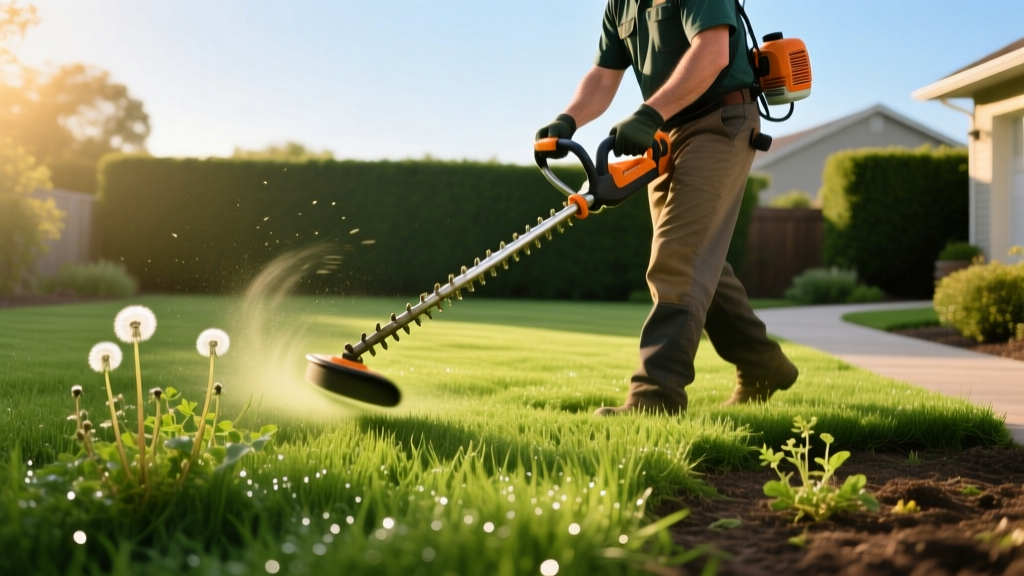
Strategic Weed Whacking Before Spot-Treating Lawn Weeds
The Physiological Reset: Why Tall Weeds Resist Herbicides
Homeowners frequently waste money and chemicals by spot-spraying mature, fully grown weeds. When stubborn species like Dallisgrass, Yellow Nutsedge, or Goosegrass reach their reproductive stage, their internal physiology shifts dramatically. Energy and nutrient flow moves upward to produce seed heads, and the plant's vascular system essentially stops pulling water and dissolved compounds downward into the root zone and rhizomes. If you apply a systemic post-emergent herbicide to a weed in this stage, the chemical sits in the upper foliage, burns the leaf tips, and fails to eradicate the root system. The weed inevitably returns in three weeks.
This is where strategic weed whacking becomes a critical, non-negotiable first step in professional spot-treatment protocols. By using a string trimmer to cut the weed down to its basal crown, you force the plant into a vegetative survival response. The weed must rapidly generate new, tender leaf tissue to resume photosynthesis. This aggressive regrowth phase reactivates the downward translocation of nutrients, creating a highly efficient delivery system that will pull your targeted herbicide straight down to the rhizomes and tubers when applied a few days later.
Equipment Calibration: Trimmer Line and Deck Height
Not all weed whacking is equal. The goal of pre-treatment defoliation is to slice the weed stalk cleanly without bruising, tearing, or shredding the stem. Shredded stems invite fungal pathogens and bacterial rot, which can kill the upper plant tissue before the herbicide has a chance to work.
String Thickness and Geometry
Avoid the standard 0.065-inch round line that comes pre-spooled on most consumer trimmers. Round lines tend to bludgeon and tear thick weed stalks. Instead, upgrade to a 0.080-inch or 0.095-inch twisted line (such as Oregon Gatorline or Weed Warrior ProTwist). The twisted geometry creates a sharp, aerodynamic edge that cleanly slices through fibrous weeds like mature crabgrass and dallisgrass, leaving a clean wound that heals quickly and pushes out new, spray-ready growth.
Trimmer Deck and Guard Management
For precision spot-prep, remove the plastic debris guard on your string trimmer if it restricts your line length, but only do this while wearing heavy-duty eye and leg protection. Guards often force you to choke the trimmer, leading to uneven cuts. Modern high-torque brushless trimmers, like the 2026 EGO Power+ ST15121 (15-inch cut) or the Husqvarna 122C gas model, offer the low-end torque required to maintain blade speed when dropping the cutting head directly into dense weed clumps without bogging down the motor.
⚠️ WARNING: The Seed Head Danger
If the target weed has already developed mature, viable seed heads (indicated by dark purple or brown coloring on dallisgrass, or yellow/brown dusting on nutsedge), do not use a high-speed string trimmer. High-RPM whacking will shatter the seed heads, launching thousands of viable seeds into your turf canopy. For weeds in the late seed stage, use manual pruning shears to snip the stalks, place them immediately into a sealed bucket, and dispose of them in municipal yard waste. Only use a weed whacker on weeds that are in the vegetative or early-flowering stage.
Species-Specific Whacking & Spot-Treatment Matrix
Different weed species require specific cutting heights and regrowth wait times to maximize herbicide efficacy. The table below outlines the exact parameters for the three most notoriously difficult lawn weeds.
| Weed Species | Whack Height | Regrowth Wait Time | Recommended Spot Herbicide | Active Ingredient |
|---|---|---|---|---|
| Dallisgrass | 1.5 inches | 5 to 7 days | MSMA (restricted) or Topramezone | Topramezone (e.g., Pylex) |
| Yellow Nutsedge | 2.0 inches | 3 to 5 days | Dismiss NXT | Sulfentrazone + Imazethapyr |
| Goosegrass | 1.0 inch | 4 to 6 days | Acclaim Extra | Fenoxaprop-p-ethyl |
Note: Always verify herbicide compatibility with your specific turfgrass species. Fenoxaprop-p-ethyl, for instance, is safe for cool-season turf and zoysia, but can severely injure St. Augustinegrass.
The 5-Step Cut-and-Spray Execution Protocol
Follow this exact sequence to ensure your weed whacking translates into a permanent kill.
- Isolate and Mark: Use small landscaping flags to mark the center of large weed clumps. This prevents you from losing track of the target area once the tall foliage is removed and mixed with turfgrass.
- The Precision Cut: Hold the string trimmer parallel to the ground. Drop the RPMs to 50% and sweep the trimmer head over the weed. You are not trying to scalp the soil; you are simply removing the top 80% of the leaf blade. Leave the basal crown intact.
- Debris Removal (Critical): Do not leave the severed weed blades on the lawn. Thick weed clippings will form a mat that blocks sunlight from reaching the regenerating crown, delaying the spray window. Use a leaf blower or a stiff turf rake to remove all severed material.
- The Regrowth Window: Wait for the exact number of days specified in the matrix above. You are waiting for exactly 1.5 to 2 inches of fresh, light-green regrowth. This young tissue lacks a thick waxy cuticle, making it highly permeable to herbicides.
- Targeted Application: Mix your chosen herbicide with a high-quality non-ionic surfactant or Methylated Seed Oil (MSO) at a rate of 0.25% v/v (roughly 1/3 teaspoon per gallon of water). The surfactant breaks the surface tension, allowing the chemical to spread evenly across the narrow, upright leaves of the regrowth.
Herbicide Chemistry and Surfactant Synergy
The success of the cut-and-spray method relies heavily on chemical penetration. Weeds like Yellow Nutsedge produce a thick, silicone-like waxy cuticle on their leaves to retain moisture. If you spray an aqueous herbicide solution on mature nutsedge without whacking and without a surfactant, the droplets will simply bead up and roll off onto the soil, wasting the chemical and potentially harming the turfgrass roots.
By weed whacking, you remove the oldest, most heavily waxed leaves. The new leaves that emerge 4 days later have a significantly thinner cuticle. When paired with a methylated seed oil (MSO) surfactant, the herbicide (such as Sulfentrazone) dissolves the remaining wax barrier and enters the plant's phloem within minutes. A 16 oz bottle of professional-grade Sulfentrazone costs roughly $85 in 2026, but because spot-treating requires only micro-doses mixed in a 1-gallon pump sprayer, that single bottle can last a homeowner up to four years, making it vastly more economical than buying consumer-grade ready-to-spray bottles.
Post-Whacking Clean-Up and Turf Protection
One of the most common failure modes in mechanical weed control is cross-contamination. Weeds like Dallisgrass and Bermudagrass spread via tough stolons and rhizomes. If your string trimmer deck is caked with wet soil and plant matter, you risk dragging live rhizome fragments to healthy areas of your lawn.
- Deck Flushing: After whacking weeds, use a garden hose with a high-pressure nozzle to blast the underside of the trimmer deck and the string guard.
- Line Inspection: Check the trimmer spool for wrapped stolons. Nutsedge and Dallisgrass can easily wrap around the spool hub; if left there, they can root inside the spool housing or be deployed onto the lawn the next time you trim.
- Turf Canopy Protection: When spot-spraying the regrowth, use a bell-shaped spray shield (like the Chapin Sure Spread shield) attached to your pump sprayer wand. This ensures the highly concentrated herbicide mixture only contacts the targeted weed regrowth and does not drift onto the surrounding desirable turfgrass, which could cause localized phytotoxicity (yellowing or stunting).
Frequently Asked Questions
Can I weed whack and spray on the same day?
No. If you spray immediately after cutting, the herbicide will pool on the open, bleeding sap of the cut stem. The plant's natural defense mechanism will rapidly seal the cut wound with callus tissue within hours, trapping the chemical on the surface and preventing it from moving down to the roots. Waiting 3 to 7 days allows the plant to open its stomata and resume active translocation.
Will weed whacking damage my desirable lawn grass?
If done correctly, no. By keeping the trimmer head parallel and only targeting the taller weed canopy, you will simply give your turfgrass a light, uneven trim. Because weeds like Dallisgrass and Crabgrass grow significantly faster and taller than surrounding turf, you can easily isolate the weed foliage. For a deeper dive into managing stubborn grassy weeds without harming your lawn, consult the NC State TurfFiles database for species-specific tolerance thresholds.

