
Lawn Care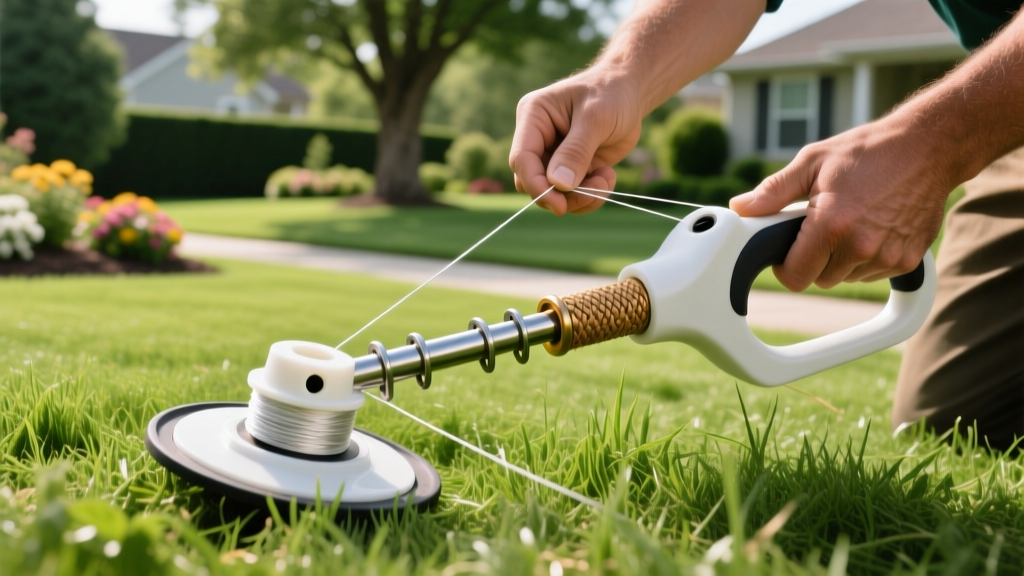
How to String a Weed Eater With Two Holes for Weed Spot-Treatment
The Mechanics of Dual-Hole Trimmer Heads in Weed Management
When executing precision spot-treatments for aggressive weed species, the mechanical reliability of your string trimmer is just as critical as your agronomic knowledge. Learning how to string a weed eater with two holes—often referred to as a dual-line or twin-eyelet bump-feed head—is a foundational skill for targeted weed eradication. Unlike single-line setups that rely on extreme rotational velocity to cut through vegetation, dual-hole trimmer heads (such as the Stihl AutoCut 25-2 or Echo Speed-Feed 400) distribute torque across two distinct cutting planes. This dual-line geometry prevents the line from whipping, deflecting, or snapping when it encounters the dense, fibrous stalks of mature weeds like Johnsongrass or Canada Thistle.
Spot-treating weeds in a healthy turfgrass canopy requires surgical precision. If your trimmer line jams or feeds unevenly mid-treatment, you risk scalping the surrounding desirable grass or missing the weed's crown entirely. According to turfgrass management guidelines from the Penn State University Turfgrass Extension, mechanical deflection during weed trimming often results in collateral damage to the lateral stolons of warm-season grasses like Bermuda and Zoysia. Properly stringing a dual-hole spool ensures consistent line feed, maintaining the exact cutting diameter required to sever the weed at the soil line without tearing the surrounding turf.
Matching Line Geometry to Target Weed Species
The efficacy of your dual-hole setup depends heavily on the cross-sectional shape and diameter of the trimmer line you load into the spool. Round lines slice cleanly through soft annual weeds, but they glance off woody or thick-stemmed perennials. Square, star, or twisted lines introduce aggressive cutting edges that chew through fibrous weed tissue. Below is a decision matrix for selecting the correct line profile based on the specific weed species you are spot-treating.
| Target Weed Species | Stem Density & Structure | Recommended Line Shape | Optimal Diameter (Dual-Hole) |
|---|---|---|---|
| Dallisgrass (Paspalum dilatatum) | Dense, fibrous basal clump | Square or Multi-sided | 0.095" - 0.105" |
| Johnsongrass (Sorghum halepense) | Thick, pithy vertical stalk | Twisted or Serrated | 0.105" - 0.130" |
| Canada Thistle (Cirsium arvense) | Woody, spiny lower stem | Twisted or Star | 0.130" - 0.155" |
| Field Bindweed (Convolvulus arvensis) | Soft, vining,缠绕 stems | Round or Square | 0.080" - 0.095" |
| Crabgrass (Digitaria sanguinalis) | Soft, decumbent lateral stems | Round | 0.065" - 0.080" |
Step-by-Step: How to String a Weed Eater With Two Holes
Threading a dual-eyelet spool requires strict attention to the manufacturer's directional arrows and tensioning protocols. Cross-winding the lines inside the spool housing is the primary cause of feed failure during spot-treatments. Follow this exact sequence to load your trimmer head for maximum reliability.
Step 1: Spool Preparation and Line Sizing
Remove the spool from the trimmer head by depressing the side tabs or unscrewing the central retention knob, depending on your model. Clean out any compacted grass clippings or melted line debris from the spool cavity. Cut two identical lengths of trimmer line—typically 15 feet per eyelet for standard residential dual-hole spools. Using asymmetrical lengths causes rotational imbalance, leading to excessive vibration that can fatigue the trimmer's drive shaft.
Step 2: Threading the Inner Eyelets
Locate the two internal anchor holes on the spool's central dividing wall. Insert the end of your first line into the left anchor hole, pulling it through until you have a 6-inch tail extending out of the spool's exterior exit port. Repeat this process for the right anchor hole. Critical detail: Ensure the lines are seated in the designated line-retention notches on the spool's outer rim. These notches lock the line in place while you wind, preventing it from slipping back into the anchor hole.
Step 3: Directional Winding and Tensioning
Look for the embossed arrows on the top of the spool. These indicate the required winding direction (usually clockwise for most modern bump-feed heads). Hold the spool firmly and wind the first line tightly and evenly in the designated groove. Do not overlap the line; overlapping creates friction heat, which fuses the nylon (a phenomenon known as 'line weld'). Once the first line is wound, leaving about 6 inches of slack, lock it into the outer rim notch. Repeat the winding process for the second line in its respective groove.
Step 4: Housing Alignment and Feed Testing
Thread the two 6-inch tails through the metal or reinforced plastic exit eyelets on the outer trimmer housing. Align the spool's notches with the housing's exit ports. Press the spool down firmly into the housing until it clicks or seats against the spring mechanism. Pull sharply on both external lines simultaneously to release them from the retention notches and engage the bump-feed mechanism. Verify that both lines extend to the exact same length by tapping the spool on the ground while the trimmer is off.
Advanced Spot-Treatment Techniques for Persistent Weeds
Once your dual-hole weed eater is properly strung and calibrated, your physical technique dictates the success of the spot-treatment. The UC Statewide Integrated Pest Management Program emphasizes that mechanical removal of perennial weeds must target the crown and upper taproot to prevent rapid vegetative regeneration. Simply decapitating the leaves of a weed like Dallisgrass will result in the clump pushing out new shoots within 72 hours.
The 'Scalloping' Method for Clumping Weeds
For deep-rooted, clumping weeds such as Dallisgrass or Tall Fescue invading a Bermuda lawn, use the scalloping technique. Tilt the dual-line trimmer head at a 15-degree angle toward the weed. Instead of swinging the trimmer horizontally, use a shallow, scooping motion to cut slightly below the soil surface. The dual 0.095-inch square lines will act like a localized tiller, severing the weed's basal crown without slicing the surrounding lateral stolons of the desirable turf.
Vertical Edging for Vining Weeds
When spot-treating vining weeds like Field Bindweed or Ground Ivy that have wrapped around the base of ornamental shrubs or fence posts, rotate the trimmer 90 degrees so the dual lines are spinning vertically. This vertical orientation allows you to 'shave' the vines off the bark or wood without the line catching and tearing the desirable plant tissue. The dual-hole setup is vital here; a single line spinning vertically will deflect wildly upon hitting a hard surface, whereas the dual lines stabilize the cutting plane.
'The difference between a successful mechanical spot-treatment and a damaged lawn often comes down to line feed consistency. A properly strung dual-hole head maintains the exact cutting radius required to surgically remove the weed crown while preserving the turf canopy.' — Turfgrass Maintenance Best Practices, 2026 Edition
Troubleshooting Dual-Line Feed Issues
Even with perfect spooling, aggressive weed spot-treatments can cause mechanical hiccups. Use this diagnostic framework to resolve feed issues in the field:
- One line feeds, the other does not: This indicates cross-winding inside the spool. The lines were likely wound over the central dividing wall. You must unspool and rewind, ensuring each line stays strictly within its designated upper or lower groove.
- Lines retract into the housing: The spool spring has lost tension, or the spool is not seated correctly on the drive splines. Remove the spool, stretch the central spring slightly by pulling upward, and ensure the spool's drive slots lock into the trimmer's drive shaft.
- Excessive vibration and uneven cutting: One line has broken off or worn down significantly shorter than the other. Dual-hole heads require symmetrical aerodynamic drag. Tap the head on the ground at high RPM to advance the shorter line, or manually pull both lines to equalize their length before resuming the spot-treatment.
Mastering how to string a weed eater with two holes transforms a basic landscaping tool into a precision agronomic instrument. By pairing the correct line geometry with meticulous spooling techniques, you can effectively eradicate stubborn weed species through mechanical spot-treatment, reducing your reliance on broad-spectrum post-emergent herbicides and preserving the long-term health of your turfgrass ecosystem.

