
Lawn Care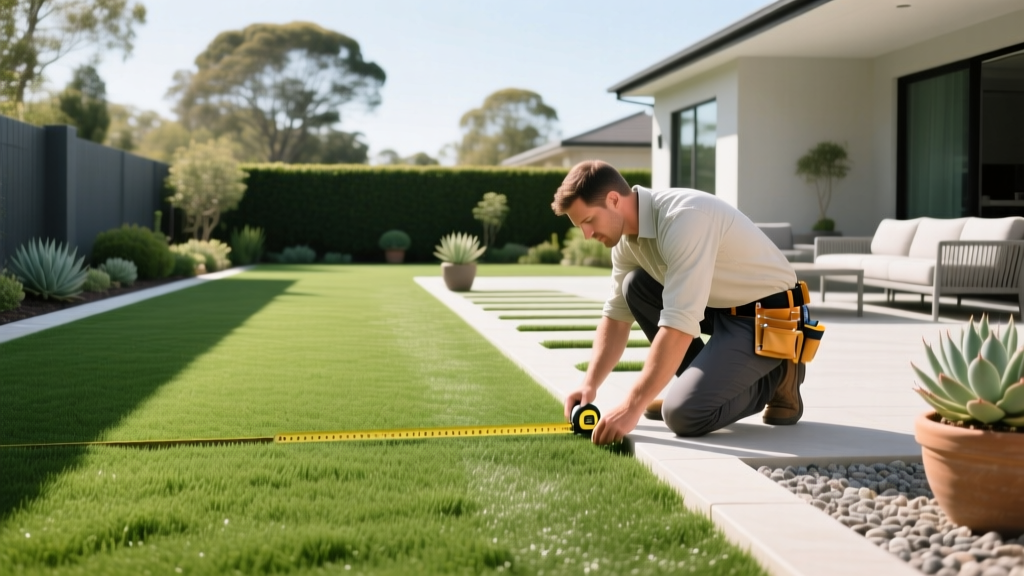
Synthetic Grass Installation Price: 2026 Cost & Coverage Guide
The national average synthetic grass installation price in 2026 ranges from $8.50 to $14.50 per square foot, with most homeowners paying $11.25 per square foot for a mid-range polyethylene turf system. For a standard 500-square-foot backyard, expect total project costs between $4,250 and $7,250. However, quoting a flat per-square-foot rate obscures the actual material dosages, base preparation coverage, and infill volumes required for a lasting installation. This guide breaks down the exact material quantities, coverage mathematics, and hidden cost variables that dictate your final invoice.
The 2026 Synthetic Grass Installation Price Matrix
Turf material alone accounts for 25% to 35% of the total project cost. The price variance is driven by face weight (ounces of yarn per square yard), backing quality, and polymer type. The Synthetic Turf Council recommends a minimum 50-ounce face weight for residential lawns to withstand foot traffic and UV degradation.
| Turf Material | Cost per Sq. Ft. | Face Weight | Best Application | Lifespan |
|---|---|---|---|---|
| Polypropylene | $2.00 - $3.50 | 30oz - 45oz | Low-traffic decorative areas, putting greens | 5 - 8 years |
| Polyethylene | $3.50 - $5.50 | 50oz - 75oz | Standard residential lawns, play areas | 12 - 15 years |
| Nylon | $5.50 - $8.00 | 60oz - 90oz | Heavy traffic, pet runs, hot climates | 15 - 20+ years |
⚠️ Procurement Warning: Never purchase turf with a face weight below 50 ounces for primary living spaces. Low face-weight turf lacks the structural density to hold infill properly, leading to matting, poor drainage, and premature UV failure. Always request a sample and verify the primary and secondary backing thickness (minimum 2mm total).
Base Preparation: Excavation and Coverage Dosages
The most critical factor in preventing drainage failure and surface undulation is the aggregate base. A proper base requires excavating 3 to 4 inches of native soil. The synthetic grass installation price heavily reflects the labor and material costs of importing and compacting this base.
Calculating Aggregate Tonnage
For a standard installation, you need a 3-inch compacted base of Class II road base (crushed rock with fines), topped with a 0.5-inch layer of decomposed granite (DG) or limestone chat for a smooth finish.
- Class II Road Base Coverage: 1 ton covers approximately 65 square feet at a 3-inch depth.
- Decomposed Granite (DG) Coverage: 1 ton covers approximately 120 square feet at a 0.5-inch depth.
Example Calculation for 500 Sq. Ft.:
You will need 7.7 tons of Class II road base and 4.1 tons of DG. Factoring in delivery fees and material costs ($45 to $75 per ton delivered), base materials will add $600 to $900 to your project. Labor for spreading and compacting this material with a minimum 185-lb vibrating plate compactor usually runs $1.50 to $2.50 per square foot.
Infill Dosage: The Hidden Material Cost
Infill is not optional; it weighs down the turf, protects the primary backing from UV rays, and keeps the grass blades upright. The type and dosage of infill directly impact both the upfront synthetic grass installation price and the long-term performance of the lawn.
Standard Silica Sand Infill
For standard residential lawns, rounded silica sand (16-30 mesh) is the industry standard. Rounded grains prevent the sharp edges from slicing the turf fibers over time.
- Standard Dosage: 1.5 to 2.0 pounds per square foot.
- Coverage: A 50-lb bag covers roughly 25 to 33 square feet.
- Cost: $12 to $18 per 50-lb bag.
For a 500-square-foot lawn at a 1.5 lb/sq. ft. dosage, you need 750 lbs of sand (15 bags), costing approximately $180 to $270.
Zeolite Infill for Pet Turf
If the lawn will be used by dogs, standard silica sand will trap ammonia and cause severe odors. Zeolite, a naturally occurring volcanic mineral, absorbs ammonia gases. According to research from the UC Davis Center for Turfgrass Science, proper drainage and porous infill are critical for managing pet waste in synthetic systems.
- Pet Area Dosage: 2.0 to 3.0 pounds per square foot.
- Cost: $35 to $45 per 40-lb bag.
Coverage Calculations: Factoring in Seams and Waste
Turf rolls are typically manufactured in 12-foot or 15-foot widths. Because most backyards are not perfect rectangles that align with these dimensions, you must account for a waste factor when calculating coverage and final pricing.
- Measure Maximum Dimensions: Measure the absolute longest and widest points of the area. Do not calculate square footage by breaking the yard into smaller geometric shapes; this leads to seam misalignment.
- Apply the 10% Waste Rule: Always add a minimum 10% overage to your total square footage to account for cutting around curves, trees, and irrigation valves.
- Seaming Materials: Every time two rolls meet, you need seaming tape and adhesive. Budget for 1 roll of 12-inch SuperSeam tape and 1 gallon of dual-component polyurethane turf adhesive for every 30 linear feet of seam.
Pro-Tip on Grain Direction: Synthetic grass has a directional grain. Always lay the turf so the grain points toward the primary viewing area (e.g., looking out from the back door). If you must seam two pieces, ensure the grain direction matches perfectly, or the seam will be glaringly visible in direct sunlight.
Long-Term ROI and Water Savings
While the initial synthetic grass installation price is significantly higher than laying natural sod ($1.00 to $2.00 per sq. ft.), the break-even point typically occurs between years 4 and 6. The EPA WaterSense program notes that outdoor water use accounts for nearly 30% of total household water consumption, with landscape irrigation being the primary driver.
By eliminating mowing, fertilizing, aerating, and watering, a 500-square-foot synthetic lawn saves the average homeowner $800 to $1,200 annually in maintenance and utility costs. Furthermore, many municipal water districts in drought-prone regions offer turf replacement rebates ranging from $2.00 to $4.00 per square foot, which can immediately offset 20% to 35% of your initial installation investment.

