
Lawn Care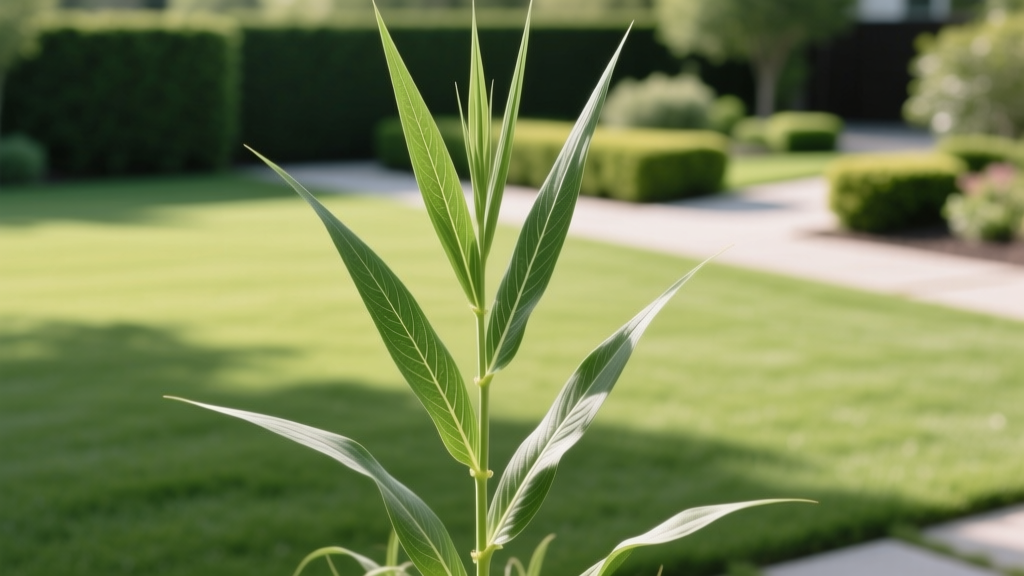
How to Identify and Kill a Tall Weed With Long Narrow Leaves
The Monocot Challenge: Why These Weeds Resist Standard Herbicides
When homeowners spot a tall weed with long narrow leaves invading their turf, they are almost always dealing with a monocotyledonous (monocot) plant. This presents a unique chemical challenge: your lawn is also a monocot. Broadleaf herbicides containing 2,4-D or dicamba—which easily kill dandelions and clover—will have zero effect on grassy weeds or sedges. To successfully eradicate a tall weed with long narrow leaves, you must first correctly identify the specific species, as the physiological differences between a grassy weed and a sedge dictate entirely different active ingredients and application strategies.
In 2026, the most effective spot-treatment protocols rely on targeted systemic herbicides and precise surfactant ratios. Below is a comprehensive diagnostic and treatment guide for the three most common culprits: Dallisgrass, Quackgrass, and Yellow Nutsedge.
Suspect Lineup: Identification Matrix
Before mixing any chemicals, perform a physical inspection. Pull a single specimen from the soil and examine the stem cross-section, ligule, and root structure against this matrix.
| Diagnostic Feature | Dallisgrass (Paspalum dilatatum) | Quackgrass (Elymus repens) | Yellow Nutsedge (Cyperus esculentus) |
|---|---|---|---|
| Stem Cross-Section | Flat, slightly compressed at base | Round, hollow nodes | Triangular (V-shaped), solid |
| Leaf Blade Width | 0.2 to 0.5 inches, coarse texture | 0.1 to 0.4 inches, rough upper surface | 0.2 to 0.4 inches, stiff, waxy |
| Ligule (Collar) | Membranous, 1-2mm, smooth edge | Membranous, very short, blunt | Absent (sedges lack true ligules) |
| Root / Subsurface | Deep fibrous roots, short rhizomes | Aggressive, sharp white rhizomes | Shallow rhizomes ending in nutlets (tubers) |
| Growth Habit | Clumping, star-like pattern, tall seedheads | Spreading patches, rapid vertical growth | Upright, grows 2x faster than surrounding turf |
Protocol 1: Spot-Treating Dallisgrass
Dallisgrass is a perennial warm-season grassy weed that forms unsightly, coarse clumps in both cool- and warm-season lawns. Because it is a true grass, selective post-emergent control in a cool-season lawn (like Tall Fescue or Kentucky Bluegrass) is notoriously difficult without causing turf phytotoxicity.
The Tribute Total Approach
The most reliable selective herbicide for dallisgrass suppression is a three-way tank mix containing thiencarbazone-methyl, foramsulfuron, and halosulfuron-methyl (commercially sold as Tribute Total). Expect to pay approximately $150 to $170 for a 2.5 oz bottle in 2026.
Pro Tip: The Micro-Scale Gotcha
The label rate for Tribute Total is 3.2 oz per acre. When spot-treating a 1,000 sq. ft. area, you only need 0.073 oz (roughly 2.1 grams). Standard kitchen or postal scales cannot measure this accurately. You must use a digital milligram jewelry scale (accurate to 0.01g) to prevent overdosing and burning your surrounding turf.
The label rate for Tribute Total is 3.2 oz per acre. When spot-treating a 1,000 sq. ft. area, you only need 0.073 oz (roughly 2.1 grams). Standard kitchen or postal scales cannot measure this accurately. You must use a digital milligram jewelry scale (accurate to 0.01g) to prevent overdosing and burning your surrounding turf.
- Prep: Mow the lawn to your standard height 24 hours before application to ensure the dallisgrass leaf surface is exposed and actively photosynthesizing.
- Mix: Fill a 1-gallon pump sprayer halfway with water. Add exactly 2.1 grams of Tribute Total. Add 0.5 fl oz of a high-quality methylated seed oil (MSO) surfactant.
- Agitate & Apply: Cap the sprayer, shake vigorously, and add the remaining water. Spray the dallisgrass clumps until the leaves are uniformly wet but not dripping.
- Follow-up: Dallisgrass requires sequential applications. Repeat the spot treatment 21 to 28 days after the initial application for complete necrosis of the deep fibrous root system.
Protocol 2: Eradicating Quackgrass via Wick Application
If your tall weed with long narrow leaves is spreading laterally via sharp, white underground rhizomes, you are dealing with quackgrass. According to Penn State Extension, quackgrass is a cool-season perennial grass. If it is invading a cool-season lawn, there are no selective herbicides that will kill it without killing your lawn.
The Glyphosate Paintbrush Method
Broadcast spraying non-selective herbicides like glyphosate (41% active ingredient) will destroy your lawn. Instead, use a targeted wick or sponge application to transfer the chemical exclusively to the quackgrass foliage.
- Equipment: Purchase a dedicated herbicide wick applicator or use a cheap, disposable foam paintbrush and a heavy-duty nitrile glove.
- Mixing: Mix a 2% glyphosate solution (2.6 fl oz of 41% glyphosate per 1 gallon of water). Add a non-ionic surfactant (NIS) at 0.25% v/v (roughly 1 teaspoon per gallon) to break the surface tension of the waxy quackgrass leaves.
- Execution: Let the quackgrass grow about 2 inches taller than your desirable turf. Dip the sponge or brush into the solution, wiping off excess to prevent dripping. Paint the solution directly onto the upper third of the quackgrass blades.
- Translocation: Do not mow for at least 5 days. Glyphosate is systemic; it requires time to translocate down the long narrow leaves and into the aggressive rhizome network to prevent regrowth.
Protocol 3: The Nutsedge Exception
Homeowners frequently misidentify yellow nutsedge as a grass because of its tall, narrow, light-green leaves. However, as the University of California IPM program notes, nutsedge is a sedge, identifiable by its solid, triangular stem. It reproduces via underground tubers (nutlets) that can remain viable in the soil profile for up to a decade.
Halosulfuron-Methyl Spot Treatment
Pulling nutsedge is a mistake; snapping the stem leaves the nutlet in the soil, which simply triggers the growth of a new plant within weeks. You must use halosulfuron-methyl (commonly sold as SedgeHammer, retailing around $25 for a multi-pack of 0.068 oz water-soluble packets).
- Dissolve: Drop one 0.068 oz packet into 1 gallon of water. Allow it to dissolve completely without shaking (shaking creates excessive foam).
- Surfactant Rule: SedgeHammer requires a Non-Ionic Surfactant (NIS) at a rate of 0.25% v/v. Do not use dish soap or crop oil concentrate, as these can cause severe turf burn when combined with halosulfuron.
- Targeted Spray: Spray the nutsedge patches thoroughly. The chemical will stunt growth within 48 hours, causing the leaves to yellow and the underground nutlets to abort.
- Patience: Complete control takes 2 to 3 weeks. A second application may be necessary for heavy infestations, but wait until the initial plants show clear signs of necrosis before reapplying.
Warning: Why Pre-Emergents Fail Here
Do not rely on standard pre-emergent herbicides like prodiamine or dithiopyr to stop these weeds. Pre-emergents only inhibit seed germination. Dallisgrass and Quackgrass primarily spread via rhizomes, and Nutsedge spreads via tubers. Pre-emergents will not stop vegetative reproduction from established subsurface networks.
Do not rely on standard pre-emergent herbicides like prodiamine or dithiopyr to stop these weeds. Pre-emergents only inhibit seed germination. Dallisgrass and Quackgrass primarily spread via rhizomes, and Nutsedge spreads via tubers. Pre-emergents will not stop vegetative reproduction from established subsurface networks.
Post-Treatment Lawn Recovery and Overseeding
Once the tall weed with long narrow leaves has been successfully eradicated, you will be left with bare spots in your turf canopy. Leaving these bare exposes the soil to new weed seeds and sunlight.
For cool-season lawns, wait at least 14 days after a glyphosate or Tribute Total application before overseeding. Rake the dead organic matter, spread a high-quality turf-type tall fescue blend at a rate of 5 to 8 lbs per 1,000 sq. ft., and cover with a thin layer of peat moss or compost to retain moisture. Water lightly twice daily for 14 days until germination is complete. For warm-season lawns (Bermuda or Zoysia), the surrounding stoloniferous turf will naturally fill in the void within 3 to 4 weeks during peak summer growing temperatures, provided you maintain a consistent nitrogen fertilization schedule of 0.5 lbs of N per 1,000 sq. ft. every 30 days.
Correct identification and precise chemical selection are the only ways to permanently remove these stubborn monocot invaders. By matching the active ingredient to the specific weed physiology, you can restore a uniform, healthy lawn without resorting to total lawn renovation.
For further reading on turfgrass weed management, consult the NC State TurfFiles weed identification database for region-specific emergence timings and localized herbicide resistance data.

