
Lawn Care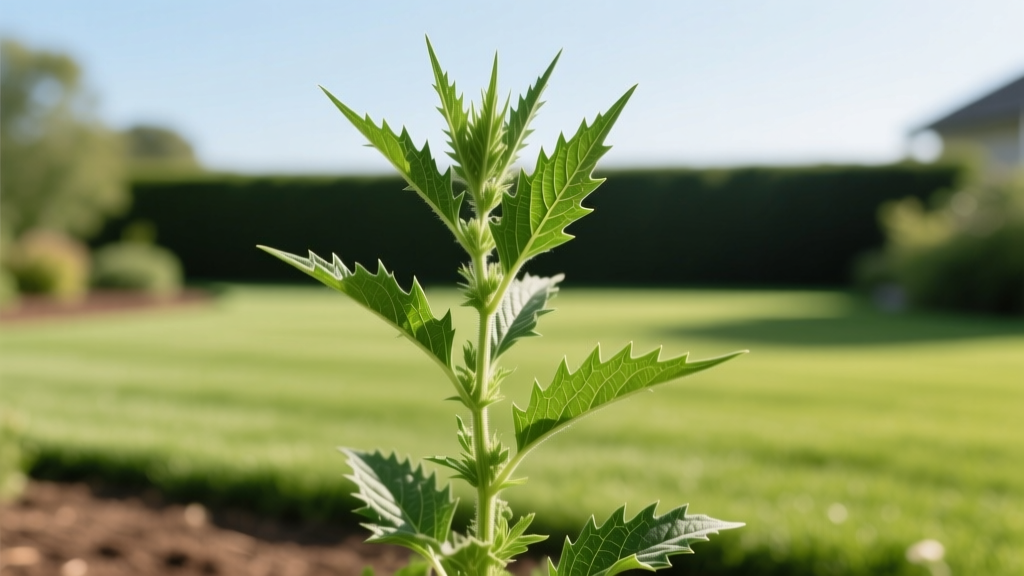
Tall Weed With Pointed Leaves: Identification and Spot-Treatment
Homeowners frequently search for a "tall weed with pointed leaves" because aggressive turf invasions often outpace the mower blade before they are properly identified. Treating these invaders blindly with broad-spectrum weed-and-feed products usually fails, resulting in wasted chemicals and damaged surrounding turf. The three most common culprits matching this visual description are Quackgrass, Dallisgrass, and Yellow Nutsedge. Each requires a distinctly different chemical approach based on its botanical classification, root structure, and your specific lawn type.
The Usual Suspects: Identifying Your Tall, Pointed-Leaf Weed
Before purchasing any herbicide, you must confirm the weed's identity. Misidentifying a sedge as a grassy weed will render your treatment completely ineffective. According to the NC State TurfFiles database, visual identification relies on three key morphological features: the collar region, the stem cross-section, and the root system.
| Weed Species | Botanical Type | Leaf & Stem Traits | Root System | Primary Active Ingredient |
|---|---|---|---|---|
| Quackgrass (Elymus repens) | Cool-Season Grass | Pointed leaves, distinct claw-like auricles at the collar, flat stem. | Thick, white, fleshy rhizomes that snap cleanly. | Fluazifop-p-butyl or Glyphosate |
| Dallisgrass (Paspalum dilatatum) | Warm-Season Grass | Coarse pointed leaves, membranous ligule, finger-like seedheads. | Deep fibrous roots with short, scaly rhizomes. | MSMA (restricted) or Glyphosate |
| Yellow Nutsedge (Cyperus esculentus) | Sedge (Not a grass) | Pointed leaves, distinct V-shaped ridges, triangular stem. | Nutlets (tubers) attached to delicate rhizomes. | Halosulfuron-methyl |
Spot-Treatment Protocol for Quackgrass and Dallisgrass
Quackgrass and Dallisgrass are true grasses, meaning they share a similar biological makeup with your desirable turf. This makes selective eradication highly dependent on your lawn species. For cool-season lawns (Fescue, Kentucky Bluegrass) and select warm-season lawns (Bermuda, Zoysia), Fluazifop-p-butyl (commonly sold as Ortho Grass B Gon) is the premier selective option. It targets grassy weeds without harming broadleaf plants or compatible turf.
⚠ CRITICAL TURF WARNING: Fluazifop-p-butyl will severely injure or completely kill St. Augustinegrass and Centipedegrass. If you have a St. Augustine lawn, you must abandon selective grassy weed killers. Instead, use a shielded wand to spot-spray a 41% Glyphosate solution (mixed at 2 fl oz per gallon of water) directly onto the weed, avoiding any contact with your desirable turf.
For mature Dallisgrass, selective control is notoriously difficult. While MSMA was historically the standard, it is now heavily restricted for residential use. The most effective residential protocol for Dallisgrass is manual removal of small patches or precise spot-treatment with Glyphosate, followed immediately by reseeding or laying sod plugs.
The Sedge Exception: Treating Yellow Nutsedge
Yellow Nutsedge is the most common reason homeowners complain that "nothing works" on their tall, pointed weeds. Because it is a sedge, standard grass killers (like 2,4-D, Dicamba, or Quinclorac) will not affect it. You can perform the "Stem Roll Test" to confirm its identity: roll the base of the stem between your thumb and index finger. If it feels distinctly triangular with sharp edges, you are dealing with nutsedge.
💡 The Halosulfuron-Methyl Standard
The gold standard for nutsedge eradication is Halosulfuron-methyl (brand name Sedgehammer). In 2026, a 5-pack of 0.9 oz water-soluble bags retails for approximately $24 to $28, which is enough to treat nearly an acre of spot infestations.
- Mixing Rate: One 0.9 oz packet per 1,000 square feet of treatment area.
- Surfactant Requirement: You must add a Non-Ionic Surfactant (NIS) at a rate of 0.25% v/v (roughly 1/2 teaspoon per gallon of mixed solution). Nutsedge leaves have a thick, waxy cuticle; without a surfactant, the herbicide will bead up and roll off.
- Timeline: Nutsedge is slow to die. Expect to see yellowing in 7-10 days, with complete necrosis taking up to 21 days. Do not reapply prematurely.
Precision Spot-Spraying Framework for Maximum Kill Rate
When spot-treating tall weeds, application technique is just as critical as chemical selection. Broadcast spraying wastes product and increases the risk of turf phytotoxicity. Follow this precision framework recommended by the UC Statewide IPM Program:
- Equip a Pin-Stream Nozzle: Swap the standard fan-spray nozzle on your tank sprayer for a pin-stream or narrow cone nozzle. This concentrates the chemical stream directly into the weed's crown and reduces herbicide drift by up to 60%.
- Time the Application: Apply herbicides when daytime temperatures are between 65°F and 85°F. Applications made above 90°F risk rapid volatilization, which can burn surrounding desirable turf.
- Implement the Mowing Buffer: Do not mow your lawn for 48 hours before application (to maximize the weed's leaf surface area for absorption) and wait at least 48 hours after application (to allow the chemical to translocate down into the root system).
- Drench the Crown: Aim the pin-stream at the base of the weed where the leaves meet the soil. For Quackgrass and Nutsedge, the growing point (crown) and root initiation zones are located at the soil line. Hitting the crown ensures the chemical is pulled directly into the rhizomes or nutlets.
Post-Eradication Lawn Recovery
Once the tall, pointed weeds have turned completely brown and the roots have died back (usually 14-21 days post-application), you must address the bare spots to prevent new weed seeds from germinating in the exposed soil.
Should I pull the dead weeds out?
Leave the dead foliage in place until it becomes brittle, then rake it out aggressively. Pulling dead Quackgrass or Nutsedge too early can accidentally rip up surrounding healthy turf roots that have intertwined with the dead weed's root mass. Once raked out, top-dress the bare spot with 1/4 inch of compost and overseed with your lawn's specific grass variety.
Why did my weed-and-feed fail to kill these weeds?
Standard weed-and-feed products rely on broadleaf herbicides (2,4-D, Mecoprop, Dicamba). These chemicals target the biological pathways of dicot plants (like dandelions and clover). Quackgrass, Dallisgrass, and Nutsedge are monocots. Broadleaf herbicides are biologically incapable of killing monocot weeds. Furthermore, the EPA Safe Pest Control guidelines emphasize that using the wrong chemical class not only fails to solve the problem but unnecessarily introduces ineffective pesticides into your local soil ecosystem.
Can I just hand-pull tall quackgrass or nutsedge?
Hand-pulling is generally a trap. Quackgrass spreads via thick white rhizomes that snap easily when pulled; every 1/2 inch fragment left in the soil can generate a new plant. Yellow Nutsedge produces underground "nutlets" that are almost impossible to extract completely by hand. Chemical translocation via spot-spraying is the only reliable way to destroy the subterranean reproductive structures of these specific weeds.

