
Lawn Care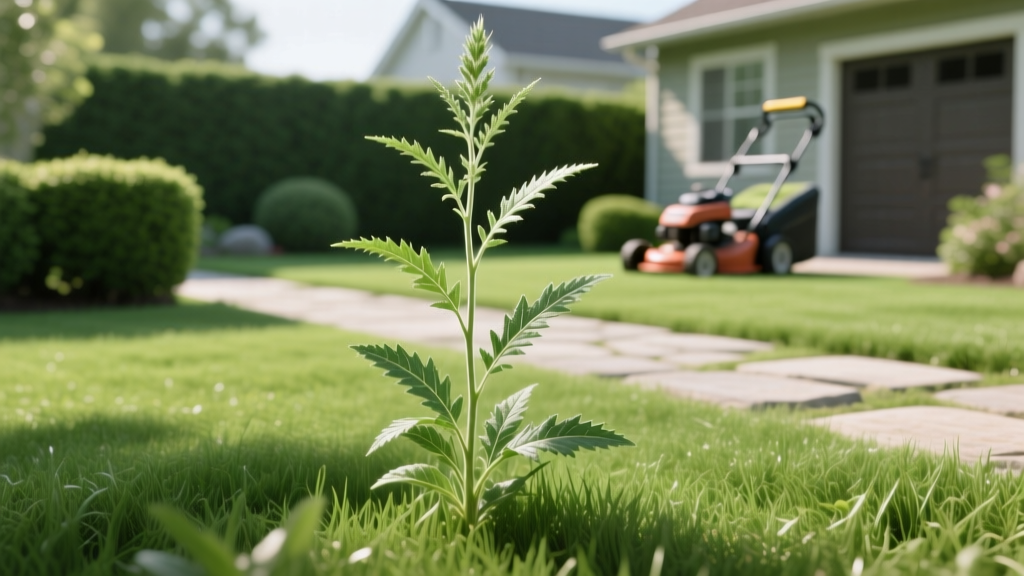
Tall Weed With Thin Leaves: Diagnosis and Rescue Fixes
The 'Tall Weed Thin Leaves' Diagnostic Matrix
When a tall weed with thin leaves suddenly shoots up three or four inches above your freshly mowed turf, it disrupts the lawn's uniform canopy and signals a specific underlying issue. Unlike broadleaf weeds such as dandelions or clover, grassy and sedge weeds mimic your turfgrass but exhibit accelerated vertical growth rates. To apply the correct rescue fix, you must first identify the exact botanical culprit. Pulling these weeds by hand is almost always a failure point; they reproduce via underground tubers, bulbs, or nutlets that snap off and resprout within weeks.
Use the diagnostic matrix below to identify your specific invader based on stem geometry, leaf structure, and root morphology.
| Weed Type | Leaf Characteristics | Stem & Base Traits | Root System | Primary Active Ingredient |
|---|---|---|---|---|
| Yellow Nutsedge | Light green, thin, V-shaped, tapered tips | Triangular stem ('sedges have edges') | Rhizomes with edible nutlets | Halosulfuron-methyl |
| Wild Garlic | Thin, hollow, tubular, waxy coating | Round, solid, distinct garlic odor | Fibrous with offset bulbils | 2,4-D + MCPP + Dicamba |
| Wild Onion | Flat, thin, solid, onion odor when crushed | Round, solid, distinct onion odor | Fibrous with central bulb | 2,4-D + MCPP + Dicamba |
| Goosegrass | Dark green, thin, folded in the bud | Flattened, white or silver base | Deep, fibrous taproot | Fenoxaprop-p-ethyl |
Culprit 1: Yellow and Purple Nutsedge (The Triangular Stem)
According to Purdue University Turfgrass Science, nutsedge is technically a sedge, not a true grass. It thrives in compacted, poorly drained soils and outgrows standard turfgrasses by mid-summer. If you roll the stem of your tall weed with thin leaves between your thumb and forefinger and feel distinct ridges (a triangle), you are dealing with nutsedge. Standard grassy weed killers like Quinclorac will not kill it.
Rescue Fix: Post-Emergent Sedge Protocol
To eradicate nutsedge, you must use a systemic herbicide that translocates down into the nutlets. The industry standard is halosulfuron-methyl (commonly sold as Sedgehammer or Prosedge).
- Mix Rate: 1/3 oz (approx. 13 grams) of halosulfuron-methyl per 1 gallon of water per 1,000 square feet.
- Surfactant Requirement: You must add a non-ionic surfactant (NIS) at a rate of 0.25% by volume (roughly 1/2 teaspoon per gallon). Nutsedge leaves are heavily waxed; without a surfactant, the herbicide beads up and rolls off.
- Application Timing: Spray when the nutsedge is actively growing and has reached the 3-to-5 leaf stage. Do not mow for 2 days before or 2 days after application to allow maximum foliar absorption.
- Cost Expectation: A box of 10 water-soluble packets of Sedgehammer costs between $55 and $65, treating up to 10,000 sq ft total.
Warning: The Pulling Trap
Never hand-pull mature nutsedge. The root system produces chains of nutlets (tubers) buried 8 to 14 inches deep. Pulling the main plant breaks the rhizome, leaving the deeper nutlets intact. This physical shock actually stimulates the dormant nutlets to sprout, turning one visible weed into three new ones within a month.
Never hand-pull mature nutsedge. The root system produces chains of nutlets (tubers) buried 8 to 14 inches deep. Pulling the main plant breaks the rhizome, leaving the deeper nutlets intact. This physical shock actually stimulates the dormant nutlets to sprout, turning one visible weed into three new ones within a month.
Culprit 2: Wild Garlic and Wild Onion (The Smelly Invaders)
If the tall weed with thin leaves emits a pungent garlic or onion odor when you crush the foliage, you have an Allium species infestation. Wild garlic (Allium vineale) features hollow, tubular leaves, while wild onion (Allium canadense) has flat, solid leaves. Both are perennial weeds that emerge in early spring and late fall, completely bypassing standard summer pre-emergent barriers.
Rescue Fix: Broadleaf Herbicide Strategy
Despite their grass-like appearance, wild garlic and onion are biologically classified as broadleaf weeds in turf management. Therefore, standard grassy weed herbicides are ineffective. You need a three-way ester or amine herbicide.
- Product Selection: Use a formulation containing 2,4-D, Dicamba, and MCPP (e.g., Trimec Classic or SpeedZone). For severe infestations in warm-season lawns (Bermuda, Zoysia), Imazaquin (Image Kills Nutsedge) is highly effective but requires 30+ days to show full necrosis.
- The Mowing Trick: Wild garlic leaves are coated in a thick, waxy cuticle that repels herbicides. Mow your lawn immediately before spraying. The fresh, open cuts on the tubular leaves act as direct pipelines for the systemic herbicide to enter the plant's vascular tissue.
- Mix Rate: For Trimec Classic, mix 1.5 fluid ounces per 1 gallon of water per 1,000 sq ft.
- Follow-up: A single application rarely kills the deep offset bulbils. Schedule a second application exactly 21 days after the first to catch any secondary sprouts.
Culprit 3: Goosegrass (The Silver-Base Clumper)
If your weed has thin, dark green leaves but features a distinct white or silver flattened base near the soil line, it is Goosegrass (Eleusine indica). It is a summer annual that thrives in highly compacted areas, such as along driveway edges or in high-traffic pathways where your primary turfgrass has thinned out. As noted by Missouri Integrated Pest Management, goosegrass is notoriously tolerant to many standard post-emergent grassy weed killers.
Rescue Fix: Late-Season Chemical Control
Goosegrass requires specific chemistry, especially once it has tillered (spread outward) and grown tall.
- For Cool-Season Lawns (Fescue, Kentucky Bluegrass): Use Fenoxaprop-p-ethyl (Acclaim Extra). Mix at a rate of 0.3 to 0.4 fluid ounces per 1,000 sq ft. It is highly selective and will not harm fescue.
- For Warm-Season Lawns (Bermuda, Zoysia): Use Mesotrione (Tenacity). Mix 1 teaspoon per gallon of water per 1,000 sq ft, plus a surfactant. Mesotrione inhibits photosynthesis, causing the goosegrass to turn stark white before dying. Note: Tenacity can temporarily bleach desirable Bermuda grass; apply at lower rates (1/2 tsp) if treating a Bermuda lawn.
Long-Term Prevention: Closing the Canopy and Soil Timing
Rescuing your lawn from tall, thin-leaved weeds is only half the battle. If the underlying environmental conditions remain, the seed bank will germinate the following season. University of Georgia Extension emphasizes that weed prevention relies on turf density and precise pre-emergent timing.
Pre-Emergent Application Framework
| Weed Target | Pre-Emergent Active Ingredient | Soil Temperature Trigger | Application Window |
|---|---|---|---|
| Goosegrass & Crabgrass | Prodiamine (Barricade) or Dithiopyr (Dimension) | 55°F at 2-inch depth for 3 consecutive days | Early Spring (Forsythia bloom) |
| Annual Bluegrass (Poa annua) | Prodiamine or Pendimethalin | 70°F dropping to 65°F at 2-inch depth | Early Fall (Late August/Sept) |
Cultural Fixes for Compacted Soil
Nutsedge and goosegrass are primary indicators of soil compaction and poor drainage. To permanently resolve the symptom:
- Core Aeration: Perform mechanical core aeration in the fall for cool-season grasses and late spring for warm-season grasses. Pull 3-inch deep plugs to relieve compaction.
- Topdressing: After aeration, apply a 1/4-inch layer of compost or fine sand to improve soil percolation, depriving nutsedge of the waterlogged conditions it requires to thrive.
- Mowing Height: Raise your mower deck. Cutting Tall Fescue at 3.5 inches or Bermuda at 1.5 inches creates a dense canopy that shades out goosegrass and wild onion seedlings, preventing photosynthesis before they can establish deep roots.
By matching the exact botanical traits of your tall weed with thin leaves to the correct systemic chemistry, you can eliminate the invader without collateral damage to your desirable turfgrass canopy.

