
Lawn Care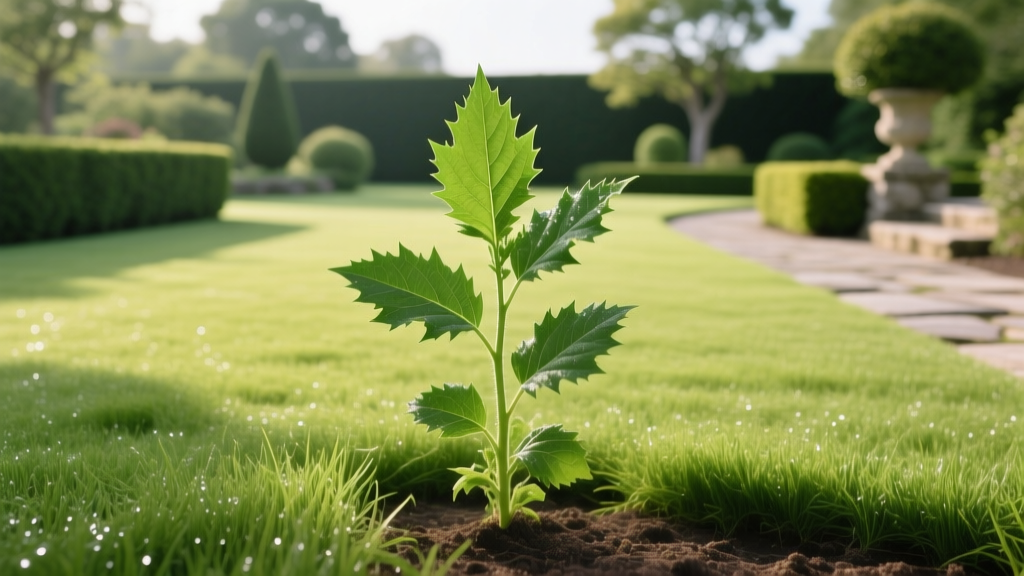
Tall Weeds With Big Leaves: Identification and Spot-Treatment Guide
When you spot tall weeds with big leaves emerging from your carefully maintained turf, they are not just an aesthetic nuisance; they are aggressive resource competitors. These broadleaf invaders boast massive photosynthetic surface areas, allowing them to shade out surrounding grass, hoard soil moisture, and develop deep, resilient root systems that laugh at standard mowing heights. Successfully eradicating them requires moving beyond generic weed-and-feed products and adopting targeted spot-treatment protocols.
The Anatomy of an Invasion: Why Broadleaves Thrive
Tall weeds with big leaves typically indicate underlying soil deficiencies or compaction issues. According to Purdue University Turfgrass Science, broadleaf weeds like plantain and dock flourish in heavily compacted, poorly drained soils where turfgrass roots struggle to penetrate. Their large leaves act as solar panels, capturing sunlight that would otherwise reach your grass canopy, while their extensive taproots mine deep soil nutrients. Treating the visible weed is only half the battle; understanding the soil environment that invited them is crucial for long-term prevention.
The Usual Suspects: Identifying Common Large-Leaved Weeds
Accurate identification dictates your treatment strategy. Waxy leaf cuticles, deep taproots, and fibrous mats all require different approaches. Below is a diagnostic matrix for the most common tall weeds with big leaves found in North American lawns.
| Weed Species | Leaf Characteristics | Root System Profile | Optimal Active Ingredient |
|---|---|---|---|
| Broadleaf Plantain (Plantago major) | Oval, heavily ribbed, 4-8 inches long, low rosette | Dense, shallow fibrous network | 2,4-D + Dicamba |
| Curly Dock (Rumex crispus) | Elongated, wavy margins, 6-12 inches, reddish stems | Brittle taproot reaching 3+ feet deep | Triclopyr + Clopyralid |
| Common Burdock (Arctium minus) | Massive heart-shaped leaves up to 2 feet across | Thick, fleshy, deeply anchored taproot | Glyphosate (wiper) or Triclopyr |
| Wild Lettuce (Lactuca canadensis) | Lobed, prickly margins, 8-14 inches, tall central stalk | Sturdy taproot with milky sap exudate | 2,4-D amine |
For comprehensive botanical classifications and regional variations, the USDA Plants Database remains the definitive resource for confirming your specific weed species before applying chemical controls.
Chemical Spot-Treatment Protocols
Broadcast spraying is inefficient and environmentally taxing for isolated tall weeds with big leaves. Spot-treatment minimizes chemical load and protects your surrounding turf. However, large leaves often feature thick, waxy cuticles designed to repel water and chemicals.
The Surfactant Multiplier
If you spray a standard 2,4-D mixture on a mature Curly Dock leaf, the droplets will bead up and roll off onto the soil. You must break the surface tension. Add a non-ionic surfactant (such as Southern Ag Surfactant or a generic methylated seed oil) at a rate of 1 teaspoon per gallon of mixed herbicide. This reduces the water's surface tension, forcing the chemical to spread evenly across the broad leaf surface and penetrate the stomata.
Exact Mixing Ratios for Spot Treatment
- For Plantain and Wild Lettuce: Mix 2 oz of a 2,4-D amine concentrate (like Hi-Yield 2,4-D Selective Weed Killer) per 1 gallon of water. Apply until the leaves are uniformly wet, but not dripping.
- For Dock and Burdock: These require a heavier hormone herbicide. Mix 1.5 oz of Triclopyr (e.g., Ortho GroundClear Super Weed & Grass Killer, ensuring it contains Triclopyr and not just Glyphosate if you want to save surrounding grass) per 1 gallon of water, plus the surfactant.
⚠️ Herbicide Drift Warning: When treating tall weeds with big leaves, wind is your enemy. Even a 3 mph breeze can carry atomized Triclopyr droplets onto nearby ornamental shrubs or tomato plants, causing severe epinasty (twisted, deformed growth). Only spray on completely still mornings when temperatures are between 65°F and 80°F. Use a shielded spray nozzle or a paintbrush for direct application on weeds growing within 12 inches of desirable plants.
Mechanical and Organic Extraction Techniques
If you maintain an organic lawn or are dealing with weeds in high-traffic play areas, mechanical extraction is highly effective—provided you remove the entire root system. Snapping the top off a 3-foot Burdock or Dock taproot guarantees it will resprout within 14 days, often with multiple new crowns.
Choosing the Right Extraction Tool
- Stand-Up Weed Pullers (e.g., Fiskars Uprooting Tool Model 78806999J): Ideal for Broadleaf Plantain and smaller Dock weeds. The 39-inch handle and serrated steel claws grip the root crown. Pro Tip: Water the area deeply 24 hours before extraction. Moist soil reduces friction, allowing the tool to pull the entire fibrous mat out cleanly.
- Deep Taproot Extractors (e.g., Grandpa's Weeder Model 12000): Essential for mature Curly Dock and Burdock. This tool uses a 27-inch steel shaft and a specialized V-notch claw to lever out taproots up to 1.5 inches in diameter without bending over. You must push the shaft at least 6 inches into the soil to get below the root's primary branching point.
Post-Treatment Turf Recovery
Eradicating tall weeds with big leaves leaves behind bare soil craters. If left untreated, these patches will quickly be colonized by crabgrass or nutsedge within three weeks. Penn State Extension recommends immediate turf renovation to close the canopy.
Fill the extraction hole with a 50/50 mix of topsoil and compost. If the weed was removed in early fall or spring, drop 5-10 grass seeds into the divot and tamp down lightly. For summer repairs, apply a light dusting of sphagnum peat moss over the soil to retain moisture and prevent seed washout during irrigation. Keep the patch consistently moist for 14 days to ensure rapid germination and canopy closure.
Frequently Asked Questions
Will mowing kill tall weeds with big leaves?
No. While mowing removes the photosynthetic canopy temporarily, broadleaf weeds like Dock and Burdock store massive carbohydrate reserves in their deep taproots. They will simply push up new leaves within days. Furthermore, many large-leaved weeds grow in low rosettes (like Plantain) that easily slip beneath standard mower decks set at 3 inches.
Can I use vinegar to kill these large weeds?
Horticultural vinegar (20% to 30% acetic acid) will burn the large leaf tissue, causing it to wilt and blacken within hours. However, it is a contact herbicide with no systemic action. It will not travel down into the taproot. The weed will almost certainly resprout from the root crown within a week, making it an inefficient long-term solution for established broadleaves.
How do I prevent big-leaved weeds from returning?
Core aeration is the best defense. Because weeds like Plantain and Dock thrive in compacted soil, performing annual core aeration (removing 3-inch soil plugs) relieves compaction, allowing turfgrass roots to outcompete weed seedlings. Follow aeration immediately with an application of pre-emergent herbicide in early spring to stop new broadleaf seeds from germinating.

