
Lawn Care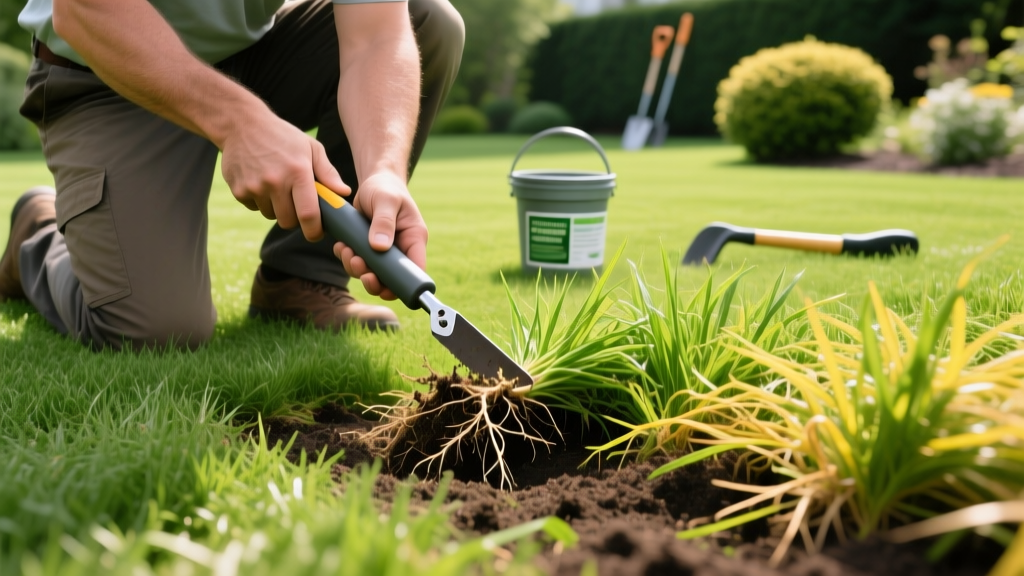
Targeted Grass Removal: Eradicating Invasive Weed Grasses
Identifying the Culprit: Invasive Grasses vs. Desirable Turf
Effective grass removal begins with accurate identification. Homeowners often mistake desirable cool-season grasses suffering from heat stress for invasive weed grasses. Invasive grassy weeds—such as quackgrass (Elymus repens), creeping bentgrass (Agrostis stolonifera), and torpedograss (Paspalum vaginatum)—share a critical biological advantage: they propagate via aggressive underground rhizomes or above-ground stolons that allow them to survive mechanical pulling and outcompete standard turf.
Before selecting a removal strategy, you must determine whether you are dealing with an annual grassy weed (like crabgrass), a perennial invasive grass (like quackgrass), or a desirable grass species that has simply spread into the wrong garden bed. According to University of Minnesota Extension, misidentifying quackgrass as tall fescue is a common error that leads to ineffective herbicide applications and wasted resources.
| Grass Species | Growth Habit | Key Identification Feature | Removal Difficulty |
|---|---|---|---|
| Quackgrass | Perennial (Rhizomes) | Clasping auricles at the leaf collar; blue-green tint | High |
| Creeping Bentgrass | Perennial (Stolons) | Very fine texture; forms dense, pale green, low-lying mats | High |
| Crabgrass | Annual (Seed) | Wide, light green leaves radiating from a central hub | Low (Pre-emergent) |
| Tall Fescue (Clumping) | Perennial (Bunch) | Wide, dark green, deeply ribbed leaves; no rhizomes | Moderate (Spot treat) |
The Chemical Playbook: Selective Herbicides for Grassy Weeds
When invasive grasses infiltrate a desirable broadleaf or cool-season lawn, non-selective herbicides will destroy your good turf alongside the weeds. For targeted grass removal within an existing lawn, you must utilize selective post-emergent herbicides formulated specifically for grassy weeds.
Active Ingredients to Target
- Fluazifop-p-butyl: Found in products like Ortho Grass B Gon, this active ingredient is highly effective against creeping bentgrass and quackgrass in broadleaf landscapes and certain warm-season lawns. Application rates typically range from 0.5 to 0.75 fluid ounces per 1,000 square feet. It works by inhibiting lipid synthesis, causing the weed grass to yellow and die within 14 to 21 days.
- Sethoxydim: Available in formulations like Bonide Grass Beater, sethoxydim is safe for use over many broadleaf ornamentals and specific turfgrasses. It requires the addition of a non-ionic surfactant (at 0.25% v/v) to penetrate the waxy cuticle of mature grassy weeds.
- Ethofumesate: Often used by professionals for Poa annua and certain grassy weed suppression in cool-season lawns, this is a pre- and early post-emergent option that disrupts cell division.
⚠️ Temperature & Timing Warning: Never apply fluazifop or sethoxydim when ambient temperatures exceed 85°F. High temperatures increase the volatility of the herbicide and severely increase the risk of phytotoxicity (chemical burn) to your desirable turf. Apply in the early morning when temperatures are between 65°F and 80°F, and ensure no rain is forecast for at least 24 hours.
Non-Selective Spot Treatment: The Glyphosate Protocol
When selective herbicides fail, or when dealing with isolated, severe patches of quackgrass or torpedograss, non-selective herbicides containing glyphosate (e.g., Roundup Pro, Glystar) or glufosinate (e.g., Finale) are required. Because these chemicals kill any green plant tissue they contact, application precision is paramount.
Use a sponge applicator or a shielded sprayer to paint the herbicide directly onto the invasive grass leaves. Avoid spraying on windy days. According to Penn State Extension, treating perennial grassy weeds in late summer or early fall (late August through September) yields the best results. During this window, the plants are actively translocating carbohydrates down into their rhizomes for winter storage, effectively pulling the systemic herbicide deep into the root network where it destroys the reproductive nodes.
Complete Grass Removal: Solarization for Lawn Renovation
If your goal is total grass removal to prepare a site for hardscaping, xeriscaping, or a complete lawn renovation, chemical herbicides are often unnecessary. Soil solarization is a highly effective, organic method that uses the sun's radiant energy to heat the soil to temperatures lethal to grass roots, rhizomes, and weed seeds.
Step-by-Step Solarization Protocol
- Mow and Clear: Mow the existing grass as short as your mower allows (scalping it down to 1 inch). Remove all large rocks, debris, and surface thatch to ensure the plastic sits flush against the soil.
- Deep Watering: Irrigate the area heavily until the soil is moist to a depth of at least 12 inches. Moist soil conducts heat much more efficiently than dry soil and triggers weed seeds and rhizomes to break dormancy, making them vulnerable to heat.
- Lay the Plastic: Use clear, 2-mil to 4-mil polyethylene plastic sheeting. Clear plastic is mandatory; black plastic will block sunlight and prevent the soil from reaching lethal temperatures. Overlap seams by at least 6 inches and seal them with UV-resistant landscape tape.
- Seal the Edges: Dig a 4-inch trench around the perimeter, lay the edges of the plastic in the trench, and backfill with soil to create an airtight seal. This traps the heat and prevents wind from lifting the sheeting.
- Wait and Monitor: Leave the plastic in place for 4 to 6 weeks during the hottest months of the year (typically July and August). As documented by the University of California Integrated Pest Management program, properly installed solarization can raise soil temperatures at a 2-inch depth to 110°F–125°F, effectively cooking invasive rhizomes and sterilizing the topsoil.
Mechanical Extraction: The Reality of Rhizomes
For small garden beds where plastic solarization is impractical and chemicals are prohibited, mechanical removal is the only option. However, simply pulling invasive grasses by hand leaves behind up to 60% of the rhizome network. Quackgrass rhizomes can regenerate a new plant from a fragment as small as half an inch.
To achieve successful mechanical grass removal, use a digging fork (not a shovel, which chops rhizomes into viable pieces) to loosen the soil to a depth of 8 inches. Gently lift the soil mass and sift through it by hand, extracting every white, wiry rhizome. You must monitor the bed weekly for the next two months and immediately dig out any new shoots before they develop three leaves, which is the threshold at which they begin generating new rhizomes.
Post-Removal Soil Recovery and Reseeding
Once the invasive grass is eradicated—whether through chemical translocation or solarization—the soil requires preparation before introducing new turf or ornamentals.
- Chemical Waiting Period: If you used glyphosate, wait at least 7 to 10 days after the grass has completely browned before raking it out and reseeding. Glyphosate binds tightly to soil particles and is deactivated quickly, but waiting ensures no active residue remains on decaying root tissue.
- Solarization Recovery: Solarization kills beneficial soil microbes alongside pests and weeds. After removing the plastic, incorporate a 1-inch layer of high-quality compost into the top 4 inches of soil to reintroduce mycorrhizal fungi and beneficial bacteria. Avoid deep tilling, which will bring dormant, unsterilized weed seeds from deeper soil layers to the surface.
- Starter Fertilizer: When reseeding, apply a starter fertilizer with a high phosphorus content (such as a 10-18-10 NPK ratio) to promote rapid root development in the new, desirable grass, giving it a competitive advantage against any surviving weed grass seedlings.
Frequently Asked Questions
Can I use vinegar to kill invasive grassy weeds?
Horticultural vinegar (20% to 30% acetic acid) is a contact burn-down herbicide. It will destroy the top growth of grassy weeds but will not translocate to the rhizomes. The invasive grass will simply resprout from the roots within 10 to 14 days, making it an ineffective long-term solution for perennial grass removal.
How thick should the mulch be to smother grass without plastic?
If opting for the cardboard smothering method instead of solarization, lay down overlapping layers of plain, uncoated corrugated cardboard, wet it thoroughly, and cover it with a minimum of 4 to 6 inches of arborist wood chips. This blocks 100% of sunlight, starving the grass roots. Expect the process to take 3 to 4 months to fully kill established rhizomes.

