
Lawn Care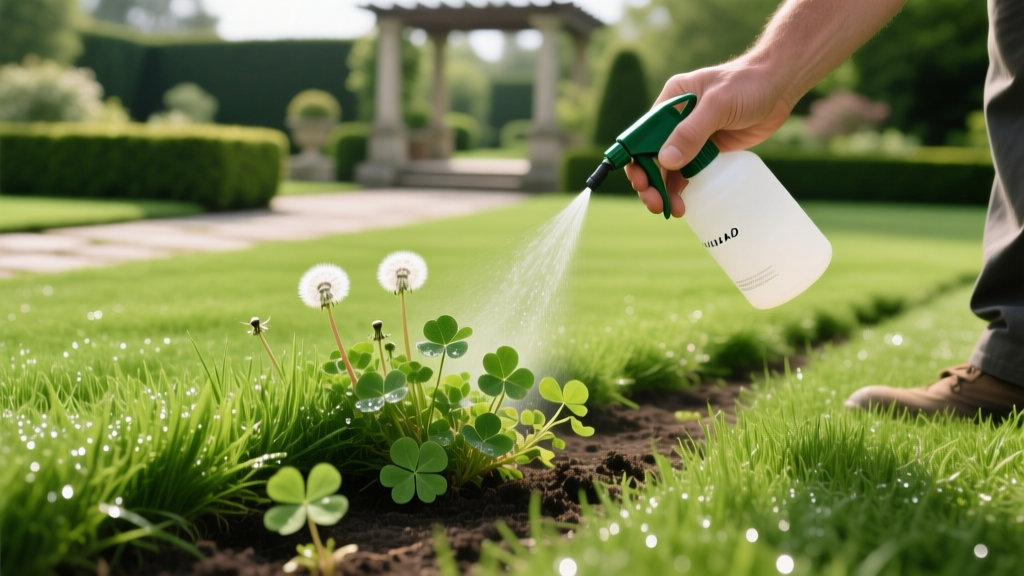
How to Eliminate Weeds From Lawn Using Targeted Spot-Treatments
The Flaw in Broadcast Spraying: Why Spot-Treatment Wins
When homeowners ask how to eliminate weeds from lawn areas, the default instinct is often to broadcast liquid herbicides across the entire turf canopy. While effective for severe, lawn-wide infestations, broadcast spraying is economically inefficient and ecologically excessive for yards with less than 20% weed coverage. Spot-treating isolates the chemical application strictly to the target weed, reducing herbicide volume by up to 85% compared to blanket applications. This targeted approach minimizes soil residual buildup, protects non-target beneficial insects, and prevents the accidental suppression of your desired turfgrass species.
According to turfgrass specialists at the University of Minnesota Extension, localized treatment of broadleaf and grassy weeds prevents the unnecessary stress that systemic herbicides place on surrounding desirable grass, particularly during transitional seasonal windows. To execute a flawless spot-treatment protocol, you must match the specific weed morphology to the correct active ingredient, calibrate your equipment for low-volume foliar delivery, and respect temperature guardrails to prevent volatilization.
Weed Species Identification and Active Ingredient Matrix
Misidentifying a weed and applying the wrong chemical class is the primary reason spot-treatments fail. Grassy weeds require entirely different modes of action than broadleaf or sedge species. Below is a precise decision matrix for the most common lawn invaders.
| Weed Species | Growth Habit | Primary Active Ingredient | Prosumer Product Example | Spot Mix Rate (Per Gallon) |
|---|---|---|---|---|
| Dandelion (Taraxacum officinale) | Broadleaf / Taproot | 2,4-D + Dicamba | Ortho WeedClear for Lawns | 2.0 fl oz |
| Crabgrass (Digitaria) | Annual Grassy | Quinclorac | Drive XLR8 | 0.75 fl oz |
| Yellow Nutsedge (Cyperus esculentus) | Perennial Sedge | Sulfentrazone | Echelon 4SC (Spot rate) | 0.25 fl oz |
| Ground Ivy (Glechoma hederacea) | Creeping Broadleaf | Triclopyr + Fluoroxypyr | Bayer Advanced All-In-One | 3.0 fl oz |
| Dallisgrass (Paspalum dilatatum) | Perennial Grassy | MSMA (Restricted) or Fluazifop | Fusilade II (for specific turf) | 0.5 fl oz |
The 4-Step Spot-Treatment Protocol for Maximum Efficacy
Simply pointing a hose-end sprayer at a weed will result in herbicide runoff, soil contamination, and poor foliar absorption. Professional turf managers use a specific methodology to ensure the chemical penetrates the leaf cuticle and translocates to the root system.
Step 1: Surfactant Loading and Droplet Tension
Many weeds, particularly mature dandelions and nutsedge, possess a waxy leaf cuticle that repels water-based herbicides. You must add a Non-Ionic Surfactant (NIS) to your tank mix. Add 0.25% v/v of NIS (approximately 1/2 teaspoon per gallon of water). The surfactant breaks the surface tension of the water droplets, causing them to flatten and spread across the leaf surface rather than beading up and rolling off onto the soil.
Step 2: Nozzle Selection and Pressure Calibration
Avoid cone nozzles for spot-treating; they produce fine mist droplets that are highly susceptible to wind drift, which can damage nearby ornamental shrubs. Equip your 1-gallon or 2-gallon pump sprayer with a flat-fan nozzle (such as a TeeJet 8002VS). Pump the sprayer to exactly 20 to 30 PSI. This pressure generates medium-coarse droplets that penetrate the turf canopy and coat the weed without drifting.
Step 3: The 'Wet-Leaf' Application Technique
When spraying, hold the wand 12 to 18 inches above the weed. Spray in a steady, sweeping motion until the weed leaves are uniformly wet but not dripping. Once the liquid reaches the point of runoff, you are wasting chemical and increasing the risk of soil-level root damage to the surrounding grass. For taproot weeds like plantain or dandelion, ensure the center rosette is thoroughly coated, as this is the primary translocation point.
Step 4: Temperature and Wind Guardrails
Herbicide volatilization (turning into a gas and drifting) is a severe risk when temperatures exceed 85°F. Conversely, systemic translocation halts when temperatures drop below 55°F. The NC State Extension mandates applying systemic herbicides only when ambient temperatures are between 65°F and 80°F, and wind speeds are below 5 mph. If you must treat weeds in late fall or early spring (40°F - 55°F), switch from an 'amine' herbicide formulation to an 'ester' formulation, which remains effective in cold weather.
Grass-Type Vulnerability Checklist
Before you pull the trigger on the sprayer, you must verify that your chosen active ingredient is safe for your specific turfgrass species. Applying a broadleaf herbicide safe for Fescue could instantly kill a St. Augustine lawn.
⚠️ WARNING: Warm-Season Turf Restrictions
St. Augustine & Centipedegrass: These grasses are highly sensitive to 2,4-D and Dicamba. Do not use standard broadleaf killers. Instead, use Atrazine-based products (like Hi-Yield Atrazine) applied when the grass is dormant or semi-dormant to prevent severe turf yellowing and stunting.
Bermudagrass: While tolerant of 2,4-D, Bermudagrass is highly susceptible to Triclopyr. If treating Ground Ivy or Wild Violet in a Bermuda lawn, keep Triclopyr rates strictly below 0.5 fl oz per gallon to avoid chemical burn.
ℹ️ NOTE: Cool-Season Turf Restrictions
Fine Fescues & Ryegrass: These species are sensitive to Quinclorac (the standard crabgrass killer) at high rates. When spot-treating crabgrass in a Fine Fescue lawn, reduce the Quinclorac rate by 30% and expect temporary, mild chlorosis (yellowing) of the surrounding grass, which will recover in 14 days.
Advanced Edge Cases: Eradicating Creeping Perennials
Creeping perennials like Wild Violet and Ground Ivy (Creeping Charlie) are the most frustrating weeds to eliminate because they spread via underground rhizomes and stolons. If you only kill the top growth, the plant will regenerate from the root nodes within three weeks.
To achieve total eradication, utilize a chemical wicking or double-application strategy. For the double-application method, apply a Triclopyr-heavy mix on Day 1. Wait exactly 14 days. The first application will shatter the plant's cellular defenses and halt stolon growth. Apply the second treatment on Day 15 to translocate the chemical deep into the rhizome network. According to the University of California IPM, timing this second application with a light irrigation the day before ensures the weed is actively growing and pulling moisture (and herbicide) down into the root zone.
Post-Elimination Turf Recovery and Soil Defense
Successfully killing the weed is only half the battle. The resulting bare spot in your lawn is an open invitation for new weed seeds to germinate. Once the treated weed turns completely brown and brittle (typically 10 to 14 days post-application), rake out the dead debris.
Immediately fill the void with a topdressing mix of 70% compost and 30% fine sand to level the grade. Overseed the patch with a turf-type tall fescue or Kentucky bluegrass blend that matches your existing lawn. Water the seed lightly twice a day for 10 days. Crucially, do not apply a pre-emergent herbicide (like Prodiamine) to this specific spot, as it will prevent your new grass seed from germinating. Rely on the dense, new turf canopy to naturally shade out and outcompete future weed invasions.

