
Lawn Care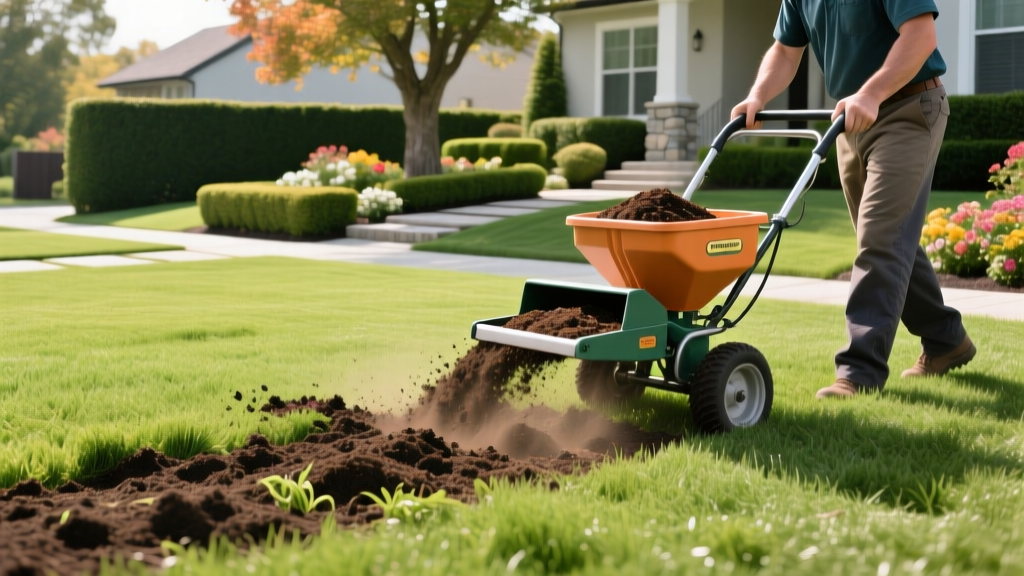
Topsoiling Lawn Grass: Ideal Depths, Costs, and Soil Blends
The Mechanics of Topsoiling Lawn Renovations
Topsoiling a lawn is a structural renovation technique used to correct severe grading issues, bury poor-quality subsoil, or establish a new root zone before seeding or sodding. Unlike routine topdressing, which applies a micro-layer of organic matter to existing grass, topsoiling lawn areas involves importing and spreading bulk soil at depths that fundamentally alter the landscape's elevation and drainage profile. According to the USDA Natural Resources Conservation Service, establishing a healthy root zone requires a minimum of 4 to 6 inches of uncompacted, biologically active topsoil to support deep turfgrass rooting and drought resistance.
Diagnostic Matrix: Topsoiling vs. Topdressing
| Criteria | Topsoiling (Renovation) | Topdressing (Maintenance) |
|---|---|---|
| Application Depth | 2 to 6 inches | 1/8 to 1/2 inch |
| Existing Grass | Killed/Removed prior to application | Left intact, grows through the layer |
| Primary Goal | Regrade yard, build new root zone | Level minor bumps, add organic matter |
| Material Type | Screened loam or sandy loam blend | Fine compost or sand/compost mix |
Calculating Volume and Depth Requirements
The most common failure in topsoiling lawn projects is under-ordering material due to miscalculating cubic yardage. Soil settles by approximately 15% to 20% after initial watering and natural compaction. Therefore, if your target compacted depth is 3 inches, you must order and spread enough material to achieve a loose depth of roughly 3.5 to 4 inches.
Volume Conversion Chart (Cubic Yards Required)
| Lawn Area (Sq. Ft.) | 2-Inch Depth | 3-Inch Depth | 4-Inch Depth |
|---|---|---|---|
| 1,000 | 6.2 cu yds | 9.3 cu yds | 12.4 cu yds |
| 2,500 | 15.4 cu yds | 23.2 cu yds | 30.9 cu yds |
| 5,000 | 30.9 cu yds | 46.3 cu yds | 61.7 cu yds |
| 10,000 | 61.7 cu yds | 92.6 cu yds | 123.5 cu yds |
Formula: (Square Footage × Target Depth in Inches) ÷ 324 = Cubic Yards. Always add 15% to this final number to account for settling and wheelbarrow spillage.
Selecting the Right Soil Blend
Not all topsoil is created equal. The turfgrass science department at Penn State Extension emphasizes that turf requires a balance of water retention and drainage. Ordering generic 'topsoil' from a local excavator often results in heavy, unamended clay that will compact and stunt root growth.
The 70/30 Sandy Loam Standard
For both cool-season grasses (Kentucky Bluegrass, Tall Fescue) and warm-season grasses (Bermuda, Zoysia), the ideal imported topsoil blend is a screened sandy loam. This consists of roughly 70% sand and silt, and 30% high-quality compost or peat. This ratio provides a Cation Exchange Capacity (CEC) high enough to hold fertilizer nutrients, while the sand fraction ensures a percolation rate of at least 2 inches per hour, preventing waterlogging.
⚠️ Warning: Avoid 'Fill Dirt' and Unscreened Soil
Fill dirt is subsoil scraped from construction sites. It lacks organic matter, contains weed seeds, and is highly acidic. Furthermore, always specify 3/8-inch screened topsoil. Unscreened soil contains rocks and clay clods that will ruin your grading and damage mower blades. Expect to pay a 20-30% premium for double-screened soil, but the reduction in manual rock-picking makes it mandatory for high-end lawn renovations.
Step-by-Step Execution and The Stratification Fix
The most critical, yet frequently ignored, step in topsoiling lawn areas is addressing the interface layer. If you dump 4 inches of sandy loam directly on top of hard, compacted native clay without breaking the boundary, you create a 'stratification layer.' Water will pool at this boundary, and grass roots will refuse to penetrate the clay beneath, resulting in a shallow-rooted lawn that dies during the first summer drought.
- Kill and Remove Existing Vegetation: Apply a non-selective herbicide or use a sod cutter to remove the old lawn. Rototilling live grass into the soil will create severe nitrogen tie-up as the grass decomposes.
- Scarify the Subgrade: Use a walk-behind rototiller or a tractor-mounted Harley rake to loosen the top 2 inches of the native subsoil. This is non-negotiable for preventing stratification.
- Spread the Topsoil: Dump the screened loam and spread it using a landscaping rake or a skid steer with a grading bucket. Maintain a 1% to 2% slope away from the home's foundation to ensure positive drainage.
- Integrate the Interface: Lightly till the bottom 1 inch of the new topsoil into the scarified subgrade. This creates a transitional zone that tricks roots into growing deeply into the native soil.
- Water and Settle: Apply 1 inch of water to the bare soil and wait 48 hours. This pre-compacts the soil and reveals low spots that need additional material before seeding.
Current Pricing and Material Sourcing
Bulk material pricing fluctuates based on regional availability and fuel surcharges. As of 2026, homeowners should budget according to the following market averages for premium, double-screened topsoil blends:
- Bulk Delivery (10-20 cu yds): $22 to $38 per cubic yard for the material, plus a flat delivery fee of $75 to $150 depending on distance.
- Bulk Delivery (Super Sacks/Big Bags): $45 to $65 per 1-cubic-yard bag. Ideal for driveways where dump trucks cannot access the backyard.
- Bagged Retail (40 lb bags): $3.50 to $5.50 per bag. A 40 lb bag covers roughly 0.5 cubic feet. You would need 54 bags to equal a single cubic yard, making bagged soil economically unviable for any topsoiling lawn project larger than 200 square feet.
Post-Application Seeding Protocol
Once the topsoil is graded and settled, immediate seeding or sodding is required to prevent erosion and weed invasion. According to the UMass Extension Turf Program, the seedbed must be kept consistently moist but not saturated during the germination window.
Starter Fertilizer & Seed Contact
Before dropping seed, apply a starter fertilizer high in phosphorus (e.g., a 10-18-10 NPK ratio) to stimulate rapid root development in the new soil profile. After broadcasting the seed, use a lawn roller filled halfway with water to press the seed into the topsoil. Seed-to-soil contact is the primary driver of germination success. Finally, apply a thin layer of peat moss or weed-free straw (no more than 1/4 inch) to retain surface moisture and protect seeds from birds and wind.
Frequently Asked Questions
Can I topsoil over an existing lawn without killing it?
No. Adding more than 1/2 inch of soil over existing grass will smother the crowns, block sunlight, and kill the turf. If you need to add 2 or more inches of soil, the existing grass must be killed and incorporated or removed first.
How long should I wait after topsoiling before it rains heavily?
Bare topsoil is highly susceptible to erosion. Ideally, you should seed and apply a tackifier or erosion control blanket immediately after grading. If heavy rain is in the 48-hour forecast before you can seed, lay down temporary erosion control netting to prevent your expensive soil blend from washing into the street or storm drains.

