
Lawn Care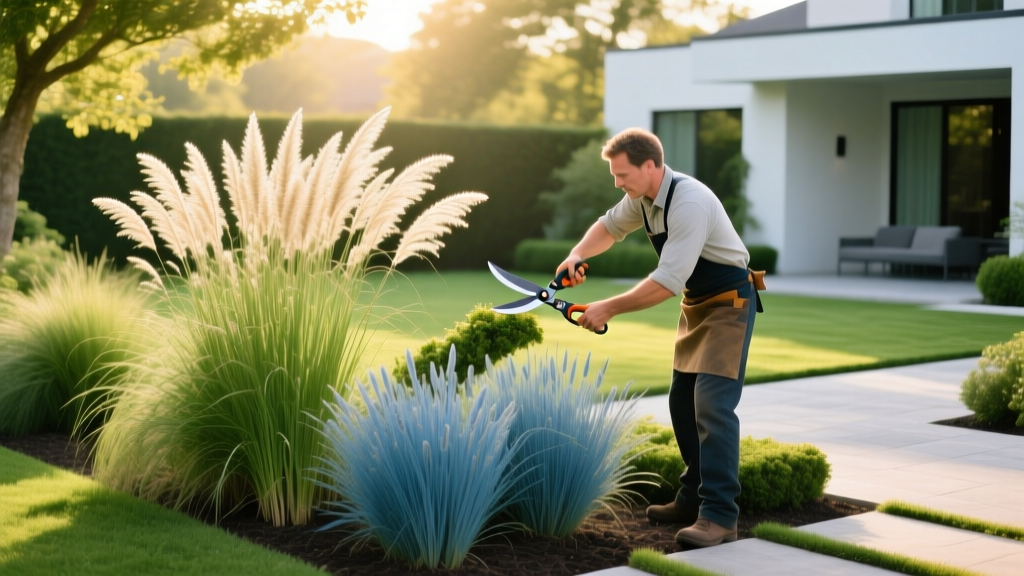
Timing and Techniques for Trimming Ornamental Grasses
Understanding Grass Physiology: Why Timing Dictates Survival
Ornamental grasses provide critical winter structure and movement in the landscape, but leaving them uncut too long into the spring stifles new growth and invites fungal pathogens. When trimming ornamental grasses, the most common mistake homeowners make is treating all species identically. The physiological divide between warm-season and cool-season grasses dictates not just when you cut, but how deep you cut. Cutting a cool-season grass like Festuca glauca (Blue Fescue) with the same aggressive 6-inch shearing technique used for a warm-season Miscanthus sinensis (Maiden Grass) will destroy the crown and kill the plant. This guide provides the exact measurements, tool specifications, and seasonal timing required to maintain vigorous ornamental grass stands.
Cool-Season vs. Warm-Season Grasses: The Cutting Matrix
Before making a single cut, you must identify your grass type. Warm-season grasses go completely dormant in winter and require hard cutbacks. Cool-season grasses remain semi-evergreen and only require selective debris removal. According to the University of Minnesota Extension, misidentifying these categories is the primary cause of spring die-back in ornamental beds.
| Grass Category | Common Species | Ideal Trimming Window | Target Cutting Height | Primary Technique |
|---|---|---|---|---|
| Warm-Season | Miscanthus, Panicum, Pennisetum, Calamagrostis | Late Winter / Early Spring (Just before forsythia blooms) | 4 to 6 inches above soil line | Bundle, tie, and shear completely |
| Cool-Season | Festuca, Helictotrichon, Carex, Deschampsia | Early Spring (As soon as ground thaws) or Late Fall | Top 1/3 of foliage only (or comb out) | Selective thinning and combing |
The Essential Tool Kit for Trimming Ornamental Grasses
Standard lawn equipment will fail you here. Ornamental grass blades contain high levels of silica, which rapidly dulls standard steel and jams mechanical gears. You need specialized, high-carbon or hardened steel tools.
Manual vs. Power Tools
- For Stands Under 3 Feet (Manual): Use long-reach hedge shears with wavy-edge blades. The ARS HS-K1000 or Felco 200 series provide the leverage needed to slice through thick culms without bending the stems. Avoid standard bypass pruners; they will crush the fibrous stems and cause micro-fractures that harbor rot.
- For Stands Over 3 Feet (Power): A cordless hedge trimmer is mandatory for large Miscanthus or Pampas grass clumps. The STIHL HSA 56 or Makita XHU02Z (18V LXT) offer the blade length (20-24 inches) and stroke speed required to cut through dense, dry silica-heavy stalks without stalling. Ensure the blade is freshly sharpened or replaced; dull trimmer blades will shred the grass base rather than cutting it cleanly.
- The Bundling System: Never cut warm-season grasses loose. Wrap the clump tightly with biodegradable jute twine or a reusable bungee cord at the midpoint before cutting. This contains the debris into a single, easily movable column, reducing cleanup time by up to 70%.
Expert Safety Note: Ornamental grass blades are micro-serrated and can cause severe lacerations. Always wear heavy-duty leather gauntlet gloves (such as the Wells Lamont 1246) and ANSI Z87.1 rated eye protection when operating power trimmers near the base, as dry silica shards will shatter and project outward at high velocity.
Step-by-Step: Cutting Back Warm-Season Grasses
Warm-season grasses store energy in their root systems over winter. The UMass Amherst Extension notes that leaving the previous year's foliage intact until late winter protects the crown from freeze-thaw cycles and provides habitat for overwintering beneficial insects. Once the threat of deep freezes has passed, execute the following protocol:
- Secure the Bundle: Tie the grass clump tightly with twine about 18 to 24 inches above the ground. For massive clumps exceeding 6 feet, use two tie points to prevent the top from splaying when cut.
- Execute the Cut: Using your hedge trimmer or long-reach shears, cut horizontally 4 to 6 inches above the soil line. Do not cut flush with the soil. The remaining 4-inch stubble acts as a protective collar for the central crown and prevents water from pooling directly into the growth nodes.
- Angle the Shears on Slopes: If the grass is planted on a slope, angle your cut slightly away from the center of the crown to encourage water runoff.
- Extract and Clear: Lift the bundled column straight up. Use a hand cultivator to gently rake out any trapped, decaying leaves from the center of the crown. This airflow is critical to preventing Puccinia (rust fungus) outbreaks in the spring.
Step-by-Step: Managing Cool-Season Grasses
Cool-season grasses begin active growth much earlier, often pushing new green shoots while snow is still on the ground. Aggressive shearing will decapitate these new shoots, setting the plant's growth back by weeks and exposing the raw cut ends to bacterial blight.
- The Comb-Out Method: For tight clumping grasses like Blue Fescue or Hair Grass, put on your leather gloves and manually rake your fingers upward through the foliage from the base to the tips. This pulls out the dead, brown winter thatch while leaving the living green blades intact.
- The Top-Third Rule: If the grass has suffered severe winter burn and the tips are entirely necrotic, use hand shears to trim only the top one-third of the foliage. Never cut into the lower two-thirds where the active meristematic tissue resides.
- Sedge (Carex) Exception: Most Carex species do not tolerate hard pruning. If a Carex plant looks entirely brown and dead in early spring, it is likely dead. Do not attempt to cut it back to the soil; instead, test for life by gently tugging the center blades. If they pull out easily with a mushy base, the plant has succumbed to winter crown rot and must be replaced.
Debris Management and Mulching Strategies
The volume of debris generated from trimming ornamental grasses is substantial. Do not send this material to the landfill; it is a valuable carbon source for your landscape.
Because ornamental grass stalks are highly lignified and break down slowly, they are poor candidates for standard compost bins unless processed first. Run the bundled stalks through a wood chipper to reduce their volume by 80% and accelerate decomposition. If you lack a chipper, use the chopped stalks as a thick, 3-inch mulch layer in your vegetable garden pathways. The high carbon-to-nitrogen ratio (often exceeding 60:1) of dry Miscanthus stalks makes them an excellent weed-suppressing mulch that will slowly break down over the summer without robbing the soil of nitrogen, provided they are kept on the surface and not tilled into the earth.
Expert Troubleshooting: Center Die-Out and Stunted Growth
If you are trimming ornamental grasses correctly but still experiencing poor performance, evaluate the following failure modes:
- The Donut Effect (Center Die-Out): If your warm-season grass is growing vigorously in a ring but the center is entirely dead, the clump has matured past its viable lifespan (typically 5 to 8 years for Miscanthus). Trimming will not fix this. You must dig up the entire root ball in early spring, use a sharpened spade or a reciprocating saw to divide the clump into three or four smaller sections, discard the dead center, and replant the vigorous outer edges.
- Stunted Spring Emergence: If you cut the grass too early (e.g., mid-warm spells in February) and a subsequent hard freeze occurs, the exposed crown nodes will suffer freeze damage. Always wait until the soil temperature consistently reaches 45°F before executing the final cut-back.
- Fungal Lesions on New Blades: If new spring growth emerges with red or brown streaks, you likely cut the grass while it was wet, or your trimmer blades were contaminated with rust spores from a previous job. Always trim on a dry, breezy afternoon, and wipe power trimmer blades with a 10% bleach solution between different plant clumps to prevent cross-contamination.

