
Lawn Care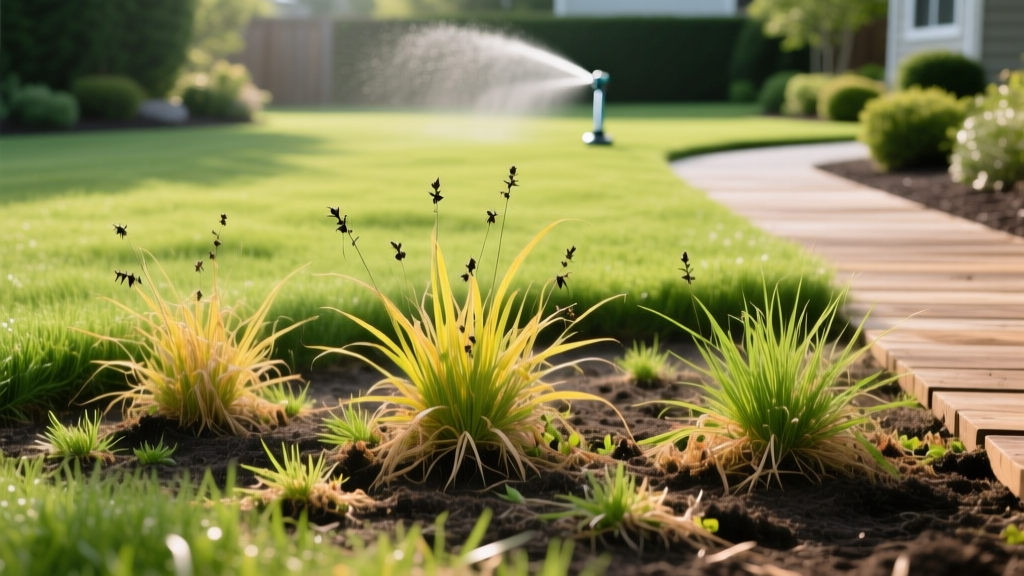
Diagnosing & Fixing Failing Small Decorative Grasses in Your Yard
The Hidden Complexities of Dwarf Ornamental Grasses
Small decorative grasses—typically defined as cultivars maturing under 24 inches in height—are foundational elements in modern landscape design. Varieties like Blue Fescue (Festuca glauca 'Elijah Blue'), Dwarf Fountain Grass (Pennisetum alopecuroides 'Hameln'), and Mondo Grass (Ophiopogon japonicus) provide year-round texture, erosion control, and border definition. However, their reputation for being "low maintenance" often leads to neglect, resulting in sudden dieback, structural collapse, or failure to bloom.
According to Penn State Extension, the most common failure modes for ornamental grasses stem from improper site selection, aggressive fertilization, and delayed division. Unlike traditional turfgrass, small decorative grasses have distinct physiological triggers. When a 1-gallon nursery plug (averaging $22 to $35 in 2026) fails to thrive, it is rarely a random event. Below is a clinical diagnostic framework to identify the exact cause of your grass failures and the precise steps to reverse them.
Symptom 1: Center Dieback (The "Donut" Effect)
The Diagnosis: The outer ring of the grass clump remains vibrant and green, but the center crown turns brown, brittle, and entirely dead. This is known as crown exhaustion or "donuting."
The Cause: As perennial grasses age (typically after 3 to 5 years), the central crown becomes overcrowded. The dense root mass chokes out its own core, preventing water and nutrients from reaching the center. Cool-season grasses like Blue Fescue are particularly prone to this by year three, while warm-season grasses like Dwarf Fountain Grass may take four to six years to exhibit the symptom.
The Prescription: Strategic Division
Do not attempt to revive the dead center with fertilizer; the tissue is necrotic. You must physically divide the plant.
- Timing: Divide cool-season grasses in early fall or early spring. Divide warm-season grasses strictly in late spring, just as new green shoots break the soil surface.
- Tools: Use a sharp, flat-edged transfer spade and a Hori Hori gardening knife. Standard shovels will crush the tough root crowns.
- Execution: Dig a trench 2 inches outside the plant's drip line to preserve the outer feeder roots. Lift the entire clump. Drive the spade directly through the crown, discarding the dead center entirely. Cut the remaining healthy outer ring into 3 or 4 equal wedges.
- Replanting: Replant the wedges at the exact same soil grade they were previously growing. Planting even 1 inch too deep will suffocate the crown and trigger rot. Water immediately with a liquid root stimulator containing 0.1% indole-3-butyric acid (IBA) to accelerate root establishment.
Symptom 2: Flopping, Splaying, and Loss of Form
The Diagnosis: The grass blades lose their rigid, upright architecture and collapse outward in a messy, splayed halo, especially after light rain or wind.
The Cause: This is almost exclusively caused by excess nitrogen or insufficient sunlight. Small decorative grasses are adapted to lean, nutrient-poor soils. If your ornamental bed borders a traditional lawn, runoff from high-nitrogen lawn fertilizers (like 20-5-10 or 32-0-4 formulations) will force the grass to produce rapid, sappy, and structurally weak cell growth. Furthermore, if a nearby tree canopy has expanded, dropping the daily direct sunlight below the required 6-hour threshold, the grass will etiolate (stretch weakly toward the light).
The Prescription: Nutrient Flushing and Canopy Management
- Immediately halt any synthetic fertilizer applications within 10 feet of the bed.
- Flush the soil profile by applying 1.5 inches of water over a 48-hour period to leach excess soluble nitrogen salts below the root zone.
- If shade is the culprit, hire an arborist to perform a "crown raising" prune on the overhanging tree, removing lower branches to allow dappled light to reach the grass canopy.
- Never apply synthetic nitrogen to small decorative grasses. If soil tests indicate a severe deficiency, top-dress with a maximum of 0.5 inches of screened compost in early spring.
Symptom 3: Tip Burn, Browning, and Orange Pustules
The Diagnosis: Leaf tips are scorched brown, or distinct orange/rust-colored pustules appear on the blades, leaving a powdery residue on your fingers when touched.
The Cause: Tip burn in early spring is usually winter desiccation combined with salt buildup from nearby road de-icing. However, orange pustules indicate Puccinia (Rust fungus), which thrives in environments with high humidity, poor air circulation, and overhead irrigation.
The Prescription: Fungal Eradication and Irrigation Audits
According to the University of Minnesota Extension, ornamental grasses require excellent air flow to prevent fungal pathogens. If rust is present, remove and destroy (do not compost) the most heavily infected blades. Apply a preventative fungicide containing chlorothalonil or copper octanoate at the manufacturer's labeled rate for ornamentals. Crucially, audit your irrigation system. Small decorative grasses must be watered at the base via drip lines or soaker hoses. Overhead sprinklers that leave foliage wet overnight will guarantee recurring rust infections.
Diagnostic Matrix: Quick-Reference Troubleshooting
| Visual Symptom | Primary Suspect | Secondary Suspect | Immediate Action Required |
|---|---|---|---|
| Dead center, green edges | Crown exhaustion (age) | Poor drainage | Dig, divide, discard center, replant outer wedges |
| Splayed, weak blades | Nitrogen runoff | Insufficient sunlight | Flush soil, stop lawn fertilizer, prune tree canopy |
| Orange powdery spots | Rust fungus (Puccinia) | Overhead watering | Apply copper fungicide, switch to drip irrigation |
| Entire plant turns gray/brown | Root rot (Phytophthora) | Heavy clay soil | Pull plant, amend bed with 30% expanded shale, replant |
| Failure to produce plumes | Late-season pruning | Immaturity (Year 1) | Adjust pruning calendar, wait for Year 2 establishment |
⚠️ Critical Warning: Invasive Reversion in Cultivars
If you are growing Japanese Blood Grass (Imperata cylindrica 'Rubra'), monitor the clump closely for solid green shoots. This cultivar is genetically unstable and frequently reverts to its wild, highly invasive green form. The reverted green form spreads aggressively via rhizomes and can overtake a 10x10 foot bed in two seasons. The Fix: The moment you spot a solid green shoot, trace it to the root and extract it entirely with a weeding fork. If more than 20% of the clump reverts, excavate and destroy the entire plant to protect your local ecosystem.
Symptom 4: Failure to Establish or Sudden Wilt
The Diagnosis: Newly planted plugs wilt severely during the day, fail to push new growth, and eventually turn uniformly straw-colored despite regular watering.
The Cause: This is rarely a water deficit; it is almost always a drainage failure or a "bathtub effect." Small decorative grasses despise "wet feet." If planted in heavy, unamended clay soil, or if the planting hole was dug deeper than the root ball and backfilled with loose potting mix, water will pool in the hole, drowning the roots and inviting Phytophthora root rot.
The Prescription: The Percolation Test and Soil Amendment
Before replanting in a failed spot, perform a percolation test. Dig a hole 12 inches deep and fill it with water. If it takes longer than 4 hours to drain, the soil is unsuitable for ornamental grasses without heavy amendment. To fix the site, excavate the bed to a depth of 10 inches and blend the native soil with 30% expanded shale or 1/4-inch pumice by volume. This creates permanent macro-pores that allow oxygen to reach the root zone, which is non-negotiable for species like Schizachyrium scoparium 'The Blues' (Little Bluestem).
The Pruning Calendar: Timing is Everything
Many homeowners inadvertently kill their small decorative grasses by pruning them at the wrong time of year, exposing the crown to freeze-thaw cycles or shearing off developing flower stalks.
The Golden Rule of Ornamental Grass Pruning: Never cut back warm-season grasses in the fall. The dormant, tan foliage acts as a protective thatch layer, shielding the crown from ice and preventing water from pooling in the center of the plant during winter. Wait until late February or early March, just before new green growth emerges, and cut the old foliage down to exactly 2 inches above the soil line.
For cool-season grasses (like Fescues and Helictotrichon sempervirens), do not cut them to the ground. Instead, wear heavy leather gloves and gently "comb" or rake out the dead, brown blades by hand in early spring, leaving the living green tissue intact. Shearing a cool-season grass to the ground will severely stunt its growth for the entire season.

