
Lawn Care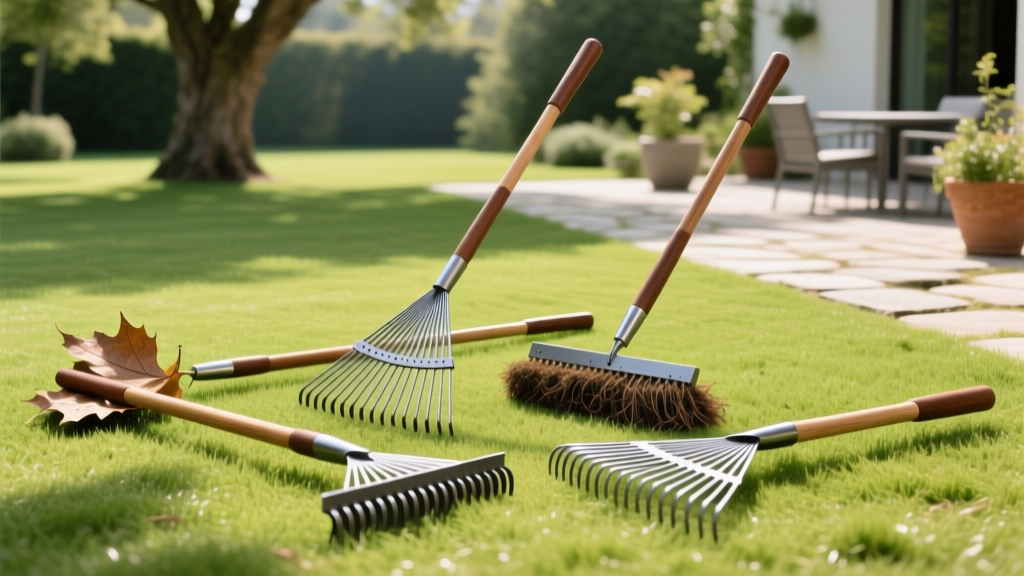
The Complete Guide to Types of Rakes for Lawn Care and Soil Management
Most homeowners own a single, flimsy plastic rake and use it for everything from clearing autumn leaves to scarifying compacted thatch. This approach damages turf crowns, fractures soil structure, and inevitably breaks the tool. Selecting the correct types of rakes for specific lawn care tasks requires understanding tine metallurgy, head geometry, and handle ergonomics. Using a leaf rake to level topsoil will bend the tines, while using a bow rake to clear wet leaves will tear your grass out by the roots.
This guide breaks down the exact specifications, materials, and use cases for every essential rake in a comprehensive lawn care arsenal, ensuring you apply the right mechanical force to your turf and soil.
The Anatomy of a High-Performance Rake
Before evaluating specific types of rakes, you must understand the structural components that dictate a tool's performance and lifespan. The interaction between the handle material and the head connection (the ferrule and bow) determines how much torque the tool can withstand.
Handle Material Comparison Matrix
- Fiberglass ($35 - $55): The professional standard. Offers the highest strength-to-weight ratio, resists weathering, and absorbs high-frequency shock. Look for UV-coated shafts to prevent resin degradation.
- Ash Wood ($25 - $45): Provides superior natural shock absorption, reducing forearm fatigue during prolonged dethatching. Requires annual linseed oil treatments to prevent splintering and rot at the ferrule.
- Aluminum ($20 - $30): Extremely lightweight but prone to permanent bending under heavy lateral loads (e.g., moving wet soil or gravel). Best reserved strictly for dry leaf collection.
Core Types of Rakes for Turf and Soil Management
1. Standard Leaf Rakes (Fan Rakes)
Designed with a wide, fan-shaped head (typically 24 to 30 inches) and flexible tines, leaf rakes are engineered to glide over the turf canopy without catching on grass blades or soil clods.
Polypropylene vs. Spring Steel: Modern poly tines (usually 0.125-inch thick) are UV-stabilized and will not rust, making them ideal for wet morning dew collection. However, they can become brittle in freezing temperatures. Spring steel tines offer superior snap-back memory and last decades, but they are heavier and require drying after use to prevent oxidation. For optimal turf protection, select a rake with a tine spacing of 1.25 to 1.5 inches; anything wider will miss smaller debris, while anything narrower will clog instantly with wet leaves.
2. Manual Thatch Rakes (Scarifiers)
Thatch is a layer of dead and living shoots, stems, and roots that develops between the zone of green vegetation and the soil surface. While a thin layer (under 0.5 inches) insulates the soil, excessive thatch blocks water and fertilizer penetration. Manual thatch rakes feature heavy-duty, curved, half-moon steel blades spaced 0.5 to 0.75 inches apart across a narrow 15-inch head.
According to turf experts at the University of Minnesota Extension, manual thatch rakes are highly effective for small lawn areas or localized problem spots. The curved blades are designed to penetrate the thatch layer and pull it to the surface when drawn backward. Be prepared for significant physical exertion; manual dethatching a 1,000-square-foot lawn can take 2 to 3 hours. If your thatch layer exceeds 0.75 inches, abandon the manual rake and rent a powered vertical mower (power rake).
3. Bow Rakes and Landscape Grading Rakes
Bow rakes (also known as garden rakes) feature a rigid, flat head with 14 to 18 short, thick steel tines. The head is connected to the handle via two curved metal bows, which distribute downward pressure evenly. These are not for leaves. Bow rakes are the primary tool for moving soil, spreading compost, leveling topdressing, and breaking up small dirt clods after core aeration.
When leveling a lawn after topdressing with a sand-soil mix, a 16-inch bow rake allows you to pull the material into low spots without gouging the underlying subsoil. For larger grading projects, professionals upgrade to a 36-inch aluminum landscape rake, which features a wide, flat head with no individual tines, acting as a giant squeegee for soil.
4. Shrub and Detail Rakes
Standard 30-inch leaf rakes are useless in tight spaces. Shrub rakes feature a compact head width of 7 to 9 inches with tightly spaced, flexible poly tines. They are specifically designed to reach beneath foundation plantings, hydrangeas, and low-hanging everbranches to extract trapped leaves that harbor moisture and cause fungal diseases like powdery mildew on the lower canopy.
Specification and Use-Case Matrix
| Rake Type | Head Width | Tine Spacing | Primary Material | Target Application |
|---|---|---|---|---|
| Poly Leaf Rake | 24" - 30" | 1.25" - 1.5" | UV Polypropylene | Dry/wet leaf collection, grass clippings |
| Manual Thatch Rake | 15" - 17" | 0.5" - 0.75" | Carbon Steel Blades | Scarifying thatch under 0.75" thick |
| Standard Bow Rake | 16" | 0.75" (fixed) | Forged Steel | Moving soil, leveling topdressing |
| Landscape Grading Rake | 36" - 48" | N/A (Solid edge) | Aluminum Head | Final grading, sand distribution |
| Shrub Rake | 7" - 9" | 0.75" - 1.0" | Polypropylene | Tight spaces, foundation plantings |
Grass-Type Specific Raking Protocols
The timing and intensity of your raking must align with your specific turfgrass species. As noted in Colorado State University Extension guidelines, improper mechanical stress during dormancy or peak heat can severely damage the crown tissue.
Cool-Season Grasses (Kentucky Bluegrass, Tall Fescue, Perennial Ryegrass)
- Leaf Raking: Perform aggressively in late autumn. Leaving wet leaves on cool-season turf during winter invites snow mold (Microdochium nivale).
- Thatch Raking: Execute in early fall (late August to mid-September). Cool-season grasses recover rapidly from the mechanical tearing of thatch rakes during their peak fall growth cycle. Avoid spring dethatching, which opens the canopy to crabgrass invasion.
Warm-Season Grasses (Bermuda, Zoysia, St. Augustine)
- Leaf Raking: Minimal raking is required during the growing season. Use a light poly rake in late winter to remove dormant, brown blades and debris before spring green-up.
- Thatch Raking: Perform in late spring to early summer (May to June), exactly when the grass is breaking dormancy and entering its most aggressive growth phase. Never dethatch St. Augustine grass with a manual steel rake; its thick, above-ground stolons will be ripped out. Use a powered dethatcher set to a high clearance instead.
Ergonomics, Maintenance, and Storage
A $50 professional-grade rake will outlast a $15 hardware store rake by a decade, but only if maintained correctly. The most common failure point on any rake is the ferrule (where the handle meets the head). When storing rakes, never leave them resting on their tines, which bends the steel and weakens the structural memory. Hang them vertically on a wall rack.
Warning on Tine Tension: Never flip a leaf rake upside down and step on the head to "flatten" bent tines. This micro-fractures the polypropylene or work-hardens the spring steel, guaranteeing a snap during your next heavy use. If tines are severely deformed, replace the tool.
For wooden handles, wipe down the shaft with boiled linseed oil at the end of every season to prevent the wood from drying out and shrinking away from the metal ferrule. For fiberglass handles, simply wash off sap and soil with a mild detergent to prevent acidic degradation of the outer resin layer. By matching the exact type of rake to the physical properties of your turf and soil, you reduce labor time, protect your lawn's root system, and achieve a professional-grade finish.

