
Lawn Care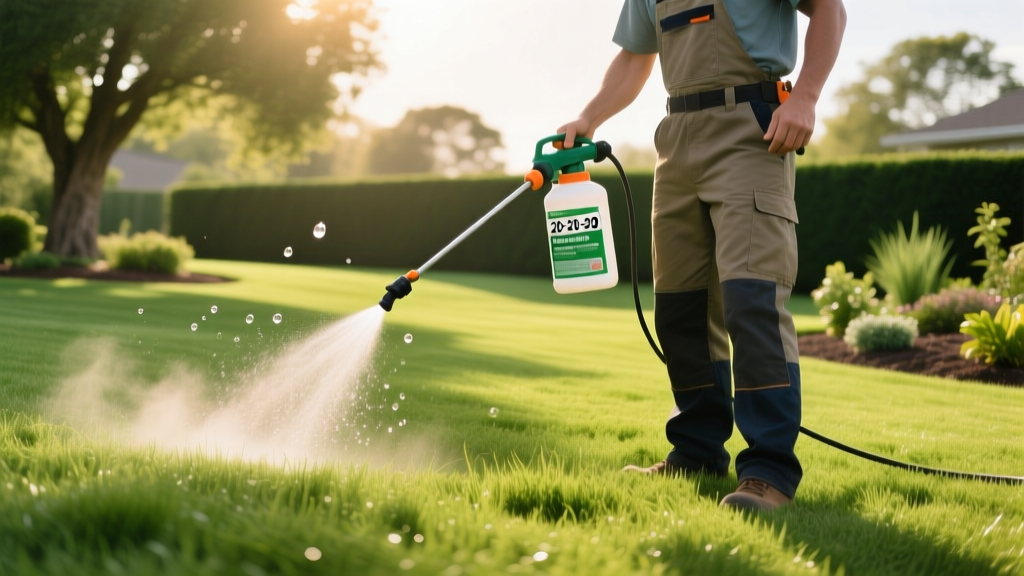
How to Use 20 20 20 Water Soluble Fertilizer on Lawns Safely
The Chemistry and Reality of 20-20-20 WSF on Turfgrass
When homeowners seek a rapid green-up or a quick nutritional rescue for a struggling lawn, 20 20 20 water soluble fertilizer (WSF) is frequently the first product they reach for. Originally formulated for greenhouse crops and hydroponics, this balanced NPK blend has migrated into the turf care market due to its low cost and immediate availability to plant roots. However, applying a highly concentrated, fully soluble salt blend to turfgrass requires a fundamentally different approach than spreading granular slow-release fertilizers.
A standard 20-20-20 WSF contains 20% total nitrogen (typically a mix of urea and ammonium nitrate), 20% available phosphate (P2O5, usually derived from monoammonium phosphate), and 20% soluble potash (K2O, from potassium chloride or potassium nitrate). Because these nutrients are already dissolved or instantly dissolve in water, they bypass the microbial breakdown required by granular fertilizers. This results in visible turf response within 24 to 48 hours, but it also introduces a high salt index—typically around 21.5 relative to sodium nitrate—which drastically increases the risk of foliar burn and root desiccation if miscalculated.
Critical Nutrient Density Data: In a standard 5-pound bucket of 20-20-20 WSF, you are purchasing exactly 1 pound of Nitrogen, 1 pound of Phosphorus, and 1 pound of Potassium. The remaining 2 pounds consist of filler agents, chelating agents, and inert salts that facilitate the dissolution process.
The Phosphorus Problem: Why "Balanced" Isn't Always Better
The most significant agronomic flaw in using 20 20 20 water soluble fertilizer on established lawns is the massive over-application of phosphorus. Turfgrass requires relatively low levels of phosphorus compared to nitrogen and potassium. According to the University of Minnesota Extension, established lawns rarely require phosphorus supplementation unless a recent soil test explicitly indicates a deficiency.
When you apply enough 20-20-20 WSF to deliver 1 pound of nitrogen per 1,000 square feet, you are simultaneously applying 1 pound of phosphorus. Over a single growing season, this leads to severe phosphorus saturation in the topsoil. Excess phosphorus binds with calcium and magnesium, locking out crucial secondary macronutrients. Furthermore, during heavy rain events, this surplus phosphorus leaches into local watersheds, driving eutrophication and toxic algae blooms. For routine maintenance, a high-nitrogen, zero-phosphorus blend (like a 24-0-6) is vastly superior for both turf health and environmental stewardship.
Foliar Feeding vs. Soil Drench: Choosing Your Application Method
How you deliver the 20-20-20 solution dictates your dilution rate, timing, and burn risk. You must choose between foliar feeding and a soil drench based on your immediate goals and current weather conditions.
1. Foliar Feeding (Quick Green-Up)
Foliar application relies on the turfgrass leaves absorbing the dissolved nutrients directly through their stomata and cuticle. This method is ideal for correcting acute deficiencies or providing a rapid color boost before a special event.
- Target Rate: 0.1 to 0.15 lbs of Nitrogen per 1,000 sq ft.
- Product Required: 0.5 to 0.75 lbs of 20-20-20 WSF per 1,000 sq ft.
- Water Volume: 2 gallons per 1,000 sq ft to ensure thorough leaf coverage without excessive runoff.
- Warning: Never apply foliar WSF when ambient temperatures exceed 82°F. The water will evaporate too quickly, leaving concentrated salt residues on the leaf blades that will cause severe tip burn within hours.
2. Soil Drench (Root Zone Delivery)
A soil drench involves spraying the solution and immediately watering it into the root zone. This is safer for the foliage and ensures the phosphorus and potassium reach the deeper root profile where they are less prone to surface runoff.
- Target Rate: 0.25 to 0.5 lbs of Nitrogen per 1,000 sq ft.
- Product Required: 1.25 to 2.5 lbs of 20-20-20 WSF per 1,000 sq ft.
- Water Volume: 1 gallon of carrier water per 1,000 sq ft, followed immediately by 0.25 inches of irrigation from your sprinkler system.
Step-by-Step Mixing and Calibration Guide
Pouring dry WSF directly into a hose-end sprayer is a recipe for uneven distribution and localized turf burn. Proper mixing requires a two-step agitation process.
- Calculate the Area: Measure your lawn precisely. For a 5,000 sq ft lawn targeting a 0.2 lb N soil drench rate, you need exactly 5 lbs of 20-20-20 WSF.
- Create a Slurry: Fill a 5-gallon bucket with 1 gallon of warm water (70°F to 80°F). Warm water dramatically reduces the dissolution time of the potassium and phosphorus salts.
- Add and Agitate: Slowly pour the measured WSF powder into the warm water while stirring continuously with a wooden paddle. Allow it to sit for 10 minutes, then stir again to ensure no undissolved crystals remain at the bottom.
- Dilute to Volume: Add cold water to the bucket to reach the total required carrier volume (e.g., 5 gallons for 5,000 sq ft).
- Transfer and Spray: Pour the mixed solution into a battery-powered backpack sprayer or pump sprayer. Calibrate your nozzle to deliver exactly 1 gallon per 1,000 sq ft by walking at a steady pace of 3 feet per second.
Performance Matrix: 20-20-20 WSF vs. Granular Slow-Release
Understanding where 20-20-20 fits into your broader lawn care program requires comparing it to industry-standard granular alternatives. The following matrix breaks down the operational differences based on 2026 turf management standards.
| Metric | 20-20-20 Water Soluble (Liquid) | Standard Granular (e.g., 32-0-10 SCU) |
|---|---|---|
| Cost per 1,000 sq ft | $0.12 - $0.18 (Bulk agricultural grade) | $0.25 - $0.35 (Retail polymer-coated) |
| Nutrient Availability | Immediate (24-48 hours) | Gradual (4 to 8 weeks) |
| Foliar Burn Risk | High (Requires strict dilution limits) | Very Low (Low salt index per prill) |
| Phosphorus Runoff Risk | High (If not watered in immediately) | Moderate (Depends on prill placement) |
| Application Equipment | Pump sprayer, hose-end sprayer, or injector | Rotary or drop spreader |
| Best Use Case | Spring green-up, acute deficiency rescue | Baseline seasonal maintenance programs |
Pro-Tips for Maximizing Uptake and Avoiding Edge Cases
To extract maximum value from 20 20 20 water soluble fertilizer while mitigating its inherent risks, incorporate these advanced turf management techniques:
"When applying water-soluble phosphorus to soils with high clay content or alkaline pH (above 7.2), the phosphorus will rapidly bind with free calcium and precipitate out of the soil solution, becoming entirely unavailable to the turfgrass roots. In these scenarios, liquid WSF phosphorus is effectively wasted unless a chelating agent or organic acid is added to the tank mix."
— Adapted from UMass Amherst Extension Turf Program
- Use a Non-Ionic Surfactant (NIS): Adding 1 to 2 teaspoons of a high-quality NIS (like CapSil or LescoFlo) per gallon of tank mix reduces the surface tension of the water. This allows the 20-20-20 solution to spread evenly across the waxy cuticle of warm-season grasses like Zoysia and Bermuda, increasing foliar absorption by up to 30%.
- Watch Your Hard Water: If you are mixing your WSF using municipal tap water that is heavily treated with calcium or magnesium (hard water), the phosphorus in the 20-20-20 blend will react and form insoluble calcium phosphate scale inside your sprayer lines. Always use filtered water or rainwater for mixing liquid fertilizers.
- Never Mix with Calcium Nitrate: A common mistake is attempting to tank-mix 20-20-20 with calcium nitrate to boost nitrogen and add calcium. This combination causes an immediate chemical reaction that creates gypsum (calcium sulfate), turning your sprayer tank into a thick, unusable sludge that will ruin your pump seals.
- Time Applications for the Evening: Apply your soil drench or foliar spray between 6:00 PM and 8:00 PM. This provides the turfgrass with 12 hours of cool, dark conditions to absorb the nutrients before the morning sun drives evaporation and increases salt concentrations on the leaf surface.
While 20 20 20 water soluble fertilizer is a potent and cost-effective tool for specific, short-term turf interventions, it should not serve as the foundation of an annual lawn care program. Reserve it for targeted rescue applications, early spring jump-starts, or addressing verified soil deficiencies, and rely on slow-release, phosphorus-free granular formulations for routine, sustainable turf nutrition.

