
Lawn Care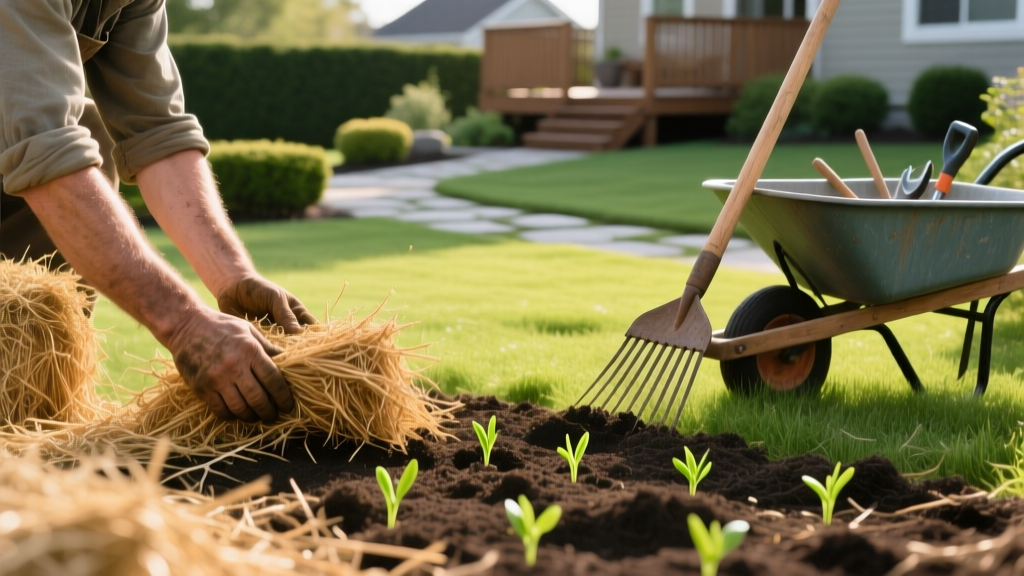
Using Hay for Grass Seed: Step-by-Step Mulching & Care Guide
The Great Mulch Debate: Hay vs. Straw for Grass Seed
When homeowners begin searching for the best hay for grass seed protection, they are usually looking for a cost-effective way to retain soil moisture and protect vulnerable seedlings from wind and birds. However, a critical botanical distinction must be made before purchasing your materials: true hay and straw are not interchangeable. Hay is cut from grasses and legumes (like alfalfa or timothy) while they are still green and nutritious, meaning it is packed with viable seeds. Straw is the dry, hollow stalk left over after harvesting grain crops like wheat or oats, and it contains virtually no seeds.
⚠️ Weed Warning: Applying true agricultural hay over your newly seeded lawn will introduce thousands of weed seeds directly into your topsoil. For lawn establishment, always purchase straw (specifically wheat or oat straw) or use a certified weed-free hay alternative like Penn Mulch, even if colloquial search terms blur the lines between the two.
According to turfgrass researchers at the University of Minnesota Extension, applying a light mulch layer over newly seeded areas reduces soil crusting, minimizes evaporation, and can increase germination rates by up to 40% compared to bare soil. Below is a comprehensive, step-by-step protocol for preparing, seeding, and mulching your lawn for optimal 2026 establishment.
Material Comparison Matrix: Choosing Your Cover
Before executing the steps below, evaluate which mulching material fits your budget and risk tolerance. Pricing reflects average regional costs for the 2026 landscaping season.
| Material | Cost per 1,000 sq ft | Weed Seed Risk | Moisture Retention | Application Effort |
|---|---|---|---|---|
| Wheat Straw | $8 - $12 | Low | High | Moderate |
| True Hay (Alfalfa/Timothy) | $5 - $10 | Extremely High | High | Moderate |
| Sphagnum Peat Moss | $15 - $22 | None | Very High | High (Clumping) |
| Hydromulch (Paper/Cellulose) | $25 - $40 | None | Moderate | Low (Requires sprayer) |
Step-by-Step: Applying Mulch for Grass Germination
Step 1: Soil Preparation and Grading
Mulch cannot compensate for poor soil contact. Begin by tilling the top 2 to 3 inches of soil or aggressively raking the existing lawn if overseeding. Remove all rocks larger than a golf ball, existing weeds, and debris. Grade the soil to ensure a 1% to 2% slope away from your home’s foundation to prevent water pooling, which will rot both your seed and your mulch.
Step 2: Precision Seed Application
Apply your chosen grass seed using a broadcast or drop spreader. For standard Kentucky Bluegrass or Tall Fescue mixes (such as Scotts Turf Builder Grass Seed), set your spreader to the manufacturer's recommended setting—typically setting 4 on a Scotts Classic Drop Spreader for a rate of 4 to 6 lbs per 1,000 square feet. Rake the seed lightly into the top 1/8 inch of soil. This ensures the seed is anchored before the mulch layer goes down.
Step 3: The 70% Coverage Mulching Rule
This is where the "hay for grass" application requires exact precision. A standard 60-pound square bale of wheat straw covers approximately 1,000 to 1,500 square feet. Do not smother the soil. Your target is a 1/4-inch thick layer that blocks roughly 70% of the sunlight from hitting the bare dirt. If you apply the mulch too thickly, the grass seedlings will lack the photosynthetic light required to push through, leading to etiolation (weak, spindly growth) and eventual death. Shake the bale apart with a pitchfork and scatter it evenly by hand, walking backward to avoid compressing the soil.
Step 4: The 21-Day Watering Protocol
Mulch retains moisture, but it also intercepts light rainfall. You must water through the mulch. For the first 14 to 21 days, water the lawn 3 to 4 times daily for 5 to 7 minutes per zone. The goal is to keep the top 1 inch of soil and the mulch layer consistently damp, not saturated. Once the seedlings reach 1.5 inches in height, transition to deeper, less frequent watering (15 minutes every other day) to encourage deep root penetration.
Step 5: Transition and First Mow
Leave the straw or weed-free hay in place; it will naturally decompose and add organic matter to the soil over the next 6 to 8 weeks. Wait to mow until the grass reaches 3.5 to 4 inches in height. Set your mower deck to 2.5 inches, ensure the blades are razor-sharp to prevent tearing the young turf, and always bag the clippings for the first two mows to prevent them from matting down and suffocating the remaining seedlings.
Cost Analysis: Mulching a 5,000 Sq Ft Lawn
Understanding the financial commitment helps in planning your 2026 landscaping budget. Here is a realistic breakdown for a standard 5,000 square foot renovation using wheat straw (the safest "hay" alternative):
- Wheat Straw (4 bales @ $12 each): $48.00
- Tall Fescue Seed (25 lbs @ $6/lb): $150.00
- Starter Fertilizer (1 bag covering 5k sq ft): $35.00
- Biodegradable Erosion Netting (Optional, for slopes): $85.00
- Total Material Cost: $233.00 - $318.00
Troubleshooting Common Mulch Failures
- Problem: Mulch Blowing Away in High Winds
- Solution: If your lawn is on a slope or in a wind tunnel between houses, straw will not stay put. Apply a liquid soil tackifier (like Profile Products SoilBinder) or pin down biodegradable jute netting over the mulch layer immediately after application. The Texas A&M Agrilife Extension heavily recommends netting for slopes exceeding a 3:1 grade.
- Problem: White Mold Growing on the Mulch
- Solution: Saprophytic fungi feeding on the decaying straw are normal and harmless to the grass. However, if you see grey, water-soaked lesions on the grass blades themselves, you are dealing with Pythium Blight. Immediately reduce watering frequency, improve air circulation, and apply a preventative fungicide containing Azoxystrobin.
- Problem: Massive Weed Outbreak After Mulching
- Solution: This is the direct result of using true agricultural hay instead of weed-free straw. You cannot selectively kill grassy weeds (like cheatgrass or barnyardgrass) in a new lawn without killing your turf. You must manually pull the weeds or wait until the new lawn has been mowed 4 to 5 times before applying a selective post-emergent herbicide like Quinclorac.

