
Lawn Care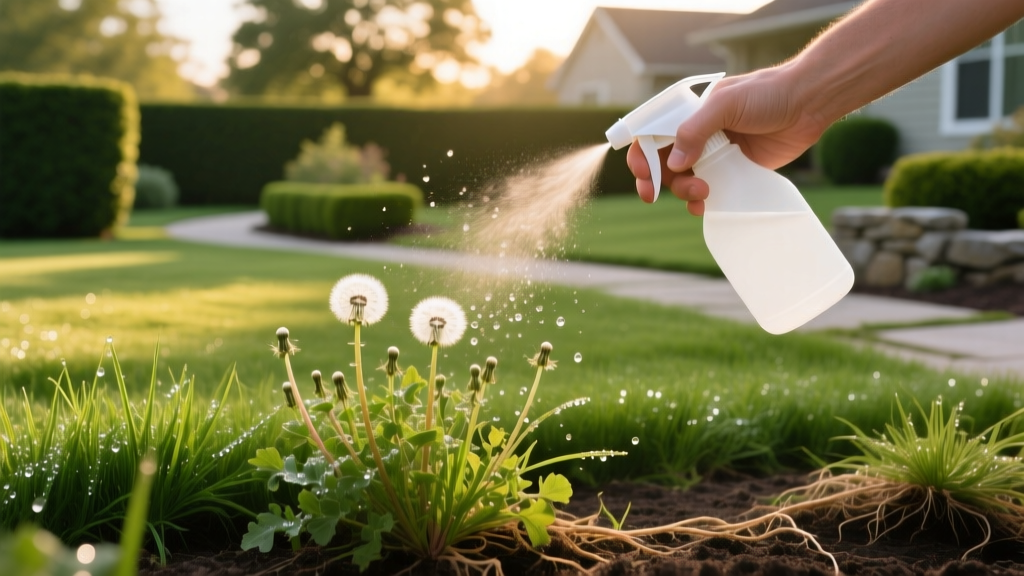
Would Vinegar Kill Weeds? The Science of Acetic Acid Lawn Care
The Short Answer: Contact Desiccation vs. Systemic Control
If you are asking, "would vinegar kill weeds," the technical answer is yes, but with severe limitations. Vinegar (acetic acid) acts as a non-selective contact herbicide. When sprayed on foliage, it rapidly destroys plant cell membranes, causing the leaf tissue to desiccate and turn brown within hours. However, it is not a systemic herbicide. It does not translocate down into the root system. For annual weeds with shallow roots, this top-kill is often fatal. For perennial weeds with established taproots—such as dandelions, bindweed, or wild violet—vinegar merely burns the top growth, and the weed will regenerate from the root within two to three weeks.
The Chemistry of Acetic Acid as an Herbicide
The efficacy of vinegar as a weed killer depends entirely on the concentration of acetic acid (CH3COOH). According to the National Pesticide Information Retrieval System, acetic acid disrupts the structural integrity of plant cells, leading to rapid fluid loss. The concentration dictates the outcome:
- Household Vinegar (5% Acetic Acid): Effective only on very young, newly germinated annual weeds (less than 2 inches tall). It will stunt mature weeds but rarely kill them.
- Cleaning Vinegar (6-10% Acetic Acid): Provides slightly better burn-down on young broadleaf weeds but still fails on mature perennials or grasses.
- Horticultural Vinegar (20-30% Acetic Acid): The only concentration capable of reliably burning down mature foliage. Products like Green Gobbler 20% or Harris 30% Pure Vinegar retail for $35 to $45 per gallon in 2026. At this strength, it is highly corrosive and classified as a hazardous chemical requiring strict PPE.
⚠️ Critical Safety Warning: Horticultural vinegar (20%+) is not a benign kitchen ingredient. It can cause irreversible corneal damage and severe respiratory irritation. The EPA notes that while acetic acid is a minimum-risk pesticide at low concentrations, high-concentration formulations require chemical splash goggles, acid-resistant nitrile gloves, and a respirator when aerosolized. Never spray 20% acetic acid on a windy day.
Household vs. Horticultural Vinegar: Comparison Matrix
| Feature | Household Vinegar (5%) | Horticultural Vinegar (20-30%) |
|---|---|---|
| Target Weeds | Seedlings, young annuals | Mature annuals, top-growth of perennials |
| Average Cost | $3 - $5 per gallon | $35 - $45 per gallon |
| Root Kill Capability | None | None (Contact only) |
| PPE Required | Basic eye protection | Acid goggles, heavy gloves, mask |
| Lawn Safety | Will burn turfgrass | Will severely burn turfgrass |
The Surfactant Factor: Why Vinegar Alone Fails
A common failure mode for DIY organic weed control is spraying pure vinegar on weeds with waxy or hairy leaves (like plantain or thistle). The liquid simply beads up and rolls off. Acetic acid requires a surfactant to break the surface tension of the water, allowing the chemical to spread across the leaf cuticle and penetrate the stomata.
While many online guides suggest adding dish soap, commercial dish detergents are often too mild or contain degreasers that interfere with the acid. For professional-grade organic burn-down, add 1 to 2 ounces of d-limonene (orange oil) or a dedicated non-ionic agricultural surfactant per gallon of horticultural vinegar. The d-limonene acts as both a powerful penetrant and an additional botanical desiccant.
Why Vinegar is a Poor Choice for Established Lawns
If you are managing a lawn composed of Kentucky Bluegrass, Tall Fescue, or Bermuda grass, vinegar is fundamentally the wrong tool. Acetic acid is non-selective. It does not distinguish between a broadleaf dandelion and your expensive turfgrass. Spot-treating a weed in a lawn with 20% vinegar will result in a distinct, brown, dead patch of grass that will require overseeding and topdressing to repair.
Furthermore, repeated applications of high-strength acetic acid in a concentrated lawn area can temporarily drop the soil pH and harm the surface-level mycorrhizal fungi and beneficial nematodes that your turf relies on for nutrient uptake. While the Environmental Protection Agency (EPA) notes that acetic acid degrades rapidly in the environment via microbial metabolism, dumping gallons of 20% acid on a small lawn area overwhelms the local soil biology.
Superior Organic Alternatives for Lawn Weeds
If your goal is chemical-free lawn care that actually targets weeds without harming the grass, abandon acetic acid and utilize these targeted organic solutions:
1. Post-Emergent: Chelated Iron (FeHEDTA)
Products containing Iron HEDTA (such as Natria Lawn Weed Control or Fiesta) represent the gold standard in organic broadleaf weed control. Broadleaf weeds (dandelions, clover, chickweed) absorb iron rapidly and suffer fatal iron toxicity, causing cellular rupture and blackening within hours. Monocot turfgrasses, however, metabolize iron differently and simply use it to become greener. A 32oz ready-to-spray bottle costs approximately $25 to $30 and covers up to 5,000 square feet. Apply when temperatures are below 85°F to prevent temporary grass tip-burn.
2. Pre-Emergent: Corn Gluten Meal (CGM)
To stop weeds before they sprout, apply Corn Gluten Meal in early spring when soil temperatures reach 55°F. CGM (typically 9-0-0 NPK) inhibits root formation in germinating seeds. It will not kill existing weeds, but it prevents crabgrass and annual broadleaf seeds from establishing. Apply at a rate of 20 lbs per 1,000 square feet. Expect to pay around $45 to $55 for a 50lb bag in 2026.
Frequently Asked Questions
Does vinegar permanently ruin the soil?
No. Acetic acid breaks down into water and carbon dioxide relatively quickly (usually within a few days to a week) as soil bacteria metabolize it. It does not leave toxic residual salts in the soil like some synthetic herbicides. However, the immediate localized pH drop can temporarily stunt planting in that exact spot.
Will adding salt to vinegar make it a better weed killer?
Adding sodium chloride (table salt) to vinegar will kill weeds more effectively by dehydrating the roots, but it is highly destructive to soil health. Salt sterilizes the soil, preventing any future plant growth, and can leach into surrounding areas, killing desirable plants and ruining soil structure. Never use salt in or near a lawn or garden bed.
What is the best time of day to spray acetic acid?
Apply horticultural vinegar between 10:00 AM and 2:00 PM on a hot, sunny day. The heat and UV radiation accelerate the desiccation process, causing the cell membranes to collapse faster. Spraying in the evening or on cloudy days significantly reduces efficacy, as the liquid dries too slowly and can wash off with morning dew.
Summary Decision Framework:
• Driveway/Patio Cracks: Use 20% Horticultural Vinegar + Orange Oil Surfactant.
• Broadleaf Weeds in Lawn: Use Chelated Iron (FeHEDTA).
• Preventing Crabgrass: Use Corn Gluten Meal in early spring.
• Large Perennial Roots (Bindweed/Thistle): Manual extraction or targeted synthetic systemic (if organic is not a strict requirement), as vinegar will fail.
• Driveway/Patio Cracks: Use 20% Horticultural Vinegar + Orange Oil Surfactant.
• Broadleaf Weeds in Lawn: Use Chelated Iron (FeHEDTA).
• Preventing Crabgrass: Use Corn Gluten Meal in early spring.
• Large Perennial Roots (Bindweed/Thistle): Manual extraction or targeted synthetic systemic (if organic is not a strict requirement), as vinegar will fail.

