
Lawn Care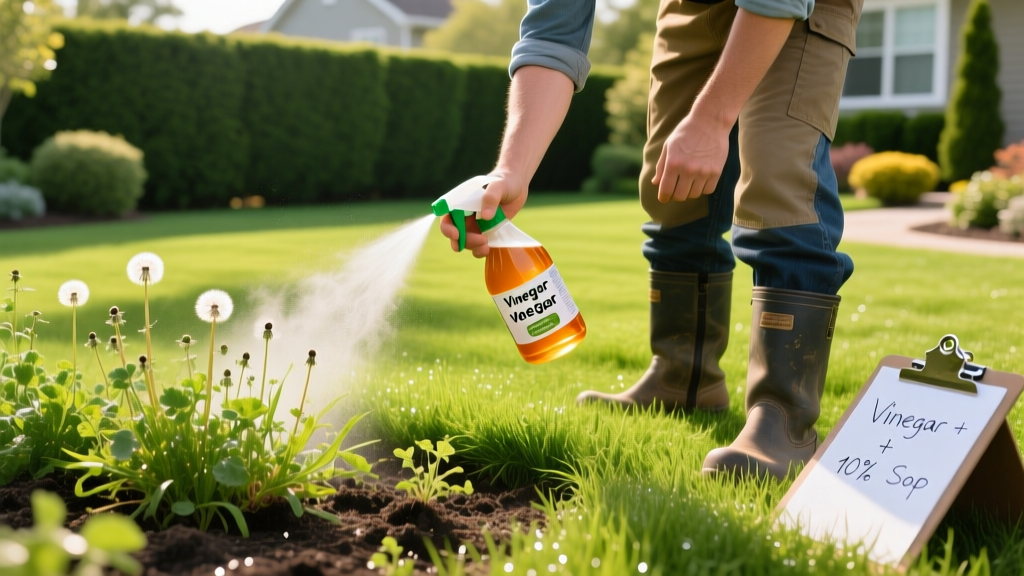
Vinegar for Killing Weeds: Organic Recipes, Rates, and Limits
The Reality of Acetic Acid as an Herbicide
Using vinegar for killing weeds is a cornerstone of organic lawn care, but its efficacy is frequently misunderstood. Acetic acid, the active compound in vinegar, acts as a rapid-contact desiccant. It strips the waxy cuticle from plant leaves and ruptures cell membranes, causing immediate tissue collapse and dehydration. However, it is strictly a non-selective, contact herbicide. It does not translocate through the plant's vascular system, meaning it will not travel down to the roots.
As of 2026, the market is saturated with 'natural' weed killers, but the concentration of acetic acid dictates success. Standard culinary vinegar contains 5% acetic acid, which is only lethal to very young, newly germinated annual seedlings. To achieve an 85% to 100% burn-down on mature broadleaf weeds, you must use horticultural vinegar, which contains 20% to 30% acetic acid. According to Penn State Extension, concentrations below 10% often result in incomplete foliar burn, allowing weeds to recover within 10 to 14 days.
⚠️ Critical Safety Warning: While 5% kitchen vinegar is harmless, 20% and 30% horticultural acetic acid is a severe corrosive. It can cause irreversible eye damage and severe skin burns. Always wear ANSI-approved splash goggles, nitrile gloves, and long sleeves when mixing or spraying high-concentration acetic acid.
Formulating the Ultimate Organic Weed Killer
Acetic acid alone struggles to penetrate the thick, waxy cuticles of mature weeds like plantain or dandelion. To maximize efficacy, you must formulate a solution that includes a solvent to break down the wax and a surfactant to reduce surface tension, ensuring the liquid coats the leaf rather than beading up and rolling off.
The 20% Burn-Down Recipe
- Base: 1 Gallon of 20% Horticultural Acetic Acid (Cost: $25–$35 per gallon).
- Solvent: 1.5 oz of d-Limonene (Cold-pressed orange oil). This natural terpene dissolves the protective epicuticular wax on weed leaves.
- Surfactant: 1 teaspoon of non-ionic liquid surfactant or pure liquid Castile soap. Avoid standard dish soaps with heavy degreasers or lotions, as they can interfere with the chemical stability of the mix.
Mix the d-limonene and surfactant together first, then add them to the acetic acid. Agitate the pump sprayer gently before use, as the oils will naturally separate from the water-based acid over time.
Application Protocol: Timing and Technique
Because acetic acid relies on rapid desiccation, environmental conditions dictate your success rate. Spraying on a cool, overcast day will yield poor results.
- Temperature: Apply when ambient temperatures are between 75°F and 85°F. Heat accelerates the chemical burn and speeds up cellular dehydration.
- Sunlight: Spray between 10:00 AM and 2:00 PM when UV radiation and solar heat are at their peak.
- Moisture: Ensure foliage is completely dry before application. Dew or recent rain will dilute the acid on the leaf surface.
- Wind: Do not spray if wind speeds exceed 5 MPH. High-concentration vinegar drift will instantly scorch desirable turfgrass and ornamental plants.
Use a pump sprayer equipped with a shield or a cone nozzle to direct the spray strictly onto the weed canopy. For weeds growing in turfgrass, use a paintbrush or sponge applicator to dab the solution directly onto the leaves, avoiding the surrounding grass blades.
Vinegar vs. Commercial Organic Herbicides
While DIY vinegar mixes are popular, commercial organic alternatives offer different modes of action. The Environmental Protection Agency (EPA) classifies many of these under minimum-risk or biopesticide guidelines. Here is how they compare in real-world lawn scenarios.
| Product Type | Active Ingredient | Cost per Gallon (2026) | Efficacy on Mature Taproots | Turfgrass Safety |
|---|---|---|---|---|
| DIY Horticultural Vinegar | 20% Acetic Acid + d-Limonene | $25 - $35 | Poor (Top-kill only) | None (Non-selective burn) |
| Avenger Weed Killer | 70% d-Limonene (Citrus Oil) | $45 - $55 | Moderate (Better cuticle penetration) | None (Non-selective burn) |
| Fiesta / Natria Lawn Weed Control | Chelated Iron (FeHEDTA) | $30 - $40 | High (Systemic iron toxicity to broadleaves) | Safe (Selective to broadleaves) |
The Verdict: If you are spot-treating weeds in driveway cracks or patio pavers, 20% vinegar is the most cost-effective choice. If you are treating broadleaf weeds (like clover or dandelion) directly inside your lawn, chelated iron (FeHEDTA) is vastly superior because it selectively kills broadleaves without harming your grass.
Limitations and Failure Modes
Organic gardeners must understand the biological limits of acetic acid to avoid frustration. Vinegar fails in three primary scenarios:
1. Deep-Rooted Perennials and Rhizomes
Weeds with extensive root systems or rhizomes—such as field bindweed, Canada thistle, yellow nutsedge, and mature dandelions—will experience complete foliar burn but will resprout from the root crown within 7 to 14 days. Eradicating these weeds with vinegar requires 4 to 6 repeated applications spaced two weeks apart to exhaust the root's carbohydrate reserves.
2. Soil Acidification and Microbiome Damage
Repeatedly drenching the same soil area with high-concentration acetic acid will temporarily crash the soil pH. While soil buffering capacity (dictated by cation exchange capacity and organic matter) will eventually neutralize the acid, heavy applications can harm beneficial mycorrhizal fungi and nitrogen-fixing bacteria in the top inch of the soil profile.
3. Seed Bank Germination
Acetic acid has no pre-emergent properties. It will not prevent weed seeds in the soil from germinating. In fact, by killing the mature canopy, you expose bare soil to sunlight, which often triggers a new flush of weed seed germination.
Post-Treatment Soil Recovery
If you have heavily treated a specific area (like a garden bed or a localized lawn patch) with horticultural vinegar over several months, you must actively restore the soil chemistry before reseeding or planting.
- Test the pH: Use a digital soil meter or send a sample to your local university extension. If the pH has dropped below 6.0, the soil is too acidic for optimal turfgrass growth.
- Apply Garden Lime: Broadcast pelletized calcium carbonate (garden lime) at a rate of 5 lbs per 1,000 square feet to buffer the acidity and raise the pH back to the 6.5–7.0 range.
- Inoculate Microbes: Apply a liquid compost tea or a mycorrhizal root dip to reintroduce beneficial soil biology that was stripped by the acid.
Frequently Asked Questions
Will vinegar permanently sterilize my soil?
No. Acetic acid breaks down rapidly in the soil, typically decomposing into water and carbon dioxide within a few days to a week. It does not leave a toxic residual like synthetic herbicides such as imazapyr. However, heavy, repeated doses can temporarily alter soil pH and microbial activity.
Can I mix vinegar with salt to make it stronger?
While adding sodium chloride (table salt) increases the desiccation power, it is highly discouraged for lawn care. Salt accumulates in the soil, causing sodium toxicity that permanently ruins soil structure, prevents water uptake, and creates dead zones where neither grass nor weeds will grow.
Is vinegar safe for pets and wildlife?
Once the 20% acetic acid solution has completely dried on the foliage (usually within 1 to 2 hours), it is safe for pets and wildlife to walk on. However, the wet spray is highly irritating to paws, eyes, and respiratory tracts. Keep animals out of the treatment zone until the foliage is dry.

