
Lawn Care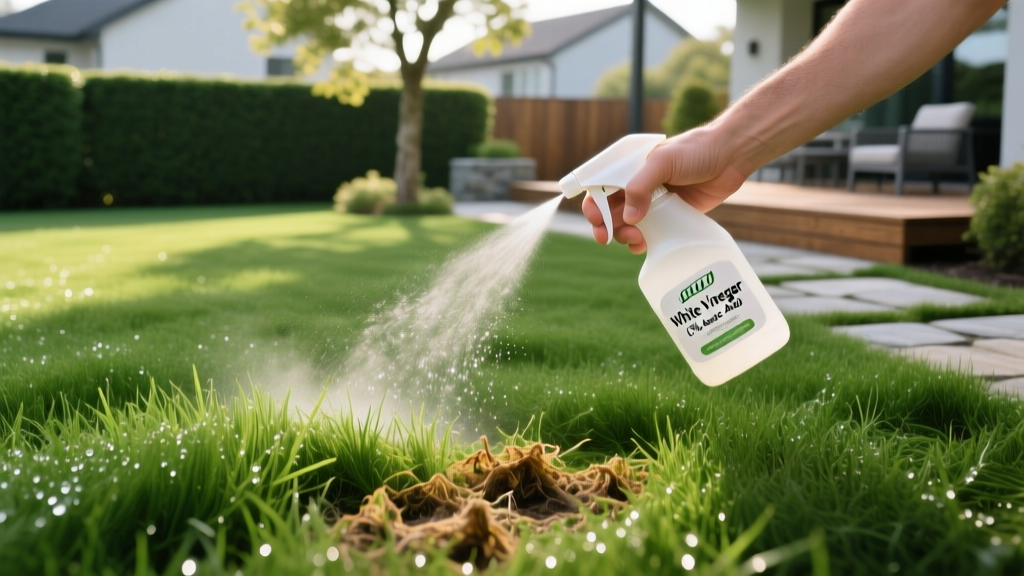
Will Vinegar Kill Lawn Grass? The Truth About Acetic Acid Herbicides
The Short Answer: Contact Burn vs. Systemic Kill
If you are wondering, will vinegar kill lawn grass, the direct answer is yes—but with a critical caveat. Vinegar (acetic acid) is a non-selective, contact herbicide. It destroys the plant tissue it touches but does not translocate through the plant's vascular system to kill the roots. Whether your lawn survives the application depends entirely on the concentration of the acetic acid, the maturity of the turfgrass, and the specific grass species you are growing.
While many homeowners turn to vinegar as an organic weed control method, overspray or blanket applications will severely damage your turf. Understanding the exact chemical interaction between acetic acid and grass blades is essential before you spray anywhere near your lawn.
The Cellular Mechanism: How Acetic Acid Destroys Turf
To understand the damage, we must look at the cellular level. Grass blades are protected by a waxy outer layer called the cuticle. This cuticle retains moisture and protects the plant from environmental stressors. When acetic acid contacts the leaf, it rapidly dissolves this waxy cuticle.
Once the cuticle is compromised, the cell membranes rupture, causing the cytoplasm to leak out. This results in rapid desiccation (drying out) of the leaf tissue, usually visible within 2 to 4 hours of application on a sunny day. Because vinegar is a contact herbicide, it only kills the top growth. However, if the acid pools at the base of the plant and burns the crown (the growing point located at the soil line), the grass plant will die completely, as it can no longer generate new blades.
Household vs. Horticultural Vinegar: A Concentration Matrix
Not all vinegar is created equal. The concentration of acetic acid dictates whether your lawn will experience a temporary cosmetic burn or permanent death. Below is a breakdown of how different concentrations impact turfgrass.
| Vinegar Type | Acetic Acid % | pH Level | Effect on Established Lawn | Root/Crown Kill Potential | Approx. Cost (2026) |
|---|---|---|---|---|---|
| Household White Vinegar | 5% | ~2.4 | Mild leaf burn; recovers in 7-14 days | Very Low | $3 - $5 / gallon |
| Cleaning Vinegar | 6% - 10% | ~2.2 | Moderate burn; may kill young seedlings | Low to Moderate | $6 - $12 / gallon |
| Horticultural Vinegar | 20% | ~1.8 | Severe burn; high risk of crown death | High | $35 - $45 / gallon |
| Industrial Vinegar | 30% - 45% | < 1.5 | Total top-kill; severe soil acidification | Very High | $60+ / gallon |
According to the Environmental Protection Agency (EPA), while acetic acid is often used in organic gardening, concentrations above 11% are considered highly corrosive and require strict personal protective equipment (PPE), including chemical-resistant gloves and face shields, to prevent severe skin and eye burns.
Turfgrass Tolerance: Cool-Season vs. Warm-Season Recovery
The recovery of your lawn after accidental vinegar exposure depends heavily on the grass species and its growth habit. Grasses that spread via underground rhizomes or above-ground stolons have a distinct survival advantage over bunch-type grasses.
- Kentucky Bluegrass (Cool-Season, Rhizomatous): Highly resilient. Even if the surface blades and crown are burned, the underground rhizomes will push up new shoots within 2 to 3 weeks, provided the soil remains moist.
- Tall Fescue (Cool-Season, Bunchgrass): Highly vulnerable. Because it grows in isolated bunches without lateral spread, if the crown of a Tall Fescue plant is burned by 20% vinegar, that specific plant is dead. The resulting bare spot will require overseeding.
- Bermudagrass (Warm-Season, Stolon/Rhizome): Extremely aggressive recovery. Bermudagrass can survive severe top-kill from horticultural vinegar and will rapidly regenerate from its deep root system and stolons once watered.
- Zoysiagrass (Warm-Season, Stolon/Rhizome): Moderate recovery. While it has lateral spread, Zoysia is notoriously slow-growing. A severe vinegar burn may leave unsightly brown patches for an entire growing season before filling in.
The Hidden Threat: Soil Acidification and Nutrient Lockout
⚠️ WARNING: Soil pH Crash
Repeated applications of 20% or 30% vinegar will drastically lower your soil pH. Turfgrass thrives in a pH range of 6.0 to 7.0. If vinegar drops your soil pH below 5.0, it triggers aluminum toxicity and locks up essential macronutrients like phosphorus and calcium, starving your lawn even if you continue to fertilize.
While a single spot-treatment of vinegar will be quickly buffered by the soil's natural cation exchange capacity (CEC), blanket spraying a lawn with high-concentration acetic acid overwhelms the soil's buffering ability. The University of Minnesota Extension notes that altering soil pH through acidic home remedies can cause long-term nutrient deficiencies that mimic disease or drought stress.
Step-by-Step Soil Remediation Protocol
If you have accidentally oversprayed your lawn with horticultural vinegar, or if you are trying to rehabilitate an area where vinegar was heavily used for weed control, follow this exact remediation sequence:
- Immediate Leaching (Day 1): Apply 1.5 inches of water to the affected area immediately. This dilutes the acetic acid in the topsoil and pushes it below the primary root zone (top 6 inches).
- Soil Testing (Day 3): Use a reliable testing kit (such as the Luster Leaf 1601 Rapitest or a digital meter like the Sonkir MS02) to check the soil pH. If the pH reads below 5.8, proceed to step 3.
- Calcitic Lime Application (Day 4): Apply pelletized calcitic lime to neutralize the acid. For a pH between 5.0 and 5.8, apply 25 lbs of lime per 1,000 square feet. For a pH below 5.0, apply 50 lbs per 1,000 square feet. Water it in lightly to activate the dissolution process.
- Microbial Inoculation (Day 10): High acidity kills beneficial soil microbes. Apply a liquid kelp extract or a humic acid supplement (like Simple Lawn Solutions Liquid Humic/Fulvic) at a rate of 3 oz per 1,000 sq ft to restore soil biology.
Frequently Asked Questions
Will vinegar kill grass roots?
No, vinegar does not kill established grass roots. Acetic acid lacks systemic properties, meaning it cannot travel down the phloem to the root system. It only destroys the tissue it physically contacts. However, if the grass is a young seedling with an underdeveloped root system, the loss of all its leaf tissue will cause it to starve and die.
How long does vinegar stay active in the soil?
Vinegar breaks down very quickly in the soil. Soil microbes metabolize acetic acid rapidly, and it typically dissipates within 48 to 72 hours. However, the effects of the acid—specifically the lowered soil pH and the resulting nutrient lockout—can persist for months if not corrected with lime applications.
Can I seed my lawn after applying vinegar?
You should wait at least 5 to 7 days after a heavy vinegar application before dropping grass seed. While the acetic acid itself degrades in a few days, the temporary spike in soil acidity can inhibit seed germination. Rake the area, apply a light dusting of lime, water heavily, and then proceed with your overseeding protocol.

