
Lawn Care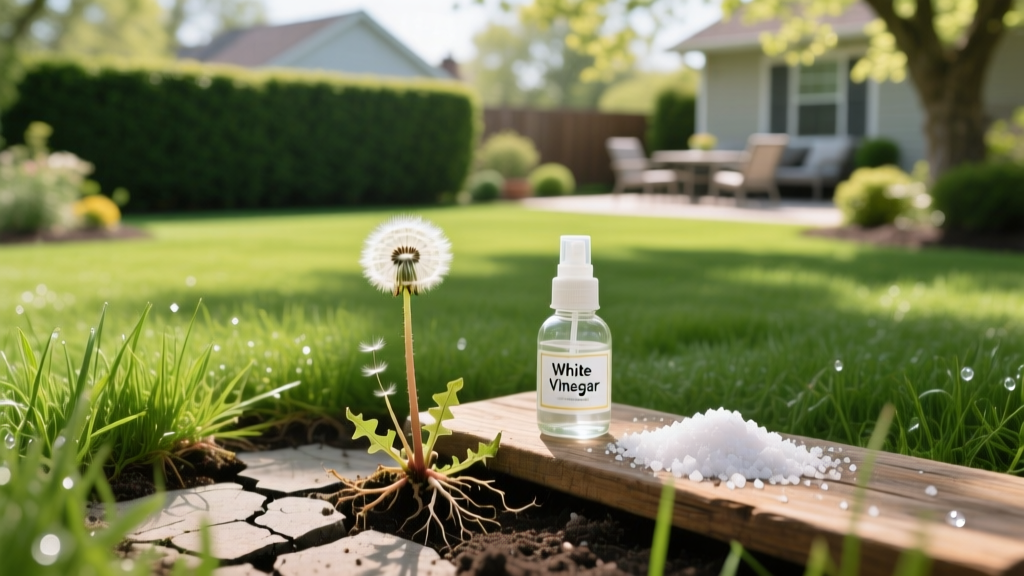
The Best Home Remedy for Killing Weeds: Vinegar, Salt, and Thermal Efficacy
When homeowners seek a home remedy for killing weeds, the internet is flooded with anecdotal recipes involving kitchen staples. However, treating weeds with household items requires a clear understanding of plant physiology and soil chemistry. Unlike systemic commercial herbicides (such as glyphosate or 2,4-D) that translocate through the plant's vascular system to destroy the root, almost all DIY organic remedies are strictly contact herbicides. They burn the foliage they touch but leave the root system intact.
To achieve a permanent kill using organic methods in 2026, you must match the specific remedy to the weed's life cycle, apply it under optimal environmental conditions, and understand the hidden long-term costs to your soil microbiome. Below is a deep-dive, science-backed evaluation of the most common chemical-free weed controls.
The Acetic Acid Reality: Household vs. Horticultural Vinegar
The most popular home remedy for killing weeds is vinegar. The active ingredient, acetic acid, works by rapidly destroying plant cell membranes, causing the leaf tissue to desiccate and die within hours. However, the concentration of acetic acid dictates its efficacy.
Why 5% Household Vinegar Fails on Mature Weeds
Standard culinary white vinegar contains 5% acetic acid. According to research from the USDA Agricultural Research Service, a 5% solution is only effective on very young weed seedlings (less than two weeks old) with underdeveloped cuticles. On mature broadleaf weeds like dandelions or plantain, 5% vinegar will burn the top leaves, but the plant will simply push out new growth from the undamaged crown within 48 hours.
The 20% Horticultural Vinegar Protocol
To actually kill established annual weeds, you need horticultural vinegar, which contains 20% to 30% acetic acid. As of 2026, a one-gallon jug of 20% horticultural vinegar costs between $45 and $65. Because it is highly corrosive, it requires strict safety protocols.
⚠ SAFETY WARNING: 20% acetic acid causes severe eye damage and skin burns. You must wear ANSI Z87.1-rated splash goggles, nitrile gloves, and long sleeves when mixing and applying. Never spray on windy days to prevent drift onto your skin or desirable plants.
The Ultimate Vinegar Recipe:
- 1 Gallon of 20% Horticultural Vinegar
- 1 oz (30 ml) of d-Limonene (Orange Oil) – acts as a secondary solvent to strip the weed's waxy leaf cuticle.
- 1 teaspoon of liquid dish soap (e.g., Dawn) – acts as a non-ionic surfactant to break the water's surface tension, ensuring the mixture coats the leaf rather than beading up and rolling off.
The Sodium Trap: Why Salt is a Last Resort
Many DIY guides recommend mixing table salt (sodium chloride) with water and pouring it on weeds. While a high-salinity solution will dehydrate and kill any plant it touches, using salt in or near your lawn is an ecological disaster.
When sodium (Na+) accumulates in the soil, it displaces calcium (Ca2+) and magnesium (Mg2+) on clay particles. This process, known as sodification, causes soil particles to disperse rather than clump together (flocculate). The result is a hardpan, impermeable soil crust that repels water, suffocates grassroots, and destroys soil microbial life. According to the University of Minnesota Extension, soil sodium levels exceeding 250 parts per million (PPM) can cause severe turfgrass decline.
Expert Rule of Thumb: Never use salt-based weed killers on soil. Restrict salt solutions (1 cup salt per 1 gallon of water) exclusively to deep hardscape cracks in concrete driveways or patios where no desirable plants will ever grow.
Thermal Weed Control: Boiling Water and Flame Weeding
If you want a truly chemical-free home remedy for killing weeds that leaves zero toxic residue in the soil, thermal control is the gold standard. Plant cells rupture and die when exposed to temperatures above 150°F (65°C). You do not need to incinerate the weed to ash; you only need to boil its internal cellular water.
Boiling Water for Taproot Weeds
Pouring a full kettle of 212°F (100°C) boiling water directly onto the crown of a dandelion or thistle cooks the meristematic tissue (the growing point). If the water penetrates deep enough into the soil fissure, it will pasteurize the upper few inches of the taproot. This is highly effective for weeds growing in gravel or between pavers, but impractical for large lawn areas.
Propane Flame Weeding
For larger areas, a backpack propane flame weeder (such as the Red Dragon VT 2-1/2) delivers a 2,000°F flame. The correct technique is to pass the flame over the weed for just 1 to 2 seconds. The goal is to see the leaves change from glossy to dull matte, indicating the cell walls have burst. Flame weeding is most effective on young, succulent annual weeds and is an EPA-recognized organic management strategy.
Efficacy and Soil Impact Comparison Matrix
| Home Remedy | Active Mechanism | Best Target | Soil Impact | Cost (2026) |
|---|---|---|---|---|
| 5% White Vinegar | Mild cell membrane disruption | Young seedlings (< 2 weeks) | Temporary pH drop; harmless | $0.20 / gal |
| 20% Horticultural Vinegar | Rapid tissue desiccation | Established annual broadleaves | Acidifies topsoil; harms microbes | $5.50 / gal |
| Table Salt Solution | Osmotic dehydration | Any plant (non-selective) | Severe; causes soil dispersion | $0.10 / gal |
| Boiling Water | Thermal cell rupture | Taproot weeds in hardscapes | Neutral; kills surface microbes | Energy cost only |
| Corn Gluten Meal | Pre-emergent root inhibition | Crabgrass and annual seeds | Positive; adds nitrogen (10-0-0) | $45 / 50 lbs |
Application Protocol for Maximum Kill Rate
Because organic contact remedies lack systemic action, your application technique must be flawless. Follow this exact protocol to ensure the highest mortality rate without requiring repeated applications.
- Time of Day: Apply between 10:00 AM and 2:00 PM. The intense UV radiation and high ambient temperatures accelerate the desiccation process initiated by the acetic acid or thermal treatment.
- Weather Conditions: Ensure zero rain is in the forecast for at least 24 hours. Dew or rain will dilute the vinegar solution, dropping the acetic acid concentration below the lethal threshold.
- Spray Volume: When using a 20% vinegar mix, spray until the leaves are completely wet and dripping. Do not just mist the surface; the solution must coat the underside of the leaves where the stomata (breathing pores) are concentrated.
- Mowing Strategy: Do not mow for 48 hours before application. You need maximum leaf surface area to absorb the contact herbicide. If you mow the weed down to a stub, the remedy will not reach the crown.
Frequently Asked Questions
Will baking soda kill weeds permanently?
Baking soda (sodium bicarbonate) acts similarly to salt by increasing soil salinity and drawing moisture out of plant cells. While it will burn the foliage of small weeds, it leaves behind sodium residues that alter soil pH and structure. It is not recommended for lawn areas and should only be used sparingly on patio cracks.
Does vodka or rubbing alcohol work as a weed killer?
Isopropyl alcohol and ethanol do desiccate plant tissue by stripping away the protective epicuticular wax. However, mixing a 2-ounce shot of vodka with 2 cups of water and a drop of dish soap is highly inefficient and cost-prohibitive compared to horticultural vinegar. It is better suited for small, spot-treatment of indoor houseplant pests rather than outdoor lawn care.
How can I prevent weeds from returning after using a home remedy?
Because home remedies only kill the top growth, the bare soil left behind is an open invitation for new weed seeds. Immediately after the dead weed debris decomposes, overseed the area with competitive turfgrass or apply a 2-inch layer of organic mulch. For lawns, applying Corn Gluten Meal in early spring acts as an organic pre-emergent, inhibiting the root formation of germinating weed seeds while feeding your grass.

