
Lawn Care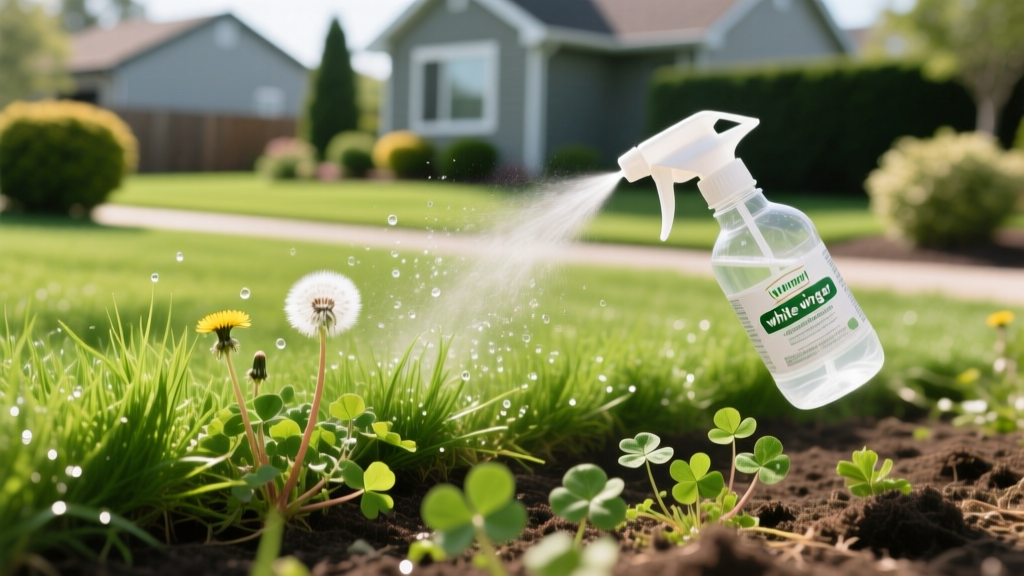
Does Vinegar Kill Weeds and Grass? Science, Risks & Alternatives
The internet is saturated with DIY lawn care hacks, but few generate as much confusion as using pantry staples for weed control. Homeowners frequently ask: does vinegar kill weeds and grass, or is it just a temporary cosmetic fix? The short answer is that vinegar is a non-selective contact herbicide. It will burn the foliage of almost any plant it touches—including your prized turfgrass—but it rarely kills the root systems of established weeds.
While acetic acid can be a useful tool for clearing patio pavers or managing young seedlings, applying it broadly across your lawn carries significant risks to your soil biology and turf health. This guide breaks down the exact chemical mechanics of vinegar as an herbicide, the true cost of horticultural concentrations, and the scientifically proven organic alternatives that actually eradicate weeds at the root.
The Mechanism of Action: How Acetic Acid Burns Foliage
Vinegar’s active ingredient is acetic acid (CH3COOH). When sprayed on plant leaves, acetic acid acts as a rapid desiccant. It dissolves the waxy cuticle that protects the leaf surface, causing the plant's cellular fluids to leak out and evaporate. This results in the rapid browning and wilting of the treated foliage, often within hours on a sunny day.
However, this mechanism is strictly a contact action. Acetic acid does not possess systemic properties, meaning it is not absorbed by the leaves and translocated down into the root system. Once it hits the soil, it rapidly breaks down. For annual weeds that have just germinated, this foliage burn is enough to kill the plant. For mature annuals and deep-rooted perennials, the plant simply sacrifices its burned leaves and pushes out new growth from its intact root crown within a week or two.
Household vs. Horticultural Vinegar: A Chemical Breakdown
A common point of failure for DIYers is using the wrong concentration. The vinegar in your kitchen is fundamentally different from the herbicidal vinegar sold at agricultural supply stores. According to the National Pesticide Information Center, the efficacy and safety profile of acetic acid changes drastically as concentration increases.
| Acetic Acid Concentration | Common Use | Efficacy on Mature Weeds | Root Kill Capability | Average Cost per Gallon (2026) |
|---|---|---|---|---|
| 5% (Household) | Cooking, Cleaning | Poor (burns seedlings only) | None | $3 - $5 |
| 10% - 15% | Heavy Cleaning, Pickling | Fair (defoliates young annuals) | None | $12 - $18 |
| 20% (Horticultural) | Commercial Weed Control | Good (defoliates most broadleaves) | Minimal (shallow roots only) | $30 - $45 |
| 30% (Industrial) | Agricultural Desiccant | Excellent (severe foliage burn) | Low | $50 - $70 |
⚠️ Safety Warning: Concentrations of 20% and above are highly corrosive. The Environmental Protection Agency notes that high-strength acetic acid can cause severe corneal damage and permanent eye injury. If you use 20%+ horticultural vinegar, you must wear ANSI Z87.1-rated chemical splash goggles, a face shield, and neoprene chemical-resistant gloves. Standard gardening gloves and reading glasses are insufficient.
Collateral Damage: How Vinegar Impacts Lawn Grass and Soil Biology
Because acetic acid is a non-selective contact burner, it cannot distinguish between a dandelion and your Kentucky Bluegrass. If you spray vinegar over your lawn, you will burn the grass blades, leaving unsightly brown patches that take weeks to recover.
The Soil pH Myth vs. Reality
A pervasive myth suggests that spraying vinegar will permanently lower your soil pH, making it too acidic for grass to grow. In reality, soil possesses a high buffering capacity. While a heavy application of 20% acetic acid will temporarily drop the pH of the top millimeter of soil, soil microbes rapidly metabolize the acetate ions. Within 48 to 72 hours, the acetic acid breaks down into water and carbon dioxide, and the soil pH rebounds to its baseline level.
However, this rapid microbial metabolism comes at a cost. The sudden influx of acetic acid can temporarily disrupt the local soil food web, killing off beneficial mycorrhizal fungi and nitrogen-fixing bacteria in the immediate spray zone. While the soil chemistry recovers quickly, the biological recovery can take several weeks, leaving your turfgrass temporarily vulnerable to nutrient deficiencies.
The Perennial Problem: Why Roots Survive the Burn
If your lawn is infested with perennial weeds like dandelions (Taraxacum officinale), plantain, or creeping Charlie, vinegar is largely a waste of money. These weeds store massive amounts of energy in deep taproots or aggressive rhizome networks.
When you spray a mature dandelion with 20% acetic acid, the leaves will crisp up and die. But the taproot, which can extend 10 to 15 inches deep into the soil profile, remains entirely unaffected. Within seven to ten days, the plant will push out a fresh rosette of leaves from the crown. You will find yourself trapped in an endless, expensive cycle of re-spraying the same weeds every two weeks, which ultimately causes more cumulative stress to your surrounding lawn grass than the weeds themselves.
Proven Organic Alternatives That Actually Kill Roots
If you are committed to organic lawn care and want to avoid synthetic chemicals like glyphosate or 2,4-D, there are scientifically validated alternatives that provide actual root kill and pre-emergent control.
1. Iron-Based Broadleaf Herbicides (FeHEDTA)
Chelated iron (FeHEDTA) is the gold standard for organic post-emergent broadleaf weed control. Products containing FeHEDTA (such as Fiesta or Natria Lawn Weed Control) exploit a biological loophole: broadleaf weeds absorb iron rapidly and cannot regulate it, leading to fatal cellular oxidative stress. Grasses, however, have a natural mechanism to slow iron absorption.
- Application Rate: Typically 3 to 4 fluid ounces per gallon of water.
- Target Weeds: Dandelions, clover, plantain, and thistle.
- Cost: Approximately $45 to $60 for a 2.5-gallon concentrate, which treats up to 10,000 square feet.
- Result: Weeds turn black and die at the root within 14 days, while your grass remains unharmed (and may even green up from the iron).
2. Corn Gluten Meal for Pre-Emergent Control
To stop weeds before they start, corn gluten meal (CGM) acts as an organic pre-emergent. It does not kill existing weeds, but it inhibits root formation in germinating seeds.
- Application Rate: 20 pounds per 1,000 square feet.
- Timing: Apply in early spring when soil temperatures consistently reach 50°F to 55°F (typically when forsythia bushes bloom).
- Bonus: CGM is roughly 10% nitrogen by weight, providing a slow-release organic fertilizer boost to your turf.
3. Thermal Weeding for Hardscapes
For weeds growing in driveway cracks or along fence lines where soil biology is less of a concern, propane flame weeders (generating temperatures upwards of 2,000°F) are highly effective. You do not need to incinerate the weed; simply passing the flame over the plant for one second boils the water inside the plant cells, causing them to rupture and die permanently without introducing any chemicals to the environment.
Frequently Asked Questions
Can I mix vinegar, salt, and dish soap for a better weed killer?
While this popular DIY recipe increases foliage burn, the salt (sodium chloride) is highly detrimental to soil health. Sodium destroys soil structure, causing clay particles to bind together and eliminating drainage. Salt does not break down in the soil; it accumulates, creating sterile dead zones where neither grass nor weeds will grow for years.
Does vinegar kill crabgrass?
Vinegar will burn the leaves of young crabgrass seedlings, but once crabgrass reaches the tillering stage (producing multiple stems), acetic acid will only defoliate the top growth. The plant will rapidly regenerate from its nodes. Iron-based herbicides or targeted organic post-emergents are required for mature crabgrass.
How long after spraying vinegar can I plant grass seed?
Because acetic acid breaks down in the soil within 48 to 72 hours, it is generally safe to sow grass seed 3 to 4 days after a vinegar application. However, ensure you have raked away the dead, desiccated plant material so the new seed has direct soil contact for proper germination.

